When both partners in a relationship struggle with addiction and mental health disorders, the challenges can feel overwhelming. This situation, known as dual diagnosis, requires a coordinated approach to address both issues together. Here’s a quick guide to the five steps couples can take to navigate this journey:
- Step 1: Recognize the Problem
Understand the connection between substance use and mental health. Acknowledging these struggles is the first step toward recovery. - Step 2: Communicate and Set Boundaries
Use open, honest communication and establish clear boundaries to rebuild trust and create a supportive environment. - Step 3: Seek Integrated Therapy
Combine individual and couples therapy to address both addiction and mental health issues simultaneously. - Step 4: Build Support Systems
Create shared recovery plans while maintaining individual paths. Support each other without enabling harmful behaviors. - Step 5: Commit to Long-Term Care
Focus on ongoing treatment, professional coaching, and monitoring to maintain progress and prevent relapse.
Recovery is a shared journey that requires patience, effort, and professional guidance. By following these steps, couples can work together to heal and build a healthier future.
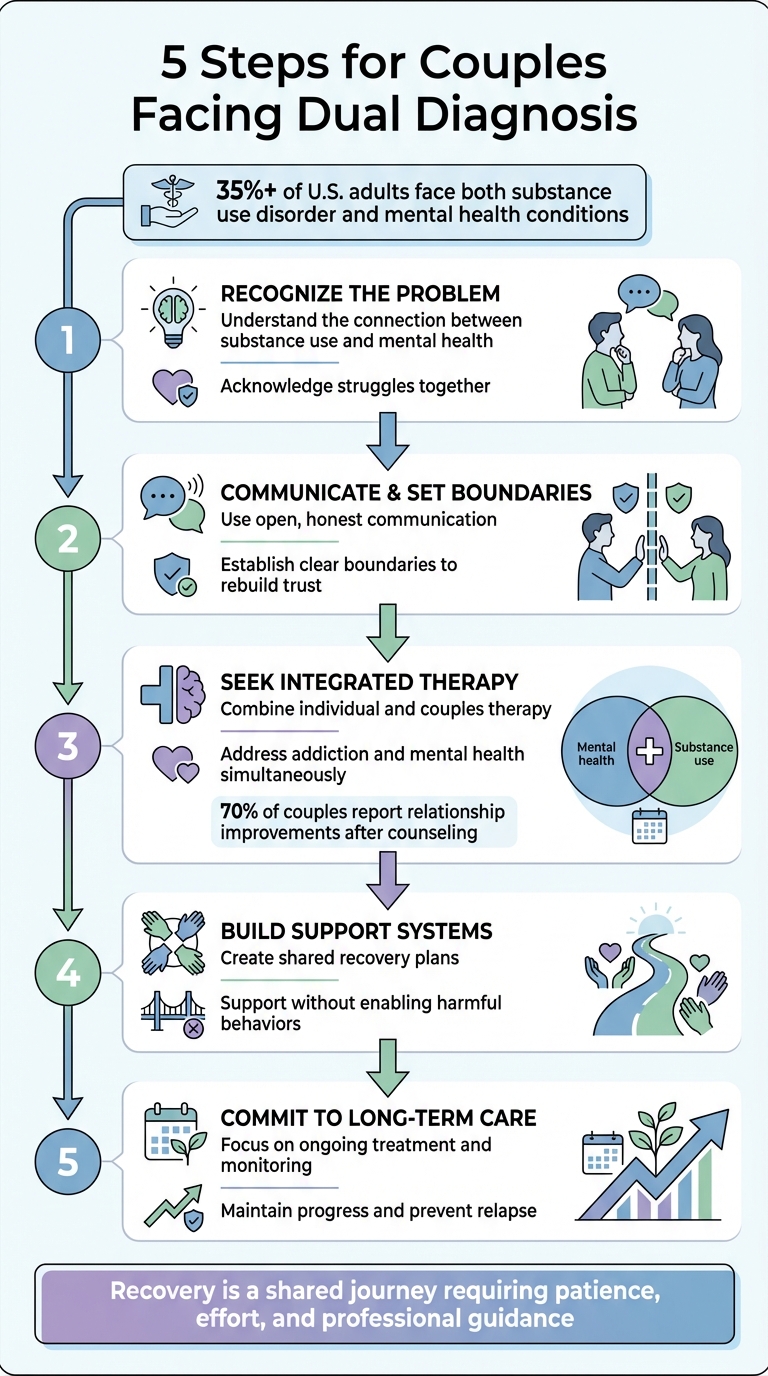
5 Steps for Couples Facing Dual Diagnosis Recovery
Dual Diagnosis Treatment
Step 1: Recognize and Acknowledge the Dual Diagnosis
Understanding that both partners are dealing with intertwined mental health and substance use challenges is crucial. Without this awareness, treatment efforts often fall short. When one issue goes untreated, it can intensify the other, leading to more complications [7]. Denial frequently plays a significant role in both addiction and mental health struggles, making it hard for couples to grasp the full scope of their situation. Acknowledging these issues sets the stage for open communication, which is explored further in Step 2.
Identifying Symptoms in Each Partner
Start by paying attention to signs that may indicate underlying issues. These can include bloodshot eyes, tremors, secretive behavior, withdrawal from loved ones, sudden declines in work performance, unexplained financial problems, extreme mood swings, irritability, feelings of hopelessness, or constant worry [1] [2] [6] [7].
Be mindful if one partner relies on substances to manage anxiety or painful memories – this is often a red flag [1] [7]. A helpful approach is to conduct a "sober check" by observing whether feelings of depression, anxiety, or irritability persist even when substances aren’t involved [1]. Additionally, keeping track of shared triggers, like stressful events, poor sleep, or social environments that worsen symptoms, can provide valuable insights [1]. Recognizing these patterns can inform both individual and couples therapy, which will be addressed in later sections.
Breaking Through Denial Together
Denial is one of the biggest obstacles couples face. As HelpGuide explains:
Denial is common in both substance abuse and mental health issues. It’s often hard to admit how dependent you are on alcohol or drugs or how much they affect your life [1].
Feelings of shame, fear of being perceived as weak, or simply hoping the problems will fade away often fuel this defense mechanism [1] [9]. When both partners are in denial, they can unintentionally reinforce it in each other.
To break through denial, focus on how these challenges impact your relationship as a whole. Consider practical consequences like financial strain, job loss, or patterns of codependency, where one partner constantly steps in to "rescue" the other [5]. Avoid shielding each other from the natural consequences of substance use – covering legal issues, making excuses, or taking over responsibilities only prolongs the cycle [5]. Instead, create a safe space where both partners feel comfortable sharing their experiences without fear of judgment. Gaining a deeper understanding of how addiction and mental health are interconnected can help reduce feelings of shame and reframe these struggles as health conditions rather than personal failures [1] [8]. Admitting there’s a problem is the first step toward recovery, and tackling it together can make the process feel less isolating. Overcoming denial is essential before moving on to strategies focused on communication and mutual support.
Step 2: Establish Open Communication and Healthy Boundaries
Once you’ve recognized the presence of a dual diagnosis, the next step is to open the lines of communication in a way that avoids triggering defensiveness. It’s worth noting that over 35% of adults in the United States face the dual challenge of a substance use disorder and a mental health condition [8]. A crucial part of this process is separating the individual from the disorder. As Candice Rasa, LCSW, Clinical Director of the Beach House Center for Recovery, explains:
Attributing what’s a diagnosable disease… to an inherent character or personality flaw in your spouse can get in the way of the healing and recovery process [10].
By viewing these struggles as health conditions rather than personal failings, you can shift conversations from blame to collaboration. This approach fosters an environment where both partners feel safe sharing their experiences without fear of judgment.
Techniques for Honest Conversations
The way you frame your words can make all the difference. Instead of starting sentences with "You", try using "I" statements. For instance, replace "You never care about me" with "I feel lonely when we don’t spend quality time together" [10][14]. This small adjustment helps your partner hear your emotions instead of feeling attacked. Similarly, focus on expressing your feelings and needs – saying "I felt scared when…" is far more effective than "You always…" [10].
Another way to encourage understanding is by asking open-ended questions. For example, instead of asking, "Did you use today?" try, "How are you feeling about your recovery today?" [5]. Open-ended questions invite dialogue, while closed questions can feel accusatory. If conversations become heated, consider involving a licensed therapist to help navigate difficult discussions [5].
The timing of these conversations also matters. Marsha Vannicelli, PhD, Clinical Associate Professor at Harvard Medical School, highlights the importance of timing:
Until the substance abuse is off the table… no issues that a substance abuser might want to raise, no matter how legitimate, are going to get a fair hearing [11].
Choose calm, sober moments for serious discussions when both of you are emotionally prepared to engage [12][13]. By practicing clear communication, you lay the groundwork for setting and respecting healthy boundaries.
Setting and Respecting Boundaries
Once communication improves, establishing boundaries becomes essential for creating a supportive environment for recovery. Boundaries define what behaviors are acceptable and what are not, helping both partners navigate this challenging journey. Writing these boundaries down can prevent misunderstandings. For example, you might decide that drugs or alcohol are not allowed in the home or that you won’t spend time together if your partner is under the influence [12][14].
A helpful concept to keep in mind is the "3 C’s" rule: you didn’t cause the condition, you can’t cure it, and you can’t control it [14]. This mindset helps distinguish between supporting your partner and enabling them. Supporting involves encouraging treatment and self-care, while enabling involves shielding them from the natural consequences of their actions – like paying their legal fees, calling in sick for them, or covering up their behavior [12][14]. Reducing enabling behaviors can encourage your partner to take responsibility for their choices, which may inspire change.
Here’s a quick comparison of enabling versus supportive behaviors:
| Enabling Behaviors (Avoid) | Supporting Behaviors (Encourage) |
|---|---|
| Making excuses for their behavior to family or employers [12][14] | Helping them stick to their aftercare plan [12] |
| Giving money for substances or unexplained expenses [13][14] | Researching treatment options or verifying insurance coverage [12][13] |
| Bailing them out of jail or covering legal fees [12][14] | Attending therapy sessions together [12] |
| Ignoring substance use to avoid conflict [13][14] | Using "I" statements to express how their actions affect you [10][14] |
It’s also important to outline clear consequences for boundary violations. For instance, you might say, "If there is shouting, I will leave the room until we can both speak calmly" [14]. Following through on these consequences is key – without consistency, boundaries lose their effectiveness. Some couples find tools like monitoring apps or breathalyzers helpful for rebuilding trust without constant questioning [11]. As Candice Rasa points out:
Giving yourself permission to have healthy boundaries is itself a way to support your spouse in their recovery [10].
Healthy boundaries not only protect both partners but also provide the stability needed for the integrated therapy approach discussed in Step 3. By setting these limits, you create a space where recovery can truly take root.
Step 3: Pursue Integrated Individual and Couples Therapy
Once communication and healthy boundaries are in place, the next step is seeking professional help that addresses both mental health conditions and substance use disorders at the same time. This combined approach is considered the most effective for dual diagnosis treatment since ignoring one condition increases the likelihood of relapse [9].
Why Individual Therapy Matters
Individual therapy provides a private space for each partner to work through personal challenges, including trauma, emotional triggers, and coping mechanisms. Techniques like Cognitive Behavioral Therapy (CBT) and Dialectical Behavior Therapy (DBT) are particularly effective in tackling both addiction and mental health concerns [2] [4] [9]. These one-on-one sessions also allow for tailored medication management when needed, ensuring a well-rounded treatment plan. Opt for a provider who offers dual diagnosis care, including psychiatric evaluations, to address the unique needs of each individual. These insights from individual therapy lay the groundwork for progress in couples therapy.
How Couples Therapy Helps
Couples therapy focuses on rebuilding trust and improving communication patterns that addiction may have damaged. Behavioral Couples Therapy (BCT) stands out as an effective option, with research showing that individuals participating in BCT experience greater reductions in substance use compared to those in individual therapy alone. Additionally, BCT is linked to lower rates of intimate partner violence – a critical factor, as 40% to 60% of substance abuse cases involve such violence.
In therapy, couples can work on strategies like creating sobriety contracts, holding daily sobriety discussions, and using sobriety calendars. These tools help shift the focus from past conflicts to building a healthier future. Around 70% of couples report relationship improvements after counseling, and studies suggest that BCT can also positively impact children’s well-being in the home [3] [5] [15].
For couples dealing with severe relationship challenges alongside dual diagnosis, Growth and Change Counseling offers specialized support through The Marriage Rescue Institute. This intensive 12-week program is designed to help couples restore and rebuild their marriages. Available in Campbell, San Jose, Los Angeles, Roseville, and via telehealth across California, this program provides a structured approach that transitions seamlessly into long-term recovery planning in the next step.
sbb-itb-596b85d
Step 4: Build Mutual Support and Accountability Structures
Once therapy and open communication have laid the groundwork, the next step is to establish systems of mutual support and accountability. Couples need practical tools to sustain their progress, which includes creating shared recovery plans while respecting each partner’s individual journey. This is where detailed planning becomes essential to turn those principles into actionable steps for daily life.
Creating Recovery Plans as a Team
A strong recovery plan tackles both the substance use disorder and the mental health challenges simultaneously. Start by drafting a structured weekly plan that includes daily routines, counseling sessions, and activities [16]. Why? Because structure helps minimize boredom and stress – two common triggers for relapse. It’s also helpful to identify each partner’s warning signs, like changes in sleep patterns, irritability, or cravings, so you can intervene early if needed [1][16].
Set aside 10–15 minutes every day for a judgment-free check-in. Use this time to discuss recovery goals, emotions, and any challenges. These short but meaningful conversations ensure both partners stay accountable and transparent. Additionally, create a written crisis plan that answers key questions: Who can you call if things escalate? Where will you go in an emergency? Does a relapse mean the relationship ends? [17]. Having these answers ready can help both partners navigate tough situations with less panic.
Supporting Without Enabling
Support and enabling are often confused, but they’re very different. Support means encouraging positive behaviors – like celebrating when your partner attends therapy or reaches a recovery milestone [16]. Enabling, on the other hand, involves shielding them from the consequences of their actions, such as making excuses for missed work or covering financial missteps [5].
"While it may be tempting to try to solve problems for your loved one, it undermines their confidence." – Pat Aussem, L.P.C., M.A.C., Vice President, Partnership to End Addiction [16]
Instead of rushing to fix problems, invite your partner to decide on the next steps. This approach builds their confidence and fosters independence [16]. It’s equally important to maintain separate recovery paths. Each partner should have their own support systems, whether it’s a sponsor, peer meetings like Al-Anon or SMART Recovery, or other resources [17][18]. Recovery is deeply personal – your partner cannot do it for you, and you cannot do it for them.
Step 5: Commit to Long-Term Maintenance and Professional Coaching
The Importance of Long-Term Care
Recovery isn’t just about addressing substance use; it’s about reshaping your entire lifestyle. This is why long-term care is so crucial – it’s an ongoing process that requires attention and adaptation as new challenges emerge [19]. Couples need to look beyond the initial stages of treatment and focus on consistent care. Without regular monitoring of psychiatric symptoms and substance use patterns, early warning signs of relapse can easily slip through the cracks. Professional check-ins play a critical role here, allowing adjustments to treatment plans as circumstances change [19]. These regular touchpoints, combined with specialized coaching, help reinforce recovery practices and build resilience over time.
Resources for Professional Support
Once you’ve laid the groundwork with therapy and mutual support, professional coaching can take your recovery to the next level. For example, Growth and Change Counseling’s Marriage Rescue Institute offers a structured 12-week coaching program. This program is designed to help couples facing serious challenges rebuild their relationships with practical tools and hands-on exercises – not just through talk therapy.
The program is available statewide, offering both in-person and telehealth options for accessibility. Its focus is on long-term growth and healing, helping couples navigate the recovery process while emphasizing personal responsibility. This approach ensures that progress extends beyond the initial diagnosis, fostering a meaningful and sustainable life together [20].
For more information about this program and how it can support your recovery journey, visit Growth and Change Counseling to schedule a strategy session.
Conclusion
Dealing with a dual diagnosis as a couple can feel overwhelming, but these five steps – recognition, communication, integrated therapy, mutual support, and long-term commitment – offer a clear path forward. Recovery thrives on collaboration, allowing both partners to heal and grow together.
The importance of this united approach is backed by research. Studies show that couples who participate in Behavioral Couples Therapy experience greater reductions in substance use and report higher relationship satisfaction compared to those who opt for individual counseling alone [1][5].
"Trust must be rebuilt, and both people in the relationship must realize their shortcomings and work to overcome them individually and together." – AddictionCenter [5]
Recovery is a journey, not a quick fix. It requires patience, professional guidance, and the flexibility to face new challenges as they arise. Addressing mental health and addiction simultaneously through an integrated approach – where one team treats both conditions – offers couples the best shot at lasting change [1][9]. Ignoring one condition while treating the other significantly increases the risk of relapse. True progress depends on consistent effort and professional support.
While the process demands dedication, it also lays the groundwork for a stronger, more resilient partnership rooted in honesty, mutual respect, and shared growth. With the right support system and a commitment to the journey, couples can move from merely surviving to building a fulfilling life together.
For those ready to embrace this transformative process, Growth and Change Counseling offers integrated treatment plans tailored to tackle both mental health and addiction challenges. Their Marriage Rescue Institute provides an intensive 12-week coaching program designed to rebuild trust and create lasting change.
FAQs
What are the signs that a couple may be dealing with dual diagnosis?
Dual diagnosis happens when mental health struggles and substance use issues occur together, creating a challenging cycle that affects both partners in a relationship. Some common signs to watch for include mood swings, heightened anxiety, or depression that seem tied to substance use. You might also notice one partner turning to alcohol or drugs as a way to cope with emotional pain. This often leads to disrupted sleep patterns, pulling away from loved ones, or neglecting responsibilities like paying bills or managing household tasks. Over time, these behaviors can trigger frequent conflicts, emotional disconnection, and a noticeable loss of intimacy.
If this resonates with your situation, reaching out for professional help can make a significant difference. Growth and Change Counseling offers a focused 12-week couples coaching program through The Marriage Rescue Institute. This program is tailored to help couples work through these challenges, rebuild trust, and strengthen their relationship. Services are available in-person throughout California or via telehealth, making it easier to get the support you need, no matter where you’re located.
What are some practical ways for couples to set healthy boundaries when dealing with dual diagnosis?
Setting healthy boundaries in a dual diagnosis relationship – where both partners are managing addiction and mental health challenges – takes effort, honesty, and consistent action. Begin by having an open conversation about behaviors that feel unsafe or damaging, like using substances at home or bringing up sensitive issues during emotionally charged moments. Together, decide on specific boundaries, write them down (for example, No alcohol in the house), and agree on what will happen if those boundaries are crossed.
It’s equally important for both partners to focus on their own recovery journeys. This could mean attending therapy, joining support groups, or following a medication plan. Relying solely on the relationship for healing can lead to unhealthy dynamics, so maintaining separate support systems and carving out time for self-care – whether that’s getting enough sleep, exercising, or pursuing hobbies – can help build emotional strength and reduce codependency.
For couples who feel stuck or need extra help, professional guidance can be a game changer. Growth and Change Counseling offers a 12-week couples coaching program through The Marriage Rescue Institute. This program is designed to help couples rebuild trust, establish boundaries, and navigate the complexities of recovery together. By setting clear limits and seeking ongoing support, partners can work toward a healthier, more balanced relationship that nurtures both individual and shared progress.
Why is it important for couples facing dual diagnosis to seek integrated therapy?
Integrated therapy plays a key role for couples navigating the dual challenges of mental health conditions and substance use disorders. These issues are often deeply intertwined – like when anxiety or trauma drives someone to self-medicate with drugs or alcohol – creating a cycle that can put significant strain on a relationship.
Addressing both problems at the same time through a coordinated approach allows couples to better understand how these challenges are connected. This approach not only helps reduce the risk of relapse but also strengthens communication and rebuilds trust. Integrated care streamlines the process by offering a unified treatment plan, removing the hassle of managing separate appointments or receiving conflicting advice.
Growth and Change Counseling embraces this approach through its specialized couples counseling and individual therapy services. By blending evidence-based treatments, psycho-education, and relational skill-building, they support couples in healing together while working toward lasting recovery and emotional health.
Related Blog Posts
- Addiction Recovery and Marriage Communication
- How Addiction Impacts Marital Stability
- Cognitive-Behavioral Therapy for Couples with Addiction
- Addiction Recovery and Marriage: What Works
