Parenting gets harder when marital conflict and mental health challenges like anxiety or depression come into play. These issues create stress that impacts not only the parents but also the children, often leading to emotional and behavioral problems. Kids may feel insecure, blame themselves, or struggle with trust and relationships.
To support children, parents need to address both their relationship and mental health issues. This means improving how they handle disagreements, staying emotionally available, and keeping routines consistent. When conflict and mental health challenges are resolved, families experience less tension, stronger bonds, and healthier environments for children.
Key takeaways:
- Children absorb family stress, leading to anxiety, depression, or acting out.
- Marital conflict and mental health issues are connected, often worsening each other.
- Better conflict resolution and consistent parenting help stabilize family dynamics.
- Professional help can guide families to healthier relationships and emotional well-being.
Reducing parental conflict: why it matters to children and why it matters to services
How Marriage Conflict and Parent Mental Health Affect Children
Children are like sponges – they pick up on the stress, tension, and dysfunction in their surroundings, even when parents believe they’re shielding them from the worst of it. When marital conflict combines with untreated mental health challenges, the effects on children can be both immediate and long-lasting. These struggles can shape everything from their emotional well-being to their brain development, often straining the parent-child relationship and creating a ripple effect throughout the family.
Emotional and Behavioral Problems in Children
Marital conflict and parental mental health issues take a significant toll on children, often showing up in two key ways: internalizing behaviors (turning emotions inward) and externalizing behaviors (acting out).
Internalizing behaviors include signs like anxiety, depression, withdrawal, and excessive worry. A child might become unusually quiet, lose interest in activities they once loved, or report physical symptoms – like headaches or stomachaches – that have no clear medical cause. On the flip side, externalizing behaviors are more outwardly disruptive, such as aggression, defiance, impulsivity, or trouble following rules. These children may get into fights, struggle with authority, or act out in school.
The long-term effects are hard to ignore. Research shows that ongoing marital problems over several years are linked to higher rates of anxiety and depression in adolescents[2][6]. Even more concerning, studies reveal that exposure to parental conflict during infancy can alter areas of the brain responsible for regulating emotions and stress[2].
When children are constantly exposed to stress and conflict, their ability to manage emotions often suffers. This can lead to irritability, mood swings, and trouble concentrating, which may spill over into academic struggles and challenges in forming friendships. The emotional insecurity they feel at home can make it harder for them to trust others and feel safe in the world.
Another heartbreaking reality is that children often blame themselves for their parents’ issues. They may develop feelings of guilt, confusion, and low self-esteem, believing that if they were "better" in some way, their parents wouldn’t fight[1][3]. This self-blame can stick with them into adulthood, affecting their ability to build healthy relationships and maintain a sense of self-worth.
These emotional and behavioral struggles inevitably strain the bond between parents and children, as explored next.
How Marriage Problems Damage Parent-Child Bonds
Marital conflict doesn’t just affect the relationship between spouses – it also disrupts the connection between parents and their children. This "spillover effect" is one of the most harmful aspects of ongoing marital discord, as it weakens the relationships that should provide children with stability and support.
A large-scale study of nearly 4,000 families found that marital conflict increases parenting stress while reducing parental warmth, which negatively impacts children’s social and emotional development[4]. When parents are consumed by their own struggles – whether relational or mental health-related – they often have less emotional energy to give to their kids. This can result in less warmth, responsiveness, and involvement from parents[1][4].
The quality of parent-child interactions often takes a hit. Parents might become more emotionally reactive, snapping at their kids over small issues, or they may withdraw entirely, becoming unavailable when their children need them most. Mental health challenges like anxiety, depression, or addiction can further isolate parents, making it even harder for them to connect with their children[8].
This emotional distance can create a vicious cycle. Children, sensing their parents’ unavailability, might act out to grab attention or retreat into themselves. Parents, already overwhelmed by their own struggles, may misinterpret these behaviors as additional stress rather than signs that their children need support.
Inconsistent discipline is another common issue in households dealing with marital conflict. When parents fail to communicate effectively or undermine one another, children receive mixed messages about boundaries and rules. One parent might become overly lenient while the other grows harsh, leaving children confused and unsure of what’s expected of them.
The emotional fallout is profound. Children in these situations often feel unsupported and isolated, even within their own families. They may lose confidence in their parents’ ability to provide stability and protection, leading to heightened anxiety and behavioral issues. When parents are grappling with mental health challenges, it becomes even harder for them to guide and nurture their children, further straining these critical relationships[8].
The way parents handle conflict also serves as a powerful lesson for children. Kids learn how to navigate relationships and manage disagreements by watching their parents[3][5]. If they consistently witness hostile arguments, emotional withdrawal, or poor communication, they may come to view these as normal ways to handle conflict.
Children’s perceptions of their parents’ marital quality are directly tied to their mental health, including levels of anxiety and depression[7]. Even when parents think they’re hiding their problems, children are often acutely aware of the tension. This awareness can have measurable effects on their psychological well-being, shaping how they view themselves, their relationships, and the world around them.
Why Reducing Parental Conflict Matters at Growth and Change Counseling
When marital conflict arises, it doesn’t just affect the couple – it ripples through the entire family. Parents often struggle to set consistent rules and remain emotionally available, especially when mental health issues are also in the mix. These challenges can disrupt effective parenting, with stress seeping into daily life and making it harder to provide the stability children need. For many parents, personal struggles can create a cycle that undermines their ability to parent effectively. Recognizing these challenges is the first step toward breaking that cycle.
Inconsistent Rules and Discipline
In homes where marital conflict and mental health challenges are present, one common issue is inconsistent discipline. Stress often makes it difficult for parents to agree on or enforce rules in a unified way.
Disagreements about discipline strategies can lead to mixed messages for children. For example, one parent might become overly lenient to avoid further conflict, while the other may respond with stricter or harsher measures out of frustration. This inconsistency can leave children confused about what’s expected of them. Something as simple as differing bedtime rules can disrupt a child’s sense of stability and security [1][3].
Studies have shown that increased marital conflict is strongly linked to higher rates of behavioral and emotional issues in children [2][6]. Kids in these situations may struggle with anxiety, sadness, or guilt. Others might act out, show aggression, or withdraw emotionally. Over time, these experiences can hinder their ability to regulate emotions and develop impulse control [2][3][5]. Without a stable environment, children may also find it harder to form a clear understanding of right and wrong.
Adding to the problem, when parents are dealing with their own emotional struggles, their availability to their children often decreases, further compounding these challenges.
Being Less Available and Communication Problems
Just as inconsistent discipline can confuse children, a lack of emotional availability can weaken the parent-child bond. Parents dealing with mental health challenges like depression, anxiety, or emotional exhaustion often find it difficult to respond fully to their children’s emotional needs [1][2][3].
As LMFT John Kane explains:
"The more relationally healthy people are, the less anxious, addicted, and depressed they are. Do you get anxious or depressed about life or your marriage? Do you turn to an addiction to feel better or avoid pain when under stress? Anxious, addicted, depressed people isolate because they are pulling away from relationships, it hurts too much, it’s easier in the moment. But they get more mentally unwell because the root issues are endured instead of resolved, marriages are isolated instead of repaired." [8]
Even when physically present, parents may seem emotionally distant. Anxiety, addiction, or depression can cause a parent to pull away, often because engaging feels too painful or overwhelming in the moment [8]. This emotional distance can show up in distracted conversations, missed emotional cues, or a lack of meaningful connection – all of which weaken the parent-child relationship [1][2][3].
When parents struggle to be emotionally present, children often notice. Some may act out in an attempt to gain attention, while others may suppress their feelings and needs. This disconnect can make children hesitant to approach their parents for support, leading them to seek comfort from friends, teachers, or other adults instead. Over time, this can influence their academic performance and their ability to build healthy relationships [2][3][5].
Jamula Taylor, LMFT of Growth and Change Counseling, highlights the importance of addressing these deeper issues:
"We understand that our mental health conditions are related to the breakdown in our relationships and that we can’t simply make depression, anxiety, or other problems go away by simply treating the symptoms. We have to get down to the roots of the problems in order to help people effectively heal." [8]
The combination of inconsistent discipline and reduced emotional availability creates a tough environment for children. They need both structure and emotional connection to feel secure and thrive. Understanding these patterns is a crucial step toward creating the stability and presence that children rely on for healthy development.
sbb-itb-596b85d
Practical Methods for Parenting Through Conflict and Mental Health Problems
Understanding the challenges families face is important, but taking action is what truly makes a difference. Parents can adopt specific strategies to reduce the impact of marital conflict on their children while strengthening family bonds. These approaches focus on managing emotions, creating stability, and recognizing when professional help is needed.
Better Conflict Resolution and Managing Emotions
Active listening is a cornerstone of healthier conflict resolution. This involves genuinely listening to your partner without preparing a rebuttal in your head. In moments of disagreement, aim for collaborative problem-solving instead of trying to "win" the argument. Work together to find solutions that both parents can support. Avoid yelling, personal attacks, or harsh criticism. Research shows that when fathers use constructive conflict resolution techniques, it leads to greater parental involvement and positive outcomes for children [4].
Regulating emotions is equally important, especially during heated conflicts. If tensions rise, take a break to cool off before returning to the conversation or interacting with your children. This helps prevent the "spillover effect", where stress from the marriage influences harsh parenting behaviors [1]. Incorporating stress-relief practices like exercise or meditation can also build emotional resilience.
It’s essential to show children that disagreements are a normal part of relationships and that conflicts can be resolved respectfully. By modeling this behavior, parents teach their children valuable skills for handling their own future relationships [3]. These habits create a foundation for stability through unified parenting.
Keeping Consistent Parenting Habits
Once conflict management improves, maintaining consistent parenting routines can further stabilize the family environment. Unified parenting strategies are key to providing children with a sense of security, even during difficult times. Parents should align their approaches to discipline and rules so children receive clear, consistent messages from both sides [3].
Predictable routines are another crucial element. Establish regular schedules for meals, bedtime, and daily activities. These routines offer children a sense of normalcy and security, especially when other parts of family life feel uncertain. Age-appropriate rules and consistent follow-through on consequences help children understand boundaries.
Being emotionally available is just as important. Children need to feel they can rely on their parents for support, even when marital struggles arise. Spend one-on-one time with each child, engage in enjoyable activities, and show physical affection like hugs. Actively listen to their concerns and validate their feelings.
Research highlights how frequent marital conflict can increase parenting stress and reduce warmth, making consistent routines even more critical. By sticking to these routines, parents can break the cycle of stress and instability.
When to Get Professional Help
Sometimes, conflict and mental health challenges require outside support to restore balance. Professional help becomes necessary when marital conflict escalates, with frequent yelling, hostility, or patterns where one parent becomes angry while the other withdraws. Studies show that these "demand-withdraw" dynamics are linked to more behavioral issues in children [2].
Pay attention to changes in children’s behavior or emotions as potential warning signs. These may include acting out at school, withdrawing from activities, showing signs of anxiety or aggression, or struggling academically. For example, a study found that ongoing marital problems over five years were linked to increased anxiety and depression in adolescents [2]. If parents or children show signs of mental health struggles, it’s time to seek help.
For families finding it difficult to implement these strategies on their own, professional support can make a big difference. Growth and Change Counseling offers a range of services, including their Marriage Rescue Institute, which provides a 12-week couples coaching program tailored for those in crisis. They also offer individual therapy, family therapy, and parent coaching to address the interconnected mental health needs of families.
Professional interventions bring numerous benefits. Marriage counseling can reduce household tension and strengthen relationships between parents, creating a more nurturing environment for children [3]. Parent coaching offers practical strategies for maintaining consistency and reducing stress, while individual therapy addresses personal mental health challenges. Family therapy improves communication and deepens parent-child connections.
Seeking professional help also teaches children that addressing problems head-on is a positive and healthy step [3]. Therapy becomes an example of how tackling challenges can lead to stronger, healthier family relationships.
How Professional Counseling Supports Families
When families face unresolved marital conflict alongside mental health struggles, stability can feel out of reach. Professional counseling steps in to provide the structure and tools needed to break harmful cycles and rebuild healthier dynamics. Studies show that when parents learn constructive ways to resolve conflicts through therapy, children tend to experience fewer emotional and behavioral issues [2][4][6]. Addressing relationship challenges and individual mental health at the same time is key to this process.
Therapists play a crucial role in helping families recognize negative patterns they might not even realize are there. In a safe and neutral setting, couples can learn to communicate in ways that avoid the emotional flare-ups that often derail conversations. This kind of structured approach shifts the focus from blame to solutions, creating benefits for the entire family.
Specialized counseling programs take these principles and turn them into practical strategies that families can adopt to improve their relationships.
How Growth and Change Counseling Can Help
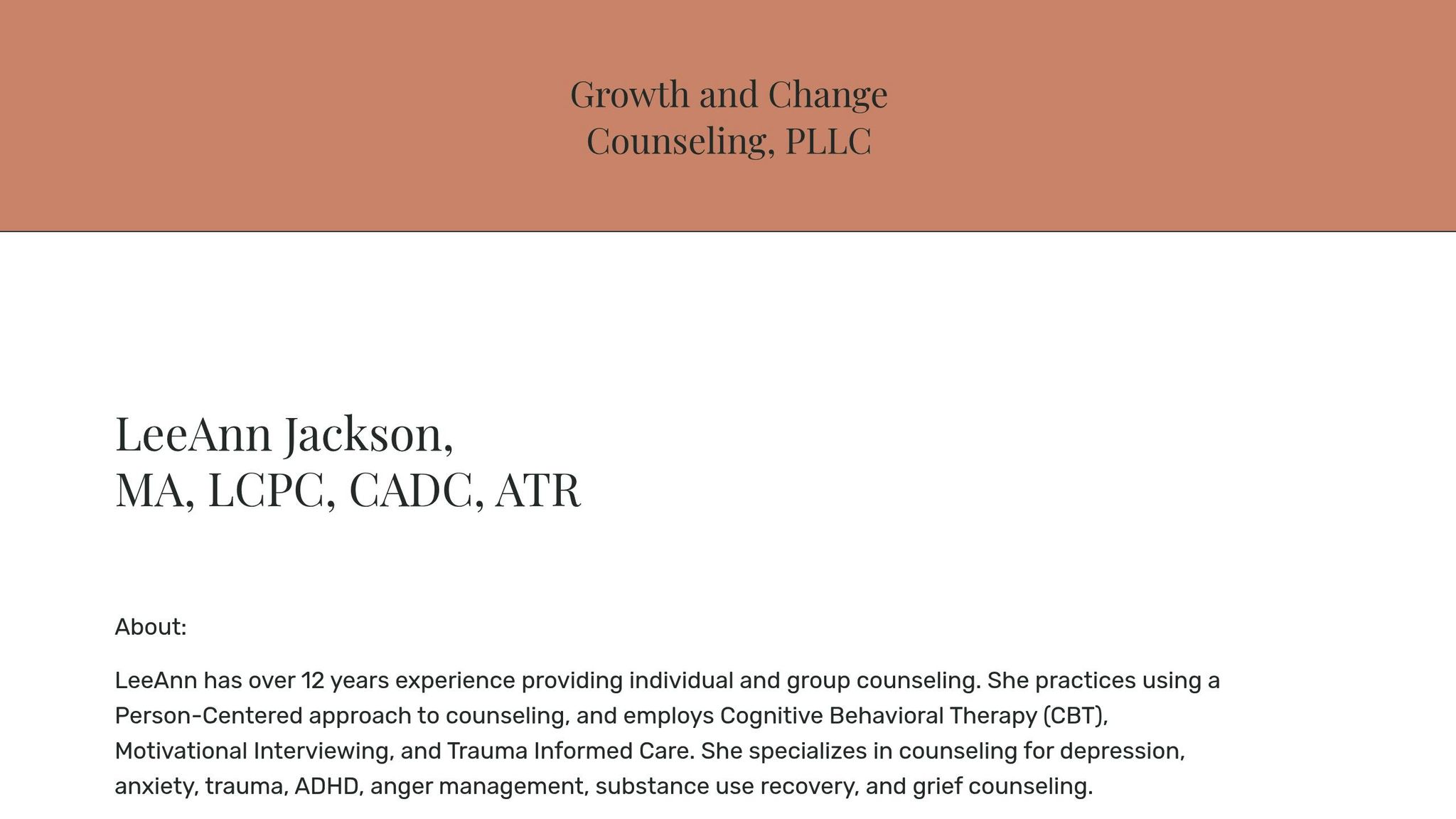
Growth and Change Counseling offers a range of services designed to meet the needs of families dealing with these intertwined challenges. Their approach centers on strengthening family connections through better communication and consistent parenting. For instance, their Marriage Rescue Institute provides a 12-week couples coaching program that equips partners with actionable tools they can start using right away.
In addition to couples counseling, the practice offers individual therapy to address mental health struggles that can affect both marriage and parenting. By supporting individual well-being, they aim to restore balance to the entire family.
Another key service is parent coaching, which helps parents develop consistent strategies for discipline and communication with their children. This is especially beneficial in situations where marital conflict has led to inconsistent parenting or when children show signs of distress. Parent coaching empowers parents to rebuild their authority while fostering stronger emotional bonds with their kids.
Growth and Change Counseling also recognizes the unique challenges faced by neurodiverse families. Whether navigating autism spectrum differences or ADHD, their therapists are skilled in addressing the communication and relational hurdles these families may encounter. This tailored approach ensures that all members of the family receive the understanding and support they need.
With locations in Campbell, San Jose, Los Angeles, and Roseville, as well as telehealth options available across California, Growth and Change Counseling makes support accessible to families no matter their location or schedule.
Complete Solutions for Relationship and Emotional Health
Effective counseling often uses a combination of approaches to address both emotional and relational health. At Growth and Change Counseling, techniques like Emotionally Focused Therapy (EFT) and Cognitive Behavioral Therapy (CBT) are employed to reframe negative thought patterns, improve relational skills, and tackle challenges like anxiety, addiction, and depression [8].
Each therapy plan is customized to fit the unique needs of the family. For example, a family dealing with a parent’s depression and ongoing conflicts might benefit from a combination of individual therapy to address mental health, couples counseling to improve communication, and parent coaching to establish consistent parenting practices.
Starting counseling early can make all the difference. Experts emphasize the importance of seeking help before conflicts escalate or children’s well-being is significantly impacted [3][5]. Families who begin therapy sooner often see quicker improvements and build resilience that helps them navigate future challenges.
Counseling also serves as a powerful model for children. When parents actively work on their relationships and mental health, they demonstrate that seeking help is a constructive way to face life’s difficulties. This teaches children valuable problem-solving and coping skills.
Research involving 3,955 families found that marital conflict often increases parenting stress and reduces parental warmth, which can negatively affect children’s socioemotional development [4]. Counseling helps reverse this cycle by equipping parents with tools to manage their emotions and maintain warmth, even during tough times.
The ultimate goal is to create a family environment where everyone can thrive. As marital tensions ease and individual mental health improves, children tend to adjust better [6], creating a ripple effect of healing and growth for the entire family.
Conclusion: Building Stronger Families
Building stronger families begins with acknowledging that marital conflict and mental health challenges don’t have to dictate your future. When parents embrace healthier ways to resolve conflicts and focus on their emotional well-being, children experience meaningful improvements in their overall adjustment over time [6]. The secret is to act early and intentionally, rather than letting problems grow unchecked.
The approaches highlighted earlier aren’t just quick fixes – they’re investments in your family’s emotional health. Consistent communication and a supportive atmosphere create a foundation where everyone can thrive. Even small changes in how conflicts are managed can lead to lasting benefits for your children’s development and the quality of family relationships. By showing that disagreements can be handled with respect and that emotions are natural and manageable, parents help their children build essential skills for future relationships [2][5].
As these changes take hold, professional guidance can play a crucial role in deepening and sustaining progress. Counseling services, like those offered at Growth and Change Counseling, provide tailored support to help families navigate these challenges. Their Marriage Rescue Institute offers an intensive 12-week coaching program for couples in crisis, while their specialized treatments address anxiety, depression, and trauma – issues that often accompany family struggles.
Families who commit to respectful conflict resolution and consistent efforts see long-term benefits. Research shows that these positive changes can lead to lasting improvements not just in the immediate future, but for years to come [2][6]. By breaking cycles of dysfunction now, you’re setting the stage for a healthier emotional future for your family.
Every family faces its own unique challenges, but with a combination of open dialogue, effective conflict resolution, and professional support, stronger connections and better well-being are within reach for those ready to put in the work.
FAQs
How can parents manage marital conflict and mental health challenges while ensuring a supportive environment for their children?
Dealing with marital conflicts while managing mental health challenges is no easy task – especially when you’re striving to create a stable, loving environment for your kids. It’s essential to focus on open communication, reach out for help when necessary, and work toward fostering a home where everyone feels emotionally secure.
Seeking professional support, like couples counseling or parent coaching, can make a big difference. These resources can help you tackle underlying problems and develop healthier ways to cope. Not only can this strengthen your relationship, but it can also have a lasting, positive effect on your children’s growth and overall well-being.
What are some signs in children that may suggest they’re struggling with family stress and need professional support?
Children respond to family stress in various ways, but certain behaviors may signal that professional support could be helpful. Pay attention to noticeable shifts, like withdrawing from loved ones, sudden mood changes, or increased irritability. Physical complaints, such as frequent headaches or stomachaches without a clear medical explanation, can also be telling.
Other signs to watch for include trouble focusing, a drop in school performance, changes in sleep or eating patterns, or expressing feelings of hopelessness. If these behaviors persist or intensify, reaching out to a mental health professional can offer valuable support and guidance to help your child manage these difficulties.
How can parents maintain effective parenting while dealing with marital conflict and mental health challenges?
Parenting through marital conflicts or mental health challenges can feel overwhelming, but maintaining stability and open communication can make a big difference. Start by creating a sense of security for your children. Stick to consistent routines, set clear boundaries, and make their emotional well-being a top priority.
At the same time, don’t overlook your own needs. Seeking professional help, like therapy or counseling, can provide valuable support as you work through personal struggles and relationship issues. Services like those offered by Growth and Change Counseling, including parent coaching and couples counseling, are designed to help families strengthen their relationships and build emotional resilience. Taking care of yourself isn’t just important – it’s essential for showing up as the parent your children need.
Related Blog Posts
- Parent Coaching Checklist: 10 Essential Skills
- Autism vs. Depression: Understanding Co-occurring Conditions
- How to Use Scripture for Conflict Resolution in Marriage
- Trauma and Depression in Marriage: Key Connections
