Feeling guilty about your child’s screen time? You’re not alone. Research shows 73% of parents experience guilt over screen use, but here’s the twist: it’s often the guilt – not the screens – that creates stress and impacts family dynamics. Instead of obsessing over minutes, focus on the big picture: Is your child sleeping well, staying active, and engaged in meaningful activities?
Key Takeaways:
- Guilt Cycle: Exhaustion leads to screen use, triggering guilt, which can harm parent-child relationships more than the screens themselves.
- Impact on Kids: Excessive screen time can disrupt sleep, learning, and mental health, especially when it replaces physical activity or face-to-face interactions.
- Quality Over Quantity: Educational content and co-viewing with parents make screen time more beneficial.
- Practical Tips: Set screen-free zones, lead by example, and replace screens with engaging activities like outdoor play or family games.
Screens don’t make you a bad parent. Finding balance and letting go of guilt can improve your family’s well-being. Dive in to learn how to manage screen time effectively without the stress.
Screen Time Statistics: Parental Guilt, Child Impact, and Health Risks
Screen Time Guilt? Here’s What Parents Need to Know
sbb-itb-596b85d
Why Parents Feel Guilty About Screen Time
Parental guilt often comes from a mismatch between the ideal of "perfect parenting" and the realities of everyday life. Many parents believe that good parenting means minimizing screen use. So, when screens are used to keep kids occupied while finishing dinner or responding to work emails, it can feel like a failure to meet those expectations [2]. This guilt deepens when screens are used for practical reasons – like managing fatigue or getting chores done – but are still seen as offering little value [2][5].
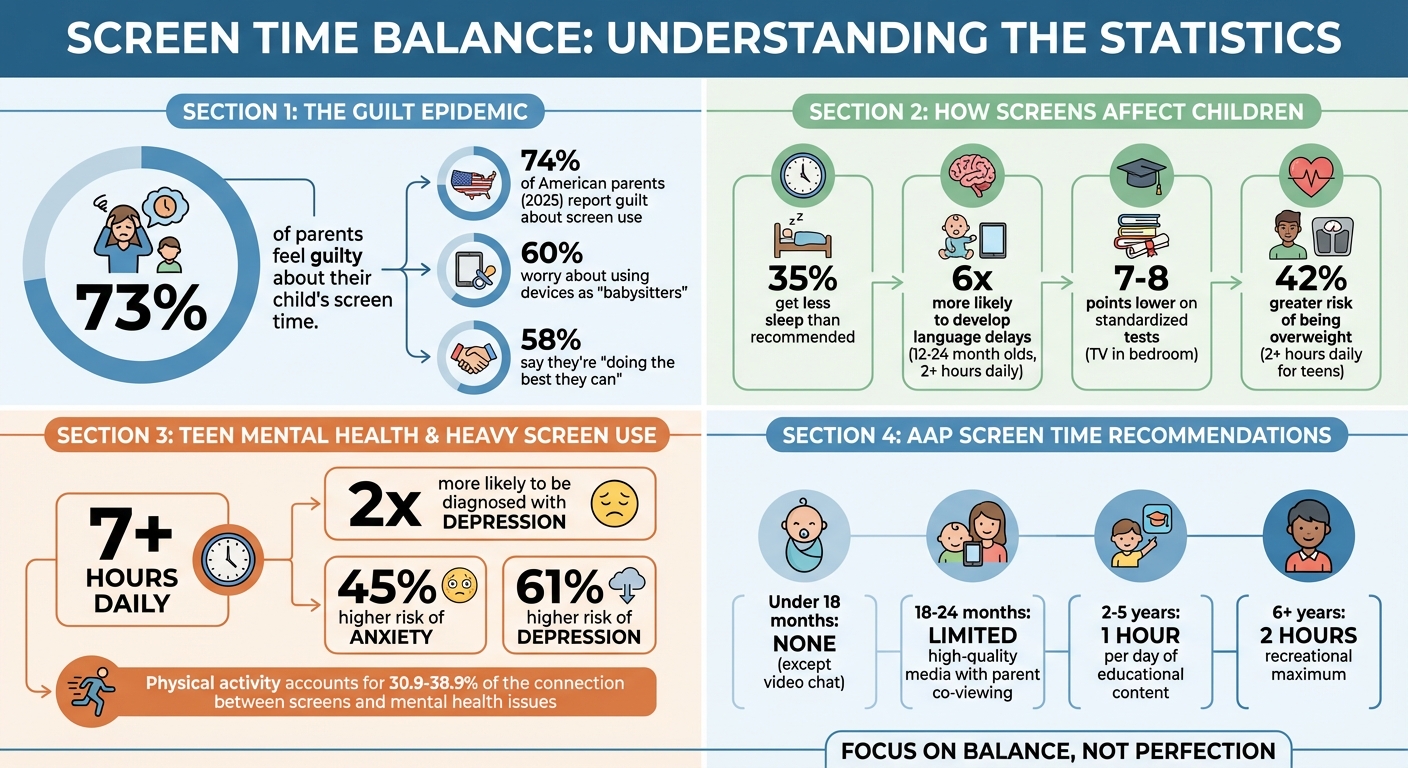
Studies show that 73% of parents feel guilty about their child’s screen time, with nearly half experiencing moderate to intense guilt [2]. By 2025, 74% of American parents reported guilt about screen use, with 60% specifically worried about using devices as "babysitters" or feeling they’re sacrificing quality family time [5]. Interestingly, the level of guilt doesn’t necessarily align with how much time kids actually spend on screens – parents often feel the same whether it’s 30 minutes or three hours [4][2].
This creates a frustrating cycle: exhaustion leads to screen use, which then triggers guilt. That guilt often results in overly strict "no-screen" rules that quickly fall apart in real-life situations, restarting the cycle and leaving parents stuck in self-blame [5]. Dr. Nathan Walter, Associate Professor of Media Psychology at Northwestern University, shared his personal experience:
"I felt enormous guilt – like I was failing as a parent. I also felt like a hypocrite because, as a communications professor, I was teaching classes on media effects" [4].
Adding to the stress, many parents worry that screen time is replacing "better" activities, such as outdoor play, face-to-face interactions, or creative hobbies [4][1]. However, research suggests that the guilt itself – more than the screens – is often the bigger strain on parent-child relationships [2][5].
How Screen Time Guilt Affects Parents Emotionally
The emotional toll of screen time guilt can be heavy, leading to feelings of failure, anxiety, and inadequacy. When screen use doesn’t align with personal parenting standards, it reinforces the idea that you’re falling short as a caregiver [2].
This guilt shows up in different ways. Some parents feel hypocritical when they set strict screen limits but relax them when life gets hectic. Others experience shame for using screens as "babysitters" to manage daily responsibilities like cooking or working [2][5]. Even when parents know they need that time, handing over a device can spark self-criticism.
What’s particularly challenging is that the guilt itself becomes a stressor. It can reduce a parent’s enjoyment of their relationship with their child [2][5]. Robin Nabi, Ph.D., Professor of Communication at the University of California, Santa Barbara, highlighted this surprising finding:
"Screen guilt was, in fact, increasing stress, and not the other way around" [2].
Ironically, the attempt to be a "better" parent by feeling guilty can backfire, creating a cycle of second-guessing that drains emotional energy and impacts family dynamics. Beyond internal struggles, social expectations often pile on additional guilt.
How Society and Social Pressure Increase Parental Guilt
Societal attitudes add another layer to screen time guilt. The dominant narrative around screens is overwhelmingly negative, painting them as distractions with little to no benefit – even when they’re used for education or relaxation [2].
This stigma is often tied to outdated guidelines that continue to influence public opinion. For instance, the recommendation of "one hour per day" for young children has led many parents to fixate on the clock instead of considering the quality of the content [3]. Rebecca Dore, Ph.D., Director of Research at the Crane Center for Early Childhood Research and Policy, explains this issue:
"Parents can become obsessed with thinking that 59 minutes of screen time is OK, and 61 minutes is harmful" [3].
High-profile advice, like calls to ban smartphones until a child reaches their teenage years, creates a rigid "acceptable or unacceptable" standard that doesn’t account for individual family needs [4]. This leaves many parents feeling judged, even though 58% say they’re simply "doing the best they can" to manage screen use [5].
Generational differences also play a role. Since today’s parents didn’t grow up with tablets and smartphones, there’s no clear roadmap for what "normal" screen use looks like [3]. This uncertainty breeds self-doubt, making it harder to trust personal judgment. Combined with societal pressures, expert opinions, and internalized ideals of "good parenting", guilt becomes almost unavoidable – even for parents who approach screen time thoughtfully. Recognizing these external influences is a key step toward finding a balanced approach to screen management.
How Screen Time Affects Children: What Research Shows
The conversation around screen time is more complex than the simple idea that "screens are bad." While overuse can lead to real problems, the effects depend on how much time kids spend on screens, what they’re watching, and whether an adult is around to help them process what they see.
It’s also important to consider the difference between short-term and long-term effects. For example, a well-designed educational app is very different from passive TV running in the background. Understanding these nuances can help parents make thoughtful decisions without unnecessary guilt. Context matters just as much as the amount of time spent on screens.
Short-Term vs. Long-Term Effects
Screens affect children differently depending on their age and stage of development. For very young kids – those under 30 months – there’s something called the "video deficit effect." Essentially, toddlers learn much less from videos than they do from real-life interactions, struggling to transfer what they see on a screen to the three-dimensional world around them [6][8].
In the short term, screens can also disrupt sleep and focus. Background TV, for example, reduces parent–child interaction and makes it harder for kids to concentrate during play [6][8]. Watching screens before bed can delay falling asleep, cause more nighttime waking, and shorten overall sleep due to blue light exposure and stimulating content [8]. This is concerning given that 35% of U.S. children already get less sleep than recommended, and screen habits are making the problem worse [9].
Long-term effects are more concerning with persistent heavy use. Studies show that early exposure to screens can lead to lower math skills and reduced participation in class by fourth grade. For every additional hour of daily TV viewing before age three, kids show declines in reading recognition and comprehension [7][8]. Having a TV in the bedroom also correlates with 7 to 8 points lower scores on standardized math and reading tests [8].
Other long-term risks include higher obesity rates, elevated blood pressure, and mental health challenges. For instance, teens who spend two or more hours daily on screens face a 42% greater risk of being overweight. Adolescents aged 14 to 17 who use screens for 7+ hours a day are more than twice as likely to be diagnosed with depression. Those using screens for four or more hours daily face a 45% higher risk of anxiety and a 61% higher risk of depression [6][8][9].
The American College of Pediatricians sums it up:
"Excessive exposure to screens… especially at young ages, is associated with lower academic performance, sleep disturbances, obesity, attention deficit, increased aggression, lower self-esteem, depression, and increased rates of high-risk behaviors" [8].
Interestingly, many of these issues stem from what screens replace – like physical activity, face-to-face interactions, and adequate sleep – rather than the screens themselves [9]. Physical activity, for instance, plays a key role in mitigating screen-related mental health problems, accounting for 30.9% to 38.9% of the connection [9]. Recognizing these patterns can help parents strike a balance that alleviates worry.
Why Content Type and Context Matter
Not all screen time is equal. Educational programs that teach numbers, letters, and shapes can improve school readiness compared to general entertainment or adult TV [6]. Interactive touch-screen devices, when paired with high-quality content and adult support, tend to have a more positive impact on development than passive options like television [6].
Dr. Michelle Yang, a resident at CHOC, highlights this:
"Quality versus quantity is what matters" [6].
Having an adult present during screen time makes a big difference. For children under five, parents who engage in conversations about the content help boost comprehension and language skills [6]. Dr. Yang explains:
"The studies overall have shown that there is definite improvement of learning when there’s a physical presence of adults in the room" [6].
Kids aged 12 to 24 months who spend two hours daily on screens are 6 times more likely to develop language delays [6]. This happens because heavy screen use reduces the time and quality of parent-child interactions, which are essential for building vocabulary and pronunciation skills [7].
Timing also matters. Weekend screen use often leads to worse outcomes than weekday use, as weekends are typically dominated by entertainment, while weekday usage is more likely to involve educational content [6]. Social media, while helpful for staying connected, can also create a "positivity bias", where kids see their peers as happier, potentially fueling feelings of inadequacy or depression [9].
These insights lay the groundwork for practical strategies to manage screen time effectively. By focusing on high-quality content and ensuring adult involvement, parents can navigate screen time in a way that benefits their children without unnecessary stress.
How to Manage Screen Time Without Feeling Overwhelmed
Managing screen time doesn’t have to feel like an uphill battle. Instead of obsessing over the exact number of minutes spent on screens, focus on whether screen use is disrupting essential activities. Dr. David Anderson, a clinical psychologist at the Child Mind Institute, explains:
"If the worry is that your child is having too much screen time, it’s not about how much time that actually is. It’s about what it infringes on" [10].
Take a step back and use a developmental checklist to assess your child’s overall well-being. Ask yourself: Is my child sleeping enough? Staying physically active? Keeping up with schoolwork? Spending time with friends and family? If the answers are yes, the amount of screen time might not be as problematic as it seems [10]. This approach shifts the focus from screen time itself to its impact on your child’s daily life.
Consistency beats perfection. Life happens – whether it’s a tight work deadline or a sick child, flexibility is essential. Interestingly, research shows that parental guilt over screen time often causes more harm than the screen use itself, adding unnecessary stress and straining parent-child relationships [2].
When implementing new rules, prepare for an "extinction burst" – a short period of pushback that can include tantrums or endless negotiations. This phase usually lasts one to two weeks. Stay firm and avoid engaging in debates about the rules during this time [10]. By holding the line, you’ll not only manage screen time effectively but also boost your confidence as a parent. The resistance will fade if you remain consistent.
How to Set and Enforce Screen Time Limits
Start with age-appropriate guidelines as a foundation. The American Academy of Pediatrics offers these recommendations:
| Age Group | Recommended Screen Time Limit | Key Guidance |
|---|---|---|
| Under 18 months | None (except video chat) | Focus on real-world human interaction [1]. |
| 18–24 months | Limited high-quality media | Parents should co-view and interact [1]. |
| 2–5 years | 1 hour per day | Choose interactive, educational content [1]. |
| 6+ years | 2 hours recreational max | Ensure screens don’t replace sleep, play, or social time [1]. |
Establish screen-free zones and times in your home. For example, keep devices out of bedrooms and turn them off at least an hour before bedtime to promote better sleep and family interaction [1].
For older kids and teens, try a collaborative approach. Allow them to test their own rules, such as doing homework while FaceTiming friends, and then review the impact on their grades or sleep after a trial period [10]. This gives them a sense of responsibility while providing clear evidence for adjustments if needed.
Use screen time as a reward system instead of a point of conflict. For example, offer extra screen time for completing chores or getting ready for school on time [10]. This shifts the conversation from restriction to positive reinforcement.
Activities to Replace Screen Time
Simply telling kids to stop using screens rarely works. Dr. Stephanie Lee, a clinical psychologist, emphasizes:
"When we tell kids not to do something, we almost always need to tell them what to be doing instead" [10].
Work with your child to create an "activity menu" – a list of non-screen activities they genuinely enjoy. This could include crafts, reading, playing outside, building projects, or cooking together. Write the list down and post it somewhere visible so they have immediate alternatives when boredom strikes [10][11].
Prioritize outdoor activities as a replacement for screen time. Physical activity can significantly reduce the mental health issues associated with excessive screen use, addressing up to 38.9% of the connection between screens and problems like anxiety or depression [9]. Simple activities like bike rides, backyard play, or trips to a park can make a big difference.
Plan ahead for situations where screens are the easy option. Bring screen-free distractions like books, small toys, or coloring supplies to restaurants or appointments [1]. This helps avoid the temptation to hand over a device.
Focus on activities that build family connections. Whether it’s playing board games, cooking together, or chatting during car rides, these moments strengthen bonds and provide the social interaction kids need for healthy development.
Using Technology to Support Learning and Growth
Not all screen time is created equal. The quality and context of digital experiences matter as much as the time spent. Co-viewing and co-playing can turn passive screen use into active learning, especially for younger children. Watch shows together, ask questions, and connect what they see to real-life experiences [1].
Be intentional with technology use. Plan specific times for educational apps or programs instead of using screens as a default for boredom or emotional comfort [3]. This distinction – purposeful versus reactive use – ensures screens serve a constructive role.
Video chatting is an exception to strict screen limits. Even for infants, it promotes social connection and supports language development through interactive conversations [1][10]. Regular video calls with relatives can provide meaningful engagement that justifies the screen time.
Choose content that encourages real-world engagement. Look for programs or apps that end with prompts for physical activities, creative projects, or household tasks [5]. This approach helps bridge the gap between digital and hands-on experiences.
Finally, lead by example. Kids are more likely to accept screen limits if parents model healthy habits by putting away their own devices during family time [1][10]. Actions speak louder than rules, and these strategies can help you feel more confident in managing screen time effectively.
How to Stop Feeling Guilty and Gain Confidence as a Parent
Guilt isn’t a sign of failure – it’s a signal that something might need tweaking. Robin Nabi, Ph.D., a Professor of Communication at the University of California, Santa Barbara, puts it this way:
"Although guilt may not be pleasant, if you take a moment to understand why you feel it, it can help guide you in creating a balanced mix of media, real-world engagement, and improved family relationships" [2].
For many parents, screen time is a major source of guilt. But here’s the thing: it’s often the guilt itself – not the screens – that creates the most stress. Let’s explore how to turn that guilt into a tool for positive change and build confidence in your parenting.
How to Use Guilt as Motivation for Change
When guilt arises, take a moment to reflect. Ask yourself, why do I feel this way? Is it because your child skipped homework or spent too much time indoors? Or is it because of an internalized belief that “good parents” don’t allow screens? These are two very different scenarios.
If your guilt stems from a real concern – like your child being inactive or struggling academically – consider it a cue to adjust your family’s routines. Maybe you can introduce screen-free zones during homework time or plan outdoor activities for the weekend. On the other hand, if your guilt is fueled by societal expectations or unattainable standards, acknowledge it for what it is and let it go.
Interestingly, research shows that the actual amount of screen time has little connection to parental guilt or stress [2]. By treating guilt as a chance for self-reflection rather than self-criticism, you can make thoughtful changes that improve your family’s balance without carrying unnecessary emotional weight. Once you’ve pinpointed the root cause of your guilt, it’s important to shift your focus to self-compassion.
How to Be Kinder to Yourself as a Parent
Stop obsessing over every single minute. Rebecca Dore, Ph.D., Director of Research at the Crane Center, explains:
"Parents can become obsessed with thinking that 59 minutes of screen time is OK, and 61 minutes is harmful" [3].
This kind of perfectionism only fuels the guilt cycle and adds unnecessary stress. Instead, ask yourself whether the screen time serves a purpose. Watching an educational show together or video chatting with family is a far cry from handing over a tablet just to calm a tantrum when you’re at your wit’s end.
It’s okay to be flexible. Life happens – a sick child, a looming work deadline, or just a tough day can all justify relaxing the rules temporarily. The goal isn’t perfection; it’s finding a balance between digital and offline experiences [2]. By focusing on intentional choices rather than impossible standards, you’ll feel more confident in your parenting. But sometimes, challenges go beyond what you can handle on your own.
When to Get Help with Parenting Challenges
If your struggles extend beyond screen time, seeking help is a proactive step – not a failure. Consider professional guidance if screen use is consistently replacing physical activity, causing behavioral issues, or if you’re worried about developmental delays like speech or motor skills [1]. A pediatrician can help identify any underlying concerns.
Parent coaching or therapy can also offer tailored strategies for managing family dynamics and reducing stress. Growth and Change Counseling (https://johnmarkkane.com) provides parent coaching, individual therapy, and family support across California, both in-person and online. Their practical, solutions-focused approach helps families address their unique challenges while building confidence and easing the emotional weight of parenting guilt.
How to Build Healthy Family Habits Around Screen Use
Creating healthy screen habits starts with building a family dynamic where everyone is on the same page. When screen time rules are a shared effort, it not only reduces parental stress but also encourages cooperation from kids. A united approach makes sticking to boundaries feel less like a chore and more like a team goal.
How to Create Screen Time Rules with Your Children
The best screen time rules come from working together. Delaney Ruston, MD, the filmmaker behind Screenagers, highlights the importance of collaboration:
"The more you make this feel like a team effort, the better. I keep reminding myself that we are all in this together." [12]
Start these discussions casually – maybe during a walk or snack time – rather than sitting everyone down for a formal talk. Even engaging in a fun activity, like playing a video game together, can set a relaxed tone before diving into the topic of boundaries.
Use a family checklist to ensure screen use doesn’t disrupt essentials like sleep, exercise, or family time. For teenagers, consider a trial period for rules they propose, such as managing homework while staying connected with friends. After two weeks, review the results together by looking at things like sleep patterns or grades. This process not only teaches responsibility and decision-making but also gives teens a sense of ownership over the rules.
Be prepared for some resistance, especially in the first week or two. Kids might push back with tantrums or repeated requests – this is often referred to as an "extinction burst." Stay consistent during this phase, and revisit your family agreement regularly – every three months, before school breaks, or when introducing new devices. Rules should adapt as family needs and circumstances change.
| Age Group | Focus of Rule | Example |
|---|---|---|
| Under 8 | Basic health and safety | Devices are used only in shared spaces with an adult present |
| Tweens | Privacy and etiquette | No devices at the dinner table or during family activities |
| Teens | Critical thinking and ethics | Always get consent before sharing photos of others online |
Once these rules are in place, the next step is to lead by example.
How to Model Healthy Screen Habits for Your Children
After setting clear rules, your own screen use becomes a key teaching tool. Kids are always watching, and your behavior can either reinforce or undermine the family’s screen habits. Psychologist and author Jean Twenge offers this straightforward advice:
"If you don’t want your teens to be looking at their phones at the dinner table, you should not be taking out your phone at the dinner table either." [13]
Modeling healthy habits goes beyond limiting your own screen time. It’s about being intentional and open about your use. For example, if you’re checking your phone, explain why – like checking the weather or responding to an important message – and then put it away to focus on family time. This helps avoid behaviors like “phubbing” (phone snubbing) and teaches kids that not all screen use is idle scrolling.
Physical boundaries also help reinforce these habits. Set up a family charging station in a shared space, like the kitchen, where everyone can leave their devices overnight. Designate screen-free zones, such as bedrooms or the dinner table, to prioritize face-to-face interaction and quality sleep.
When you do use screens, show your kids how to engage actively rather than passively. Watch shows together and talk about them, or play educational games as a family. Even the way you handle notifications or work emails sends a message – make those moments count. By demonstrating thoughtful screen use, you help your children understand how to balance technology with real-life connections.
Conclusion
Managing screen time isn’t about striving for perfection – it’s about making progress. Research shows that 73% of parents feel guilt over their child’s screen use, but it’s often the guilt, not the screen time itself, that strains family relationships [2]. By aiming for balance rather than rigid rules, you can create a home where technology and meaningful connections coexist.
Instead of letting guilt weigh you down, use it as a signal for reflection. Feeling uneasy about screen time might mean it’s time to tweak your family’s boundaries or ease up on your own expectations. Not all screen time is created equal – interactive, educational activities shared with a parent can foster learning and connection, while passive scrolling, especially before bed, can interfere with sleep and development [1][2].
Small, intentional changes can have a big impact. Practices like screen-free meals, keeping devices out of bedrooms, and modeling healthy habits help safeguard essentials like sleep, face-to-face communication, and physical activity. These steps don’t require a total lifestyle overhaul – they simply create space for what matters most while allowing technology to add value to your family’s life.
If screen time struggles or guilt start to feel overwhelming, consider reaching out for support. Growth and Change Counseling offers parent coaching and family therapy to help you find balance, reduce stress, and build healthier habits. Services are available in Campbell, CA, San Jose, CA, Los Angeles, CA, Roseville, CA, and through telehealth across California.
Allowing screens doesn’t make you a bad parent – it makes you a parent navigating today’s challenges. Focus on progress, show yourself compassion, and adapt as your family’s needs evolve.
FAQs
How do I know if screen time is actually harming my child?
It’s possible to tell if screen time is impacting your child negatively by observing certain behaviors. Look for signs like trouble staying focused during offline activities, pulling away from social interactions, or shifts in behavior, such as increased aggression or struggling to process emotions. Other red flags include an obsessive need to use screens, difficulty setting limits on screen time, or signs of distress when devices aren’t available. These patterns could indicate that screen use is affecting your child’s overall well-being.
What’s the best way to cut back on screens without constant fights?
The best way to cut down on screen time without endless arguments is by establishing clear, consistent, and realistic rules that fit your family’s needs. Get your kids involved in setting these rules and take the time to explain why they’re important – this helps them feel included and more likely to cooperate. Aim for balanced daily routines, use positive reinforcement to encourage good habits, and make transitions predictable. Avoid sudden or overly strict limits, as these can lead to unnecessary power struggles.
When should I talk to a pediatrician or therapist about screen time?
If screen time is impacting your child’s development, behavior, or sleep, or if challenges continue even after you’ve set boundaries, it might be time to consult a pediatrician or therapist. Professional advice can also be valuable if managing screen time feels overwhelming or leaves you feeling stressed or guilty. Experts emphasize the importance of seeking support in these situations to protect both your child’s well-being and your own peace of mind.
Related Blog Posts
- Screen Time vs. Family Time: Finding Balance
- Screen Time vs. Family Time
- Understanding Digital Burnout in Neurodiverse Kids
- Parenting Strategies for Remote Work and Media Supervision
