Infidelity can devastate a relationship, creating emotional pain and a deep sense of betrayal. But rebuilding trust is possible with consistent effort, open communication, and professional support. Here’s what you need to know:
- Emotional Impact: The betrayed partner often experiences trauma-like symptoms, while the unfaithful partner struggles with guilt and shame. Both must navigate their emotions to move forward.
- Key Steps for Healing: The unfaithful partner must take responsibility, end the affair, and commit to transparency. The betrayed partner should focus on self-care and gradually work toward forgiveness.
- Communication is Critical: Honest, daily check-ins and structured conversations help rebuild connection and understanding.
- Professional Counseling: Therapies like the Gottman Method or Emotionally Focused Therapy provide tools to repair relationships and address emotional wounds.
- Long-Term Strategies: Establishing boundaries, practicing patience, and celebrating progress are essential for maintaining trust.
Recovering from infidelity takes time – often over a year – and requires commitment from both partners. With the right approach and support, couples can create a stronger, more open relationship.
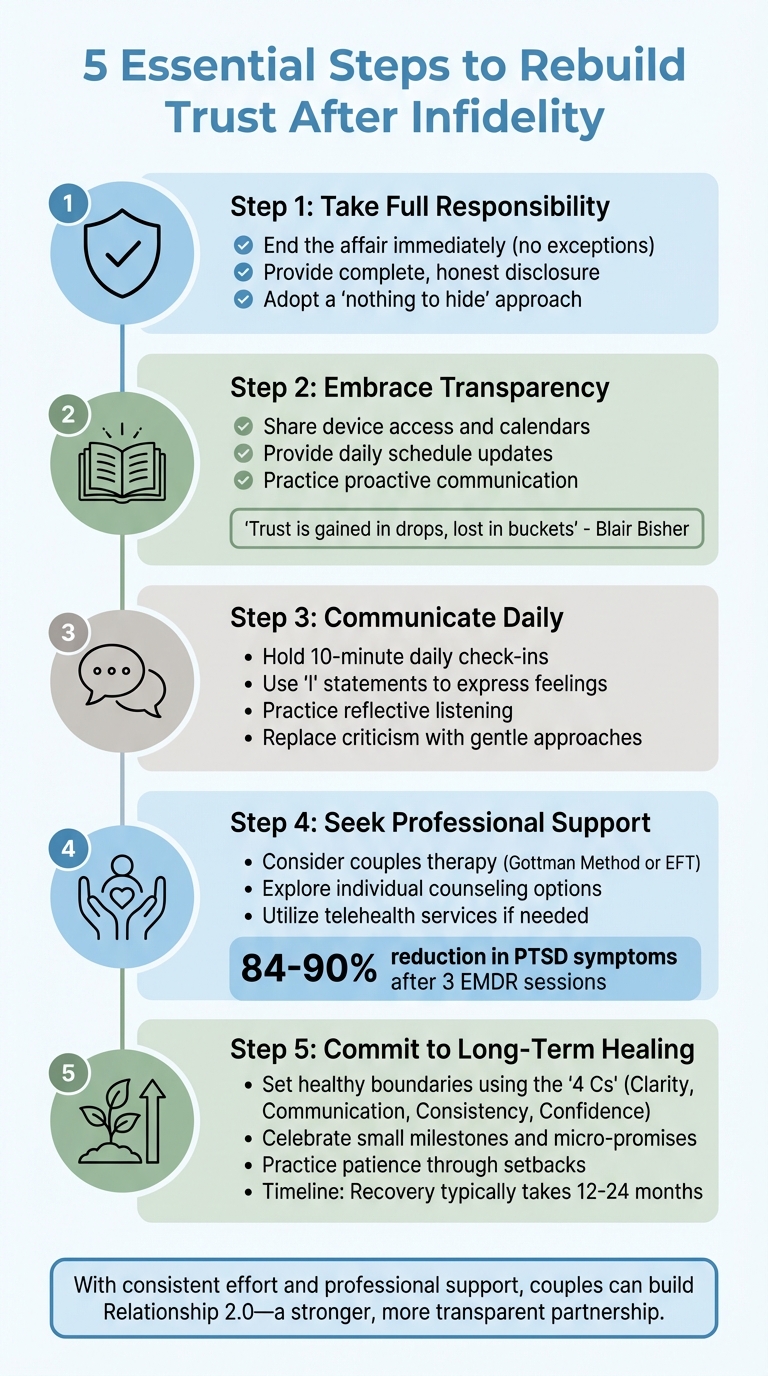
5 Essential Steps to Rebuild Trust After Infidelity
425: Rebuilding Trust After Betrayal – What It Really Takes with Geoff Steurer
How Infidelity Affects Both Partners Emotionally
Infidelity impacts both partners deeply, though their emotional experiences differ significantly. Recognizing these differences is crucial for understanding how to begin the healing process. Let’s explore what each partner goes through and how these experiences reshape the dynamics of the relationship.
What the Betrayed Partner Experiences
For the betrayed partner, infidelity often feels like a form of emotional trauma. According to research published in Stress & Health, many individuals who have been cheated on report symptoms similar to post-traumatic stress disorder (PTSD), including heightened anxiety, emotional instability, and disruptions to their overall mental health [2]. The brain and body react as though facing a direct threat, leading to feelings of panic, irritability, and a constant state of hyper-awareness.
These PTSD-like symptoms might include obsessive behaviors like checking phones or social media, vivid flashbacks, nightmares, and difficulty sleeping. Many find themselves stuck in a cycle of replaying events, questioning past moments, and struggling to make sense of what happened. Physical symptoms such as changes in appetite and sleep patterns often accompany emotional ones, including waves of anger, sadness, numbness, and humiliation [2].
Infidelity also takes a heavy toll on self-esteem. Betrayed partners often feel deep shame and question their worth, wondering if they were "not enough." As Michele Weiner-Davis, MSW, puts it:
"The lies, the deceit, the betrayal, all go a long way to destroy trust and hope" [1].
Recovering from this emotional upheaval is a long process, often spanning 12 to 24 months [9]. During this time, many betrayed partners withdraw from friends and family, either due to exhaustion or fear of being judged.
What the Unfaithful Partner Goes Through
The unfaithful partner isn’t immune to emotional turmoil. Mac Stanley Cazeau, LMHC, explains:
"For the one who strayed, there’s often a heavy mix of guilt, shame, and regret, wondering how you let it get to this point and if you’ll ever forgive yourself, let alone earn back your partner’s trust" [10].
This internal struggle often stems from cognitive dissonance – the tension between their actions and their self-perception [10][4]. Many wrestle with the fear that their partner may never trust them again, no matter how much effort they put into rebuilding the relationship [1][10].
Feelings of shame and guilt can become major obstacles to moving forward. These emotions often lead to self-punishment, which makes it harder to engage in meaningful repair efforts [2]. On top of this, unfaithful partners may feel overwhelmed by their partner’s intense emotional reactions, leaving them unsure of how to offer support while managing their own remorse.
How Infidelity Changes the Relationship
The emotional fallout from infidelity doesn’t just affect individuals – it fundamentally alters the relationship itself. Trust, once taken for granted, must now be rebuilt through consistent, visible actions. Dr. Paul Peluso compares this to a warning light on a car’s dashboard:
"Affairs can be viewed as the warning light that flashes on a car’s dashboard; it indicates the presence of a leak or larger problem that needs attention" [5].
Communication often takes a hit, with couples falling into negative patterns researchers call the "Four Horsemen": criticism, contempt, defensiveness, and stonewalling. Studies show that couples displaying these behaviors are more likely to divorce, on average, within 5.6 years of marriage [10][5].
Emotional and physical intimacy also become fraught with challenges. Many couples find they need to start over, building what therapists refer to as "Marriage 2.0" – a relationship with new boundaries, rules, and levels of transparency [10][4]. Even years later, small triggers like a text notification or an anniversary of the affair can cause emotional setbacks, as the journey to healing is rarely straightforward [2][10].
Steps to Rebuild Trust Together
Rebuilding trust after infidelity is no small feat – it takes consistent effort from both partners. Each person has a role to play: the unfaithful partner must show accountability through honest actions and empathy, while the betrayed partner focuses on processing their pain in a healthy way. Together, they need to create new ways of communicating that replace old, damaging patterns.
Taking Responsibility: What the Unfaithful Partner Must Do
The unfaithful partner has an essential responsibility in kickstarting the healing process. First and foremost, the affair must end immediately – no exceptions. Then comes the hard but necessary step of full disclosure. This means sharing a complete and honest account of what happened, without sugarcoating, justifying, or leaving out details. While this conversation is undoubtedly painful, withholding information only prolongs uncertainty and delays recovery.
Once the truth is out, transparency becomes the cornerstone of rebuilding trust. This means adopting a "nothing to hide" approach, as sex addiction therapist Blair Bisher puts it:
"Trust is gained in drops, lost in buckets." [7]
Equally critical is listening with empathy. When your partner expresses their pain, anger, or fear, respond with validation rather than defensiveness. View these moments not as attacks but as opportunities to show your commitment to earning back trust. Forget grand gestures – they can come off as manipulative or short-lived. Instead, focus on small, consistent actions that demonstrate reliability over time.
While the unfaithful partner works to rebuild trust, the betrayed partner must begin their own healing journey.
Processing Pain: How the Betrayed Partner Can Heal
For the betrayed partner, healing starts with acknowledging the depth of the emotional wound. Infidelity often triggers intense reactions – sleepless nights, obsessive thoughts, waves of anger – that can feel overwhelming. These responses are normal, even if they’re hard to manage. Using "I" statements, like "I feel deeply hurt", can help express emotions in a constructive way.
It’s natural to want answers, but repeatedly revisiting every detail of the affair can reopen wounds instead of closing them. Setting boundaries around these discussions – such as agreeing on specific times to talk about the affair – can help create balance. Outside of these moments, prioritize reconnecting in ways that don’t center on the betrayal.
Self-compassion is key. Treat yourself with the same care you’d offer a close friend. Activities like yoga, meditation, journaling, or even a simple walk can help ground you and restore a sense of calm. Remember, healing isn’t just about the relationship – it’s also about reclaiming your sense of self. Infidelity can deeply impact self-esteem, so rebuilding your identity independent of your partner’s actions is crucial for long-term recovery.
Building Transparency and Open Communication
As both partners work on their individual responsibilities, open and honest communication becomes the glue that holds the process together. Transparency doesn’t mean control or constant surveillance; it’s about creating safety through openness. The unfaithful partner should proactively share information, whether it’s access to devices, shared calendars, or details about their day. This shift from secrecy to honesty helps lay the foundation for trust.
Daily check-ins can be a game-changer. Setting aside just 10 minutes a day for a "State of the Union" conversation gives both partners a chance to share feelings and experiences without diving into problem-solving mode.
The Gottman Method offers a helpful framework for rebuilding trust: Atone, Attune, Attach. In the Atone phase, the unfaithful partner takes full responsibility for their actions. During Attune, the couple works on rebuilding emotional intimacy by understanding each other’s needs. Finally, in Attach, they move toward a secure, lasting connection.
To make this work, replace destructive habits like criticism, defensiveness, and stonewalling with healthier alternatives. Use gentle "I" statements, take responsibility for your actions, show appreciation, and practice self-soothing when emotions run high. Reflective listening – repeating back what your partner has said before responding – can help ensure both sides feel heard. And don’t forget to carve out time for activities that remind you why you fell in love in the first place. Whether it’s a date night or a shared hobby, these moments can help you reconnect with the friendship and joy that form the foundation of your relationship.
sbb-itb-596b85d
How Professional Counseling Helps Rebuild Trust
Professional counseling offers a neutral and structured environment to tackle the pain of betrayal and work toward rebuilding trust. A therapist serves as an impartial guide, helping couples uncover the root causes of betrayal and recognize harmful interaction patterns. These strategies not only promote healing but also align with the practical steps mentioned earlier [2][8].
Couples Counseling for Trust Recovery
Therapy provides a space for open dialogue and introduces evidence-based approaches to healing. Models like the Gottman Method and Emotionally Focused Therapy give couples practical tools to address accountability, rebuild intimacy, and create a sense of security in their relationship. These structured frameworks play a key role in restoring trust [16][17].
Studies reveal that couples who engage in structured therapy often experience greater satisfaction in their relationship after infidelity compared to those attempting to heal on their own [13]. Infidelity can trigger neurobiological trauma, which trauma-informed therapists are equipped to address [2]. For instance, research shows that 84%–90% of individuals dealing with single-incident trauma no longer meet the criteria for PTSD after just three 90-minute EMDR sessions [14].
In therapy, couples also learn practical communication strategies to replace harmful habits. For example, instead of criticism, they practice gentle approaches; instead of defensiveness, they learn to take responsibility; instead of contempt, they focus on building appreciation; and instead of stonewalling, they develop self-soothing techniques to manage heightened emotions [5]. Therapists may also introduce transparency protocols, such as scheduled "Truth Time" sessions or sharing daily plans, to help eliminate doubt and establish a foundation of reliability.
Growth and Change Counseling Services
For couples navigating the aftermath of infidelity, specialized services like Growth and Change Counseling offer targeted support. Their Marriage Rescue Institute is a 12-week coaching program designed for couples in crisis, providing the structure, accountability, and tools needed to rebuild relationships that might feel irreparable.
The practice offers both joint and individual counseling sessions. Individual therapy allows the betrayed partner to process their trauma independently, while the unfaithful partner can explore their motivations without the pressure of joint sessions [13][15]. Growth and Change Counseling provides in-person and telehealth options in areas like Campbell, San Jose, Los Angeles, and Roseville, with competitive pricing and sliding-scale payment options available.
Telehealth Therapy Options
For those who find in-person visits difficult or have busy schedules, telehealth therapy provides a convenient alternative. Growth and Change Counseling offers online sessions across California, ensuring access to professional support no matter your location. These virtual sessions use the same evidence-based methods and provide the flexibility to seek help from the comfort of home [2][3][8]. This accessibility can often be the deciding factor in giving your relationship a genuine chance to heal.
Long-Term Strategies for Maintaining Trust
Rebuilding trust is a journey that requires consistent actions and a commitment to growth. Research shows that strong relationships can increase lifespan by as much as 50% [18]. The strategies below build on earlier steps to ensure that recovery continues well beyond the initial crisis.
Setting Healthy Boundaries
Healthy boundaries are essential for protecting relationships while respecting individual needs. A helpful approach is the "4 Cs" framework: Clarity, Communication, Consistency, and Confidence [18]. For example, after an incident of infidelity, temporary measures like digital transparency can help ease anxiety and rebuild trust.
"It is an act of love to allow our [partner] to reap the effects of [their] selfishness or irresponsibility." – Dr. Henry Cloud, Psychologist [19]
Clear communication plays a crucial role. Using "I" statements – such as "I feel anxious when…" instead of "You always…" – helps express needs without triggering defensiveness [18]. On the other hand, behaviors like stonewalling for extended periods (18–24 months) can cause emotional harm and may require professional intervention [20].
Recognizing Progress and Celebrating Milestones
Trust is rebuilt through small, consistent actions rather than one-time grand gestures. Tracking "micro-promises", such as sending a check-in text during the day or following through on plans, demonstrates reliability over time [2][3]. Dr. John Gottman emphasizes:
"The wounded partner will feel the stirrings of new faith only after multiple proofs of trustworthiness." [11]
Regular "State of the Relationship" conversations – perhaps held monthly – can help couples reflect on their progress, set new goals, and adjust their approach to healing [2]. Working toward shared goals, like saving for a vacation or learning a new skill together, can also create opportunities to celebrate joint achievements [2].
Adding a simple daily gratitude practice, where each partner shares one thing they appreciate about the other, is another way to maintain a positive connection.
Practicing Patience and Understanding
Healing from infidelity is rarely a straightforward process. It often takes a year or more of consistent effort, and setbacks are a normal part of the journey – not a sign of failure [2][12]. The betrayed partner may continue to experience trauma responses, such as flashbacks or hypervigilance, for months or even years after the event [2][8]. With approximately 40% of couples struggling to rebuild trust after infidelity, patience becomes a vital part of the process [6].
As Stefanie Kuhn, LMFT, explains:
"Trust is built on consistent, reliable actions that show you can count on your partner." [3]
Shared rituals, like weekly date nights or morning coffee together, can reinforce commitment [1][6].
Both partners should practice self-compassion. The betrayed partner needs grace as they heal, while the unfaithful partner must move past feelings of shame to focus on repairing the relationship [2][6]. Reflective listening – such as paraphrasing what the other person has shared – can foster understanding and ensure both partners feel heard. Additionally, the unfaithful partner can take proactive steps, like sharing daily schedules and activities, to create a routine of transparency rather than relying on reactive measures [2].
Ultimately, protecting each other’s vulnerabilities is key to reinforcing mutual healing and rebuilding trust [2].
Conclusion: Moving Forward with Hope and Commitment
Rebuilding trust after infidelity isn’t about going back to the way things were – it’s about creating what some experts call "Relationship 2.0." This new version of the relationship is built on a stronger foundation of transparency, accountability, and a deeper emotional bond [4]. Trust isn’t restored overnight; it’s built through consistent, reliable actions [1]. For the unfaithful partner, this means demonstrating accountability through daily behaviors like openly sharing schedules, maintaining honest communication, and following through on promises. For the betrayed partner, it means gradually allowing themselves to trust again. Together, these efforts lay the groundwork for a more resilient partnership.
Professional counseling can be a game-changer in this process. Trained therapists using evidence-based techniques can help couples navigate tough conversations without causing further harm [2]. For those in need, Growth and Change Counseling offers specialized support through The Marriage Rescue Institute. This intensive 12-week program is available in Campbell, San Jose, Los Angeles, and Roseville, CA, as well as through telehealth services across California.
It’s important to remember that recovery is a long journey, often taking a year or more, and setbacks are part of the process [2]. Both partners must practice self-compassion. The betrayed partner needs to give themselves grace as they heal, while the unfaithful partner must work through feelings of shame to focus on repairing the relationship. Simple daily habits, like 10-minute emotional check-ins or regular dates that focus on positive connection, can make a big difference in fostering healing.
Moving forward requires a shared commitment to protect each other’s vulnerabilities and to stand together against external pressures [2]. With patience, professional guidance, and consistent effort, couples can turn betrayal into an opportunity to build a deeper, more enduring connection.
Proven Steps to Rebuild Trust with Growth and Change Counseling
How can professional counseling help couples rebuild trust after infidelity?
Professional counseling offers a safe and structured space for couples to address the difficult process of rebuilding trust after infidelity. A trained therapist facilitates open communication, helping both partners express their emotions and work through the pain of betrayal in a constructive and supportive manner.
Therapy sessions often focus on creating a recovery plan tailored to the couple’s unique situation. This plan may include improving communication, fostering transparency, and establishing boundaries to rebuild emotional security. Therapists also introduce exercises designed to promote honesty, accountability, and forgiveness, gradually helping couples reconnect and restore intimacy. With consistent guidance and effort, couples can work toward rebuilding their relationship on a stronger foundation of trust and understanding.
What emotional challenges do both partners face after infidelity?
Infidelity often stirs up a whirlwind of emotions for both partners involved. For the betrayed partner, feelings of anger, sadness, confusion, and insecurity can be overwhelming. There’s often a profound sense of loss and mistrust, which may lead to intrusive thoughts and reactions that resemble grief. These emotional struggles can make it incredibly difficult to find a sense of balance again.
On the other hand, the unfaithful partner may grapple with guilt, shame, and fear of losing the relationship altogether. They might also face anxiety, self-doubt, and emotional overload as they come to terms with the impact of their choices. Both individuals can feel trapped in cycles of pain, making it hard to move forward without support.
To help couples navigate these challenges, Growth and Change Counseling provides specialized services, including their 12-week Marriage Rescue Institute program. This program is designed to guide couples in addressing the aftermath of infidelity and working together to rebuild trust.
How do healthy boundaries support healing after infidelity?
Healthy boundaries play a key role in rebuilding trust after infidelity. They establish a clear framework for both partners, reducing uncertainty and creating a sense of safety. When the unfaithful partner commits to being open – like answering questions honestly, sharing their whereabouts, or avoiding contact with former partners – it builds clarity and consistency, which are crucial for restoring trust.
These boundaries also safeguard emotional well-being by fostering a space where both partners can share their feelings without fear of judgment or conflict. This kind of open communication allows the hurt partner to express their needs, while the unfaithful partner demonstrates empathy and accountability. Over time, respecting these boundaries shows genuine commitment and gradually rebuilds confidence in the relationship.
If setting or maintaining boundaries feels overwhelming, seeking professional support can help. Growth and Change Counseling, through The Marriage Rescue Institute, offers structured couples coaching to guide partners toward healthier patterns and deeper emotional connections.
Related Blog Posts
- Building Trust After Relapse in Marriage
- Restoring Trust in Marriage After Addiction
- How Betrayal Trauma Impacts Partners of Addicts
- Healing Intimacy After Sexual Addiction: Christian Insights
