When couples deal with trauma and neurodiversity, therapy often falls short without addressing both. Trauma stems from distressing events and can improve with treatment. Neurodiversity, like autism or ADHD, reflects natural brain differences and isn’t something to "fix." Misunderstanding these distinctions can harm relationships, especially when trauma amplifies neurodivergent traits or vice versa.
Key takeaways:
- Trauma involves emotional/physical responses to distressing events. It’s treatable and focuses on healing.
- Neurodiversity includes lifelong conditions like autism or ADHD, requiring support and accommodations, not cures.
- Mislabeling neurodivergent traits as trauma symptoms can lead to harmful therapy outcomes.
- Effective counseling combines trauma-informed care (safety, healing) with neurodiversity-affirming care (validation, accommodations).
Couples facing both challenges need therapy tailored to their unique dynamics. This means recognizing trauma’s impact while respecting neurodivergent ways of thinking and communicating. When done right, this approach helps couples break cycles of misunderstanding and build stronger connections.
Integrating Specialized Care at Growth and Change Counseling
Core Differences: Trauma vs. Neurodiversity
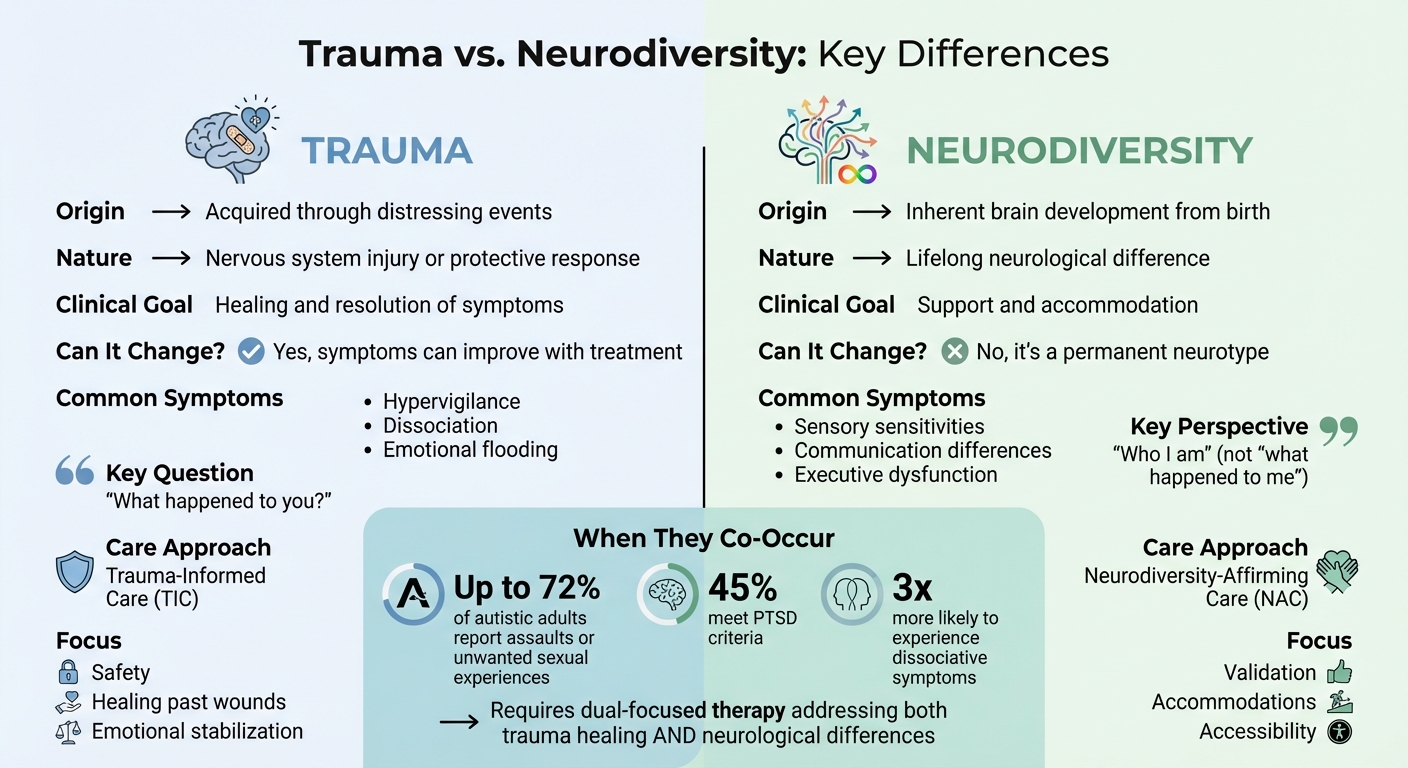
Trauma vs Neurodiversity: Key Differences in Counseling Approaches
What is Trauma?
Trauma refers to an emotional and physical response triggered by distressing events, which can disrupt how the nervous system functions. Unlike traits someone is born with, trauma is an acquired injury. When faced with a traumatic event, the nervous system adapts to help the individual survive the threat. This often results in symptoms like hypervigilance, emotional flooding, dissociation, and disorganization [6].
One important aspect of trauma is that its symptoms can change or resolve over time, especially with therapy. For example, someone who becomes hypervigilant after a car accident may gradually feel safer as therapy helps restore their sense of security.
What is Neurodiversity?
Neurodiversity refers to the natural variations in how human brains function, encompassing conditions like autism, ADHD, and dyslexia. These are not problems to be fixed or cured but rather inherent, lifelong differences in how individuals think, communicate, and process sensory information [5][7].
Dr. Thomas Armstrong captures this perspective:
"The concept of neurodiversity provides a paradigm shift in how we think about mental functioning. Instead of regarding large portions of the American public as suffering from deficit, disease, or dysfunction in their mental processing, neurodiversity suggests that we instead speak about differences in cognitive functioning" [5].
Globally, around 97% of the population is considered neurotypical [3], which means that neurodivergent individuals often navigate environments not designed for their needs. Unlike trauma, which stems from external events, neurodivergence is typically experienced as "who I am" rather than "what happened to me" [8]. This distinction is key to understanding how the two interact.
When Trauma and Neurodiversity Occur Together
When trauma and neurodiversity overlap, the challenges can become more complex. Interventions need to address the specific features of both. Research shows that many autistic adults experience trauma at higher rates, with up to 72% reporting assaults or unwanted sexual experiences and 45% meeting PTSD criteria. Additionally, autistic individuals are three times more likely to experience dissociative symptoms compared to neurotypical individuals [6].
This overlap can make diagnosis and treatment tricky. Trauma may intensify existing neurodivergent traits or blur the lines between the two, making it harder to differentiate symptoms. For instance, sensory sensitivities common in autism can become even more heightened after a traumatic event.
As KD Holmes, LPC, explains:
"The overlap between trauma symptoms and neurodivergent traits often makes therapeutic progress more nuanced, requiring us to become not only trauma-informed but also neurodivergent-informed" [6].
| Feature | Trauma | Neurodiversity |
|---|---|---|
| Origin | Acquired through distressing events | Inherent brain development from birth |
| Nature | Nervous system injury or protective response | Lifelong neurological difference |
| Clinical Goal | Healing and resolution of symptoms | Support and accommodation |
| Can It Change? | Yes, symptoms can improve with treatment | No, it’s a permanent neurotype |
| Common Symptoms | Hypervigilance, dissociation, emotional flooding | Sensory sensitivities, communication differences, executive dysfunction |
This table highlights the fundamental differences between trauma and neurodiversity. One common misstep in therapy is treating neurodivergent traits as if they were trauma symptoms to be "fixed." Effective therapy requires recognizing trauma as an acquired injury while also respecting and accommodating the inherent differences of neurodivergence [6].
Counseling Philosophies: Trauma-Informed vs. Neurodiversity-Affirming
Trauma-Informed Care Principles
Trauma-informed care (TIC) shifts the focus in counseling from asking, "What’s wrong with you?" to "What happened to you?" [9]. This perspective acknowledges that while about 70% of people experience at least one traumatic event in their lifetime, only around 10% go on to develop PTSD [9].
TIC operates using the 4 R’s Framework: Realize, Recognize, Respond, and Resist. These steps aim to address the widespread effects of trauma [10][5]. According to SAMHSA, six key principles guide this approach: ensuring safety, fostering trust and transparency, encouraging peer support, promoting collaboration and mutuality, empowering clients, and considering cultural and gender factors. In practice, this means creating predictable environments, validating symptoms as normal responses to abnormal situations, and prioritizing client autonomy in treatment planning [9]. These strategies have shown success in reducing anxiety and building trust between clients and counselors.
Neurodiversity-Affirming Care Principles
Neurodiversity-affirming care (NAC) takes a completely different approach. Instead of treating conditions like autism or ADHD as problems to fix, NAC views them as natural variations in how people think and process the world [5]. The focus here isn’t on "curing" or minimizing symptoms but on creating accessibility, supporting unmasking, and providing accommodations [4].
This model rejects cure-based approaches outright. As John Elder Robinson explains:
"People with differences do not need to be cured; they need help and accommodation instead" [5].
NAC emphasizes practical supports like sensory-friendly spaces, adapting to unique communication methods (such as AAC devices), and using strengths-based interventions [4][5]. However, traditional therapy methods can unintentionally harm neurodivergent clients. For instance, traits like bluntness or withdrawal might be misread as resistance or a lack of empathy [3]. Sarah Swenson, a Licensed Clinical Mental Health Counselor, highlights this risk:
"Autistic individuals in traditional therapy settings are likely to shut down completely… where departures from expectations are misconstrued to be resistance, reluctance, or manipulation" [3].
Combining Both Approaches
Integrating TIC and NAC becomes especially important when couples face both trauma and neurodivergent challenges. Many traditional approaches to neurodiverse counseling fail to address trauma, leaving couples stuck in reactive patterns fueled by unresolved pain [1][10]. A dual-focused therapy approach addresses both trauma and neurological differences, helping couples navigate these intertwined challenges [1]. Research shows that 59% of Medicaid beneficiaries with intellectual and developmental disabilities also have at least one co-occurring mental health condition [4]. Additionally, men with disabilities are 2.44 times more likely to experience physical intimate partner violence, while women face a 1.79 times greater risk [4]. Ignoring either trauma or neurodivergence can leave critical needs unmet, perpetuating cycles of misunderstanding and harm. By blending these approaches, therapy can offer a more comprehensive path forward for couples.
At Growth and Change Counseling, we bring together trauma-informed and neurodiversity-affirming principles in our couples therapy. This combined approach ensures that both partners’ unique experiences are acknowledged and supported, helping them build resilience and strengthen their connection. Through this individualized care, couples can work through challenges with a strategy that truly addresses their needs.
sbb-itb-596b85d
Communication and Emotional Regulation Challenges
This section dives into how trauma and neurodiversity uniquely influence communication and emotional regulation within relationships. Understanding these differences is key to fostering connection and empathy between partners.
Trauma-Related Communication Patterns
Trauma can reshape the way people communicate. Hypervigilance often leads trauma survivors to constantly search for signs of danger, creating a cycle of reactivity and a "failure narrative" that frames interactions negatively [1]. When they perceive a threat, they may experience "flooding" – an intense emotional overwhelm that shuts down rational conversation. This withdrawal isn’t about rejecting their partner; it’s a self-protective reflex [1].
Trust becomes a fragile foundation, easily shaken by past relationship wounds. Even when a current partner has good intentions, old patterns can trigger defensive behaviors, making it harder to build or sustain emotional connection.
Neurodivergent Communication Patterns
For neurodivergent individuals, communication often reflects differences in processing speed and sensory experiences. For example, autistic partners may need more time to process emotional situations due to processing delays [11]. What might seem like disinterest or detachment is often just their brain taking the time it needs to work through information.
Masking – trying to appear neurotypical – can be mentally exhausting, and alexithymia (difficulty identifying or expressing emotions) further complicates emotional exchanges [1][2]. Sensory overload can also lead to withdrawal [2]. As therapist and author Jenni Hartwell puts it:
"Love in a neurodiverse relationship isn’t always about wanting the same things or sharing feelings in familiar ways; it’s about learning to hear each other, even when the language feels unfamiliar" [2].
Partners with ADHD may experience Rejection Sensitivity Dysphoria (RSD), where even perceived criticism triggers intense emotional pain. This can lead to sudden outbursts or defensiveness, which can look similar to trauma responses [2]. Additionally, many neurodivergent individuals face interoception challenges, meaning they might not recognize they’re emotionally triggered until they’re already in a state of dysregulation [2].
Tailored Emotional Regulation Interventions
Effective emotional regulation strategies need to address the root causes of these challenges. For trauma survivors, grounding techniques and structured time-outs – with clear rules – can help manage flashbacks and reduce abandonment fears [1].
For neurodivergent partners, sensory-friendly accommodations are a must. Creating environments that minimize sensory triggers and using "emotional pause" signals during moments of overwhelm can prevent meltdowns or shutdowns [11]. Tools like "Red/Yellow/Green" cards can simplify communication by signaling emotional capacity at a glance [1].
Another helpful approach is the W.I.N. tool, which structures difficult conversations by breaking them into three steps:
- When: Describe the situation factually without judgment.
- I feel: Share your emotions without placing blame.
- Need: Clearly state a specific, negotiable request.
This method reduces the mental strain for neurodivergent partners while offering clarity to trauma-affected partners, who may otherwise misinterpret intentions as threats [1].
These strategies lay the groundwork for practical solutions explored in the next section.
Practical Counseling Strategies for Co-Occurring Conditions
When couples face the dual challenges of trauma and neurodiversity, therapy must address both healing emotional wounds and navigating differing cognitive patterns. Traditional methods often fall short because they fail to consider how trauma-driven reactions can trap couples in painful, repetitive cycles [1].
Session Modifications
Therapy sessions can be adjusted to better accommodate the unique needs of couples dealing with trauma and neurodiversity. Small changes in the physical environment, like soft lighting, quiet spaces, and the availability of noise-canceling headphones or fidget tools, can help prevent sensory overload or shutdowns [12]. Tools like Capacity Cards (using red, yellow, and green signals) and Spoon Theory provide nonverbal ways to express limits and manage energy collaboratively [1].
Validation and Collaboration Techniques
Using structured communication tools like the W.I.N. method – where the speaker expresses When, I feel, and Need/Negotiate, and the listener validates and reflects – can foster clearer and more empathetic exchanges [1][10]. Another helpful strategy is co-creating Relationship Schedules, which reduce decision fatigue and bring predictability to daily interactions [1][2]. Therapist Jenni Hartwell emphasizes this approach:
"A therapist’s job here isn’t to ‘fix’ either partner. It’s to become a translator." [2]
Addressing Misunderstandings and Re-Traumatization
Structured Time-Outs, with clear guidelines about where to go, how long to step away, and how to reconnect, can prevent meltdowns and avoid triggering feelings of abandonment [1][10]. For example, using a technique called Withdrawal with Reassurance – saying, "I’m stepping away to calm, not to leave" – can help one partner take needed space without provoking deep-seated fears in the other [1].
Early-Cue Mindfulness teaches partners to notice physical signs of stress, like a racing heart or clenched jaw, before a situation escalates into a shutdown or argument [1]. By recognizing these early signals, couples can use pre-agreed strategies to de-escalate conflicts before they spiral out of control.
At Growth and Change Counseling, these evidence-based strategies are woven into personalized therapeutic approaches. By addressing both trauma and neurodiversity, these techniques help couples build stronger connections and lay the groundwork for meaningful, long-term growth.
Conclusion
Understanding the differences between trauma-focused and neurodiversity-affirming counseling is key to breaking the cycle of painful relationship patterns. Trauma-focused care prioritizes creating safety, addressing past wounds, and fostering emotional stabilization. On the other hand, neurodiversity-affirming care centers on validating experiences, providing accommodations, and bridging the gap between different ways of thinking. For couples facing challenges in both areas, therapy must address emotional healing while also navigating the unique dynamics that arise from neurological differences.
Studies reveal that 54% to 94% of autistic individuals have co-occurring psychiatric conditions, while 59% of those with intellectual and developmental disabilities experience at least one mental health challenge [4]. By recognizing both trauma and neurodiverse needs, therapists can implement strategies that effectively address both aspects. As Dr. Thomas Armstrong explains, neurodiversity encourages seeing mental differences as natural variations rather than deficits [5].
Growth and Change Counseling offers a specialized approach that integrates these two perspectives, providing tailored therapy for couples dealing with trauma and neurodiversity. Their services are available in Campbell, San Jose, Los Angeles, Roseville, and statewide via telehealth in California. Similarly, the Marriage Rescue Institute’s 12-week intensive program delivers structured, evidence-based support to help couples restore connection and rebuild their relationships.
This approach highlights the importance of counseling that combines trauma-informed care with neurodiversity-affirming strategies. With the right guidance, couples can uncover new ways to understand themselves and each other, paving the way for meaningful and lasting change.
FAQs
How can therapy support couples dealing with both trauma and neurodiversity?
Effective therapy for couples dealing with both trauma and neurodiversity calls for a careful mix of trauma-informed care and strategies that acknowledge neurodiversity. The process begins by establishing a sense of safety, helping partners manage emotional reactions, and addressing unresolved trauma. This step is crucial to prevent past experiences from triggering reactive behaviors that could harm the relationship.
At the same time, therapy involves educating both partners about how neurodivergent traits – like heightened sensitivity to sensory input or distinctive emotional regulation patterns – can influence communication and stress management. Therapists work with couples to understand these differences and introduce practical tools, such as structured communication techniques, sensory-friendly adjustments, and shared goal-setting exercises. By addressing trauma while incorporating neurodiversity-focused strategies, couples can strengthen trust, deepen understanding, and build a relationship that honors each partner’s unique needs.
What are the common misunderstandings about neurodivergent traits being mistaken for trauma symptoms?
A common misunderstanding is assuming that traits like ADHD, autism, or sensory-processing differences are caused by trauma. In reality, these are natural variations in how the brain functions, typically emerging early in life, and not the result of adverse experiences.
Another misconception is linking emotional dysregulation or social challenges in neurodivergent individuals exclusively to trauma. Often, these difficulties arise from neurological differences rather than past distressing events. This is why focusing solely on trauma-based therapies can sometimes miss the mark. Such treatments might overlook essential needs, like managing sensory sensitivities or addressing executive functioning struggles, which are central to many neurodivergent experiences.
It’s equally crucial to move away from the idea that neurodivergence is something to "fix" or "cure." A neurodiversity-affirming approach emphasizes creating accommodations and building skills that highlight an individual’s unique strengths, instead of framing their differences as problems. By understanding these distinctions, we can ensure that support is both respectful and effective.
What’s the difference between trauma-informed counseling and neurodiversity-affirming counseling?
Trauma-informed counseling is all about creating a safe, supportive space where clients feel understood. It recognizes how past trauma can shape emotions and behavior, and therapists use this awareness to guide their approach. The focus is on helping clients regain stability, manage their emotions, and work through traumatic memories. Techniques like EMDR (Eye Movement Desensitization and Reprocessing) or somatic therapies often come into play, aiming to help clients expand their "window of tolerance" – that mental and emotional space where they can function and cope effectively.
Neurodiversity-affirming counseling takes a different but equally respectful path. It embraces neurological differences – like autism, ADHD, or sensory processing variations – as natural aspects of human diversity, not as problems to be solved. Therapists tailor their methods to fit each client’s unique needs, emphasizing collaboration, strengths, and acceptance. The goal isn’t to change or "fix" neurodivergent traits but to support and honor them.
While both approaches share a foundation of safety and respect, they serve distinct purposes. Trauma-informed care focuses on healing the effects of adverse experiences, while neurodiversity-affirming care prioritizes celebrating and supporting the client’s neurological identity.
Related Blog Posts
- Trauma, Addiction, and Neurodiverse Relationships
- Understanding Emotional Cues in Neurodiverse Couples
- Q&A: Supporting Neurodiverse Couples with Mental Health Issues
- Trauma Recovery in Neurodiverse Relationships: 7 Steps
