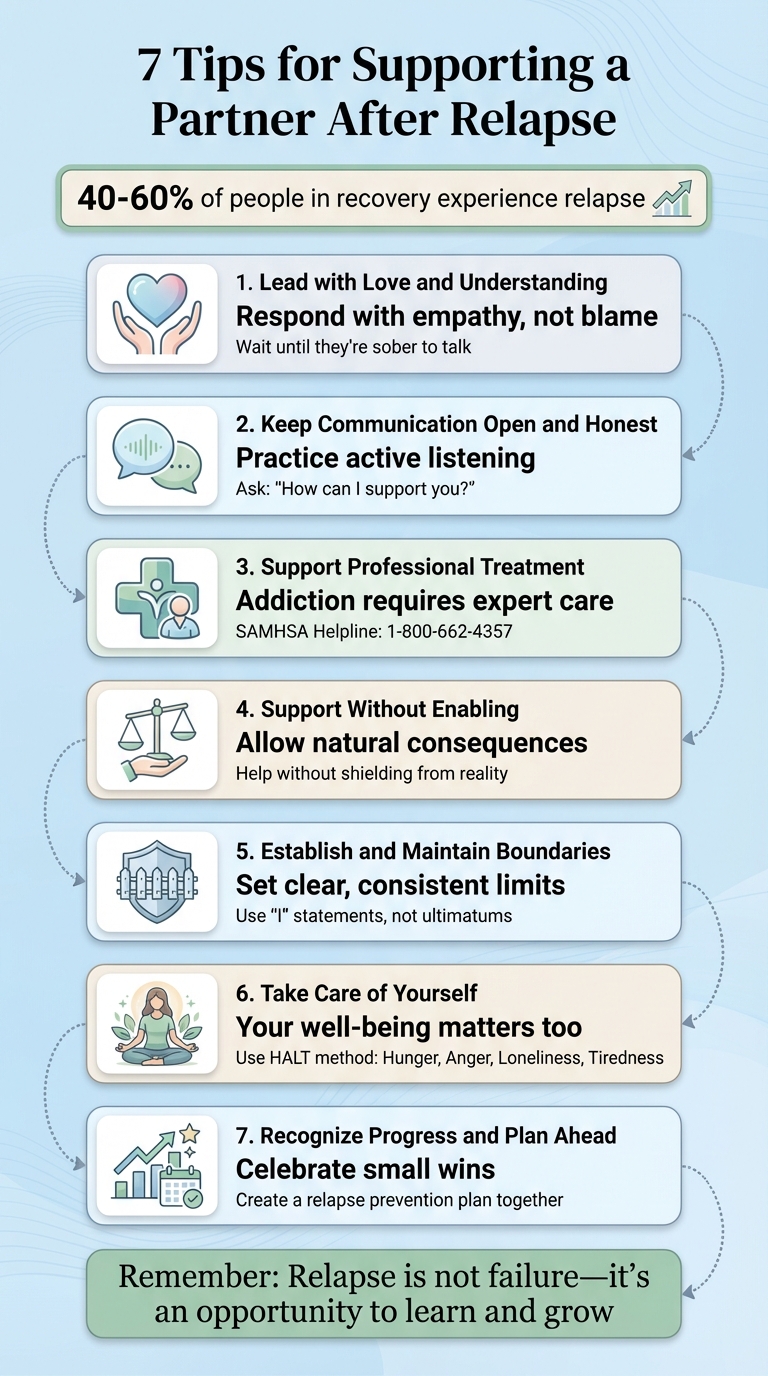
Relapse is a normal part of recovery, with 40-60% of people in recovery experiencing it. While it’s tough to see a partner relapse, how you respond can make a big difference. The key is balancing compassion, accountability, and self-care. Here are 7 practical ways to help your partner while protecting your own well-being:
- Respond with empathy: Show understanding without enabling or excusing their actions.
- Communicate openly: Create a safe space for honest dialogue, focusing on solutions rather than blame.
- Encourage professional help: Addiction requires expert care; assist with finding and accessing treatment options.
- Avoid enabling: Support their recovery without shielding them from consequences.
- Set boundaries: Clearly define your limits to protect your emotional and physical health.
- Take care of yourself: Focus on your needs through self-care, therapy, or support groups.
- Celebrate progress: Acknowledge small wins and work together on a relapse prevention plan.
Relapses are not failures – they’re opportunities to learn and grow. By following these steps, you can help your partner get back on track while maintaining a healthy, supportive relationship.
7 Essential Steps for Supporting a Partner After Relapse
Exactly What to Do If Your Loved One Relapses
1. Lead with Love and Understanding
When your partner experiences a relapse, it’s natural to feel anger, disappointment, or frustration. However, how you respond can make all the difference. Approaching the situation with compassion helps create a safe space for open and honest conversation, setting the stage for the steps that come next.
It’s important to recognize that your partner is likely already grappling with intense feelings of self-blame and shame. Nitara Osbourne, M.Ed., from American Addiction Centers, emphasizes the importance of empathy in these moments:
"By not blaming them, you are showing empathy when they’re vulnerable. This doesn’t mean that you’re not holding them accountable for their actions. They’re already blaming themselves and don’t need someone else verbalizing blame at this moment as well." [1]
Timing is crucial. Wait until your partner is sober and the environment is calm before addressing the situation. Asking questions like, "What is the best way I can support you right now?" or saying, "I’m here for you", encourages productive dialogue without adding feelings of punishment or judgment.
A well-known example of this supportive approach is Kristen Bell’s response when her husband, actor Dax Shepard, relapsed in September 2020. Rather than reacting with anger, she met the situation with understanding and treated it as a step in his recovery journey, not a failure.
Compassion doesn’t mean ignoring the issue or being passive. It’s about balancing support with accountability. As Michelle Maloney, PhD, puts it:
"Would you rather save the person’s life and have them be angry with you, or see them continue to spiral downward without that anger?" [3]
This perspective underscores the importance of acting with both care and firmness to truly help your partner.
2. Keep Communication Open and Honest
Honest communication is essential after a relapse to help both partners move forward. Create a space where your partner feels comfortable expressing their feelings without fear of immediate judgment. This approach fosters understanding while still holding them accountable for their actions.
A key part of open communication is active listening. Instead of focusing on how you’ll respond or trying to offer quick solutions, concentrate on truly hearing what your partner is saying. Pay attention to your body language, facial expressions, and tone of voice – keeping a calm and gentle demeanor can make it easier for your partner to feel safe enough to be vulnerable.
When asking questions, steer clear of accusatory ones like, "What happened?" Instead, try reflective questions such as, "How can I support you right now?" This shifts the focus from dwelling on past mistakes to finding ways to move forward. These conversations can also help uncover triggers, whether they stem from stress, certain environments, or unresolved emotions.
Timing is just as important as the words you choose. Wait until both of you are calm and your partner is sober before addressing serious topics. Pick a private setting to keep the discussion focused and respectful. If emotions start to escalate, don’t hesitate to take a break and revisit the conversation later when both of you feel more centered.
Mutual transparency is vital in these discussions. Origins Texas Recovery highlights the importance of creating a safe space for open dialogue:
"Giving them a safe space to express their emotions can lead to more authentic sharing in days and weeks to come." [6]
When your partner feels genuinely heard, they’re more likely to share early warning signs in the future. This can transform challenging moments into opportunities for deeper connection and a stronger path to recovery.
3. Support Professional Treatment
Once you’ve established open communication and shown support, the next step is professional treatment. Addiction isn’t just a bad habit – it’s a condition that changes brain chemistry, requiring specialized care to address its physical and psychological effects. Think of it like managing a chronic illness such as diabetes – it demands professional intervention to ensure proper treatment [8][9].
Your role here is to help reduce the obstacles that might prevent your partner from seeking that care. Start by researching local treatment options, checking your insurance coverage, and offering practical help, like making calls or providing transportation [8][9]. For additional support, you can contact SAMHSA‘s National Helpline at 1-800-662-HELP (4357). This confidential service can connect you with local treatment programs by simply using your zip code [7]. Taking these steps can create a supportive environment that encourages open discussions about seeking professional help.
When approaching the topic of treatment, timing and tone are crucial. Choose a calm, distraction-free moment when both of you are sober. Use "I" statements to express your concerns, such as, "I’m worried about your health," rather than using accusatory language [8][9]. If your partner seems hesitant, consider a softer approach. For instance, suggest they see a professional for issues like stress, sleep difficulties, or depression. These conversations can naturally lead to addressing substance use in a clinical setting [3].
For couples navigating the challenges of addiction, specialized services can offer support for both individual recovery and relationship healing. Growth and Change Counseling, for example, provides addiction treatment alongside couples therapy. Their services focus on rebuilding trust and improving communication while addressing addiction. They are available in Campbell, San Jose, Los Angeles, and Roseville, CA, as well as through telehealth across California.
Professional treatment offers resources and expertise that go beyond what you can provide on your own. From medical detox and cognitive therapy to identifying co-occurring mental health conditions like anxiety or depression, these tools are essential for recovery [1]. As Michelle Maloney, PhD, Director of Addiction Programming at Rogers Behavioral Health, puts it:
"Relapse is not a sign of failure" [3].
With the right professional help, your partner can learn how to spot early signs of relapse and build healthier coping mechanisms for lasting recovery.
4. Support Without Enabling
Supporting someone with an addiction requires careful balance. It’s about being there for them without shielding them from the natural consequences of their actions. Accountability is crucial – when people face the results of their behavior, they’re often more motivated to make changes [11]. For example, stepping in to protect your partner from workplace or legal consequences might actually take away opportunities for them to recognize the need for change [8].
Instead, focus on providing meaningful support. This could mean researching treatment options, offering transportation to therapy, or attending family sessions together. However, avoid actions that could unintentionally enable the addiction, like giving money that might fund substance use [8]. Be honest about your concerns, using statements like, “I’m worried about your health,” rather than covering up their behavior or lying to others [8]. At the same time, it’s essential to protect your own well-being and maintain firm boundaries, which help reinforce accountability while supporting recovery [3].
As Emily Guarnotta, PsyD, explains:
"Enabling happens when you do something for a person with an addiction that keeps them from experiencing the consequences of their behavior." [11]
This approach doesn’t mean you’re being indifferent; it’s about prioritizing growth through natural consequences. Michelle Maloney, PhD, Director of Addiction Programming at Rogers Behavioral Health, emphasizes this tough but necessary stance:
"Whatever it takes… Would you rather save the person’s life and have them be angry with you, or would you rather see them continue to spiral downward but without being angry with you?" [3]
Setting clear boundaries isn’t just about protecting them – it’s also about protecting yourself. Without limits, you risk falling into unhealthy patterns that mirror their behavior [3]. Remember, your role isn’t to prevent every consequence but to encourage professional help while maintaining a healthy distance.
sbb-itb-596b85d
5. Establish and Maintain Boundaries
Setting boundaries is essential for protecting your well-being and creating a space for healing. Think of boundaries as clear, personal guidelines for how you’ll respond to specific situations – not as threats or ultimatums. For instance, saying, "If you are intoxicated, I will leave the room," communicates your limits in a healthy way, while "If you use again, I’m leaving," can come across as a demand.
Boundaries can take many forms, each serving a unique purpose. Emotional boundaries allow you to step away from interactions that leave you drained. Physical boundaries might involve keeping your home substance-free. Financial boundaries could mean offering to pay for groceries or bills directly rather than giving cash. Time boundaries ensure you prioritize your own needs, like attending therapy or setting aside time to rest. These distinctions help create a framework for clear and consistent communication.
Once you’ve identified your boundaries, it’s crucial to communicate them effectively. Use "I" statements to express your needs without assigning blame. For example, "I feel overwhelmed when plans change last minute," is a constructive way to share your feelings. This approach aligns with the principles of honest communication and shared accountability. Be upfront about your non-negotiables, whether that’s requiring a substance-free home, insisting on mutual respect, or expecting your partner to actively engage in their recovery process.
The Hazelden Betty Ford Foundation highlights the importance of boundaries with this insight:
"Think of setting boundaries as an act of self-respect. Boundaries help you show up for yourself, even when it’s hard." – Hazelden Betty Ford Foundation
The key to successful boundaries is consistent enforcement. If a boundary is crossed, address it calmly and firmly. This isn’t about punishing anyone; it’s about reinforcing a structure that supports your emotional and mental health. Without boundaries, you risk burnout, strained relationships, and even setbacks in your own personal or professional life.
It’s normal to feel some discomfort at first – your partner might resist these changes. However, sticking to your boundaries over time fosters stability and mutual respect. If you find this process challenging, consider joining a support group or seeking individual therapy to help you stay confident in maintaining your limits.
If enforcing these boundaries feels overwhelming, professional help can make a difference. Growth and Change Counseling offers a range of mental health services, including couples counseling, to guide you through these complex dynamics. They can help you reinforce your boundaries and create a recovery environment that benefits both you and your partner.
6. Take Care of Yourself
Supporting a partner through relapse can take a toll on both your emotional and physical well-being. It’s completely normal to feel anger, frustration, or even shock during this time. The key to navigating these emotions is to acknowledge them without self-judgment – remember, your partner’s relapse is not your fault. Recognizing your feelings is the first step toward taking care of yourself.
Start by focusing on the basics: sleep, nutrition, and hygiene. The HALT method – Hunger, Anger, Loneliness, Tiredness – is a helpful tool for identifying early signs of emotional burnout. When you notice these triggers, take small, intentional actions like eating a healthy snack, going for a walk, or reaching out to a friend for support.
Seeking professional guidance can also make a big difference. Michelle Maloney, PhD, Director of Addiction Programming at Rogers Behavioral Health, explains:
"They’re so focused on that person that they begin to mimic the same behaviors and suffer from the same consequences as the person who’s using."
Individual therapy offers a safe space to process your emotions, establish boundaries, and avoid falling into patterns of codependency. Alongside therapy, leaning on a strong support system is crucial. Connecting with groups like Al-Anon or Nar-Anon can help you meet others who understand your situation. As Mental Health America emphasizes:
"It’s not selfish to have self-care. One of the most important aspects of being a caregiver is to make sure that all of your needs are being met" [12].
Carve out time for activities that bring you joy and relaxation, whether it’s exercising, pursuing a hobby, or spending time with friends. In moments of stress, try the 5Ds: Delay (wait 20 minutes), Drink water, Distract yourself, Deep breathe, and Decatastrophize [13].
If you’re finding it hard to balance your well-being with the demands of supporting your partner, professional resources are available. Growth and Change Counseling provides individual therapy tailored to those managing anxiety, depression, and the challenges of supporting a loved one in recovery. They offer sliding scale options and services in Campbell, San Jose, Los Angeles, Roseville, and via telehealth across California.
7. Recognize Progress and Plan for Challenges
Once you’ve taken steps to protect your well-being, the next focus is recognizing progress and preparing for challenges ahead.
Recovery is rarely a straight path. Every small victory matters, and acknowledging those moments can make a big difference. Whether it’s your partner sticking to therapy for a week or navigating a tough day without using, celebrating these milestones reinforces their efforts and helps rebuild self-esteem that may have taken a hit during relapse [4]. Nitara Osbourne from American Addiction Centers puts it this way:
"Remind them that they’ve been sober before and can do it again. Encouragement from a loved one goes a long way, and this reminds them of what’s possible because of what they’ve accomplished before" [1].
This kind of encouragement not only boosts morale but also sets the stage for planning ahead.
Using these small wins as a foundation, work together to prepare for vulnerable moments. Create a written relapse prevention plan with your partner. Identify potential triggers – specific people, places, or stressful situations – that could lead to a setback [14][4]. Discuss the three phases of relapse: emotional (unresolved stress or feelings), mental (inner conflict about using), and physical (actual substance use). Recognizing these warning signs early can make all the difference [14]. The plan should include clear steps like who to contact, which meetings to attend, and where to go in case of an emergency.
If a relapse does occur, use it as a learning opportunity. Once your partner regains stability, revisit what led to the setback and adjust the plan accordingly [1][4]. This isn’t about pointing fingers – it’s about understanding patterns and making improvements. As Michelle Maloney, PhD, reminds us:
"Relapse is not a sign of failure" [3].
Instead of seeing it as a defeat, view it as a chance to gather insights that can make your prevention strategy stronger.
Small, consistent efforts go a long way in rebuilding trust and commitment [10]. Regular check-ins about emotional well-being keep things stable and reinforce the idea that recovery is a journey you’re both navigating together [2].
Conclusion
Supporting a partner after relapse can feel overwhelming, but these seven strategies offer a clear path forward. By approaching the situation with compassion, fostering open communication, and setting healthy boundaries, you create a space where both you and your partner can begin to heal. Relapse is a common part of the recovery process, and it’s important to remember that you’re not alone in facing this challenge.
The approaches shared here focus on rebuilding trust and strengthening your connection. Honest conversations encourage vulnerability and reliability, laying the groundwork for trust to grow again [10]. At the same time, setting firm boundaries protects your emotional health and helps prevent enabling behaviors [3]. As Karena Mathis of Gratitude Lodge explains:
"One of the most telling changes that can occur after sobriety is more open communication… This newfound honesty and vulnerability can help to build trust and improve communication within the relationship." [10]
When personal efforts aren’t enough, expanding your support network can make all the difference. Professional guidance often provides the tools and insight needed to navigate these tough situations. For example, Growth and Change Counseling’s Marriage Rescue Institute offers a specialized 12-week coaching program to help couples work through the unique challenges of addiction recovery. Available in cities like Campbell, San Jose, Los Angeles, and Roseville, CA, as well as through telehealth across California, their services are tailored to help partners rebuild their relationships and address the deeper issues tied to substance use disorders.
These strategies, combined with professional support when necessary, can safeguard your emotional well-being and strengthen your relationship. Recovery takes time, effort, and the right resources, but by following these steps, you give your partnership the best chance to not only heal but thrive. As your partner works toward sobriety, your relationship has the potential to become more honest, connected, and resilient than ever before [5].
Finding Your Path Forward with Growth and Change Counseling
How can I support my partner after a relapse while also taking care of myself?
Supporting a partner after a relapse begins with recognizing that you can’t "fix" their addiction. What you can do is offer understanding and compassion while ensuring you take care of yourself. Start by setting clear, firm boundaries about behaviors you will and won’t accept – like not enabling their substance use or allowing it in your home. Communicate these boundaries calmly and consistently, so expectations are clear for both of you.
Equally important is prioritizing your own well-being. Make sure you’re getting enough rest, eating nutritious meals, staying physically active, and making time for activities that bring you emotional balance and renewal.
When communicating with your partner, listen without judgment. Acknowledge that relapse is often part of the recovery journey, and let them know you’re there to support them. Encourage them to seek professional help, whether it’s therapy, couples counseling, or other recovery-focused services. For example, Growth and Change Counseling provides specialized options like couples coaching through The Marriage Rescue Institute, as well as individual and family therapy for addiction, trauma, anxiety, and other challenges.
By blending compassionate support with self-care and professional resources, you can help your partner work toward recovery while safeguarding your own emotional health.
How can I encourage my partner to seek professional help after a relapse?
Encouraging your partner to seek professional help begins with empathy and honest communication. Start by gently sharing specific observations without judgment, like saying, "I’ve noticed you’ve seemed more withdrawn lately." Pair this with an expression of care, such as, "I care about you and want us both to feel stronger and healthier." Keep your tone calm, avoid assigning blame, and take time to listen to their thoughts or concerns about getting help.
You can also ease the process by offering practical support. This might include helping them research therapists, making an appointment, or even offering to attend a session with them. It’s also helpful to remind them that setbacks are a normal part of recovery, and seeking help now can prevent further challenges. Taking the time to understand addiction as a medical condition, rather than a personal failing, can help you approach these conversations with greater compassion.
For those in California, Growth and Change Counseling offers individual and couples therapy, as well as a 12-week intensive coaching program through The Marriage Rescue Institute. They also provide telehealth options, which can make accessing professional help less intimidating. Small, supportive actions on your part can make a big difference in helping your partner feel ready to take this step.
How can I set boundaries with my partner after a relapse without feeling guilty or starting a conflict?
Setting boundaries after a relapse is crucial for protecting your well-being and supporting your partner’s recovery journey. Begin by pinpointing what’s absolutely necessary for your emotional and mental health – those behaviors or situations that you simply cannot compromise on. When communicating these boundaries, use calm and clear "I" statements, such as, "I feel uneasy when alcohol is in the house, so I need us to keep it out of our home." This way, you’re expressing your needs without escalating tension or creating conflict.
Be sure to outline the consequences of crossing these boundaries in a respectful yet firm manner, and stick to them if the situation arises. Consistency is key. It’s important to remember that setting boundaries isn’t selfish – it’s an essential act of self-care. If you find yourself grappling with guilt or unsure how to approach these discussions, reaching out for professional guidance can make a big difference. Growth and Change Counseling offers therapy services to help individuals and couples navigate issues like addiction and relational stress, with options for in-person sessions across California and telehealth support.
Related Blog Posts
- Addiction Recovery and Marriage Communication
- Addiction Recovery and Emotional Connection in Marriage
- Building Trust After Relapse in Marriage
- Top Strategies for Couples in Recovery
