Balancing personal needs and relationship goals is a challenge many couples face. Whether it’s craving alone time while your partner seeks connection or pursuing career opportunities that conflict with shared plans, these situations can strain relationships. The key isn’t to eliminate these tensions but to manage them effectively.
Key Takeaways:
- Individual Needs: Time for hobbies, career ambitions, or personal growth is essential to maintain your identity.
- Relationship Goals: Shared priorities like building trust, intimacy, or stability keep the partnership strong.
- Conflicts arise when these priorities clash, especially in long-term relationships or during major life changes like addiction recovery.
- Mismanagement of these conflicts can lead to withdrawal, neglect, or recurring arguments.
Solutions to Try:
- Communicate clearly using "I" statements to express feelings without blame.
- Practice active listening to understand your partner’s perspective.
- Balance independence and connection by setting boundaries and finding compromises (e.g., scheduling solo time and shared time).
- Rebuild trust through consistent actions and accountability.
If conflicts persist, professional help can provide tools to navigate these challenges. Therapy can address deeper issues like trust, attachment styles, or past trauma, helping couples create a healthier balance between personal desires and shared goals.
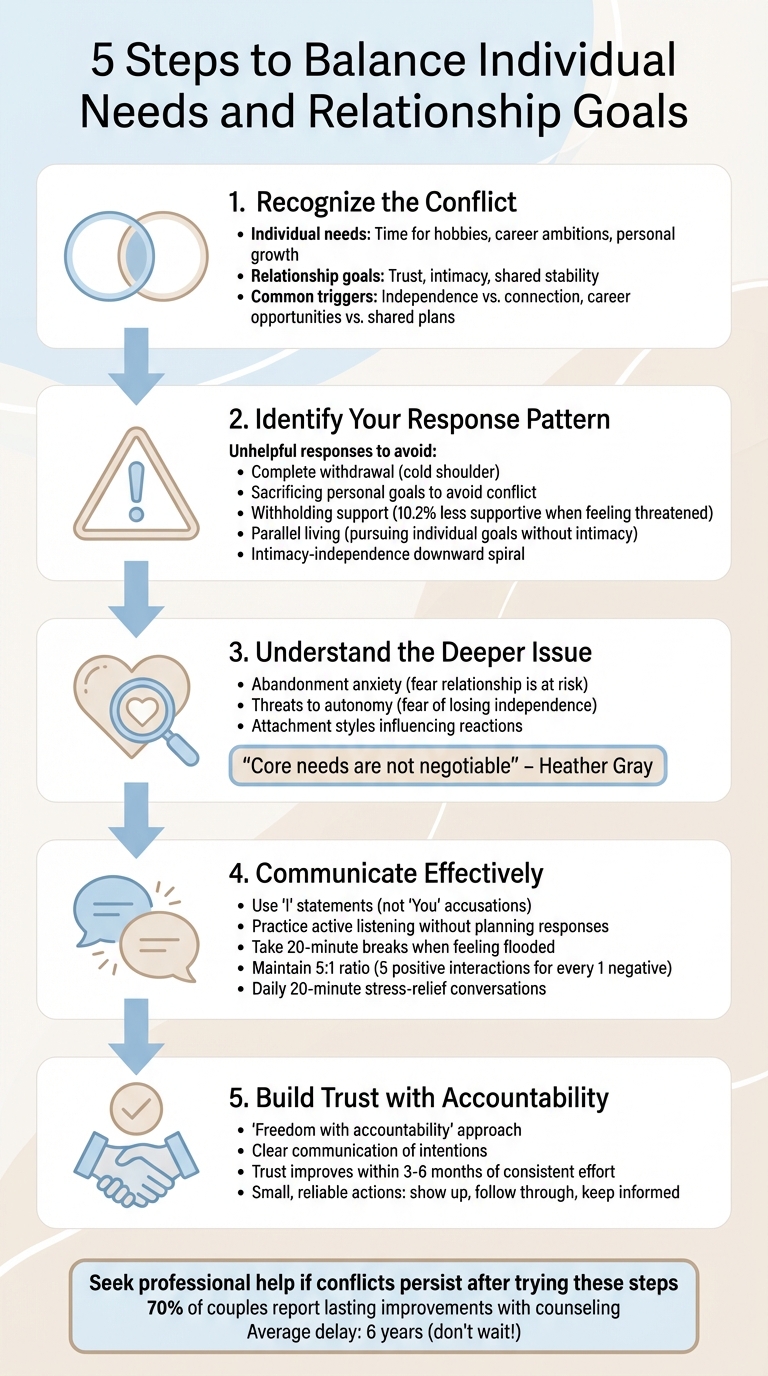
5 Steps to Balance Individual Needs and Relationship Goals
Common Conflict Patterns When Needs and Goals Clash
Where Couples Most Often Disagree
At the heart of many relationship conflicts is the push and pull between independence and connection. One partner might value having personal space – like not checking in during a solo outing – while the other seeks frequent emotional reassurance and updates [5]. Both perspectives are valid, yet they often clash, requiring constant negotiation. This dynamic often lays the groundwork for unproductive responses that can make these conflicts even harder to resolve.
Unhelpful Ways People Respond to These Conflicts
When tensions rise, couples often fall into familiar traps. One common reaction is complete withdrawal – giving a partner the cold shoulder, sometimes as an unconscious test to see if they will reach out. On the flip side, some individuals sacrifice their personal goals in an effort to avoid conflict. While this might temporarily boost feelings of commitment, research suggests it can lead to decreased relationship satisfaction over time, especially for women [4].
Another frequent pattern is withholding support. For instance, when one partner sees the other’s ambitions as a threat – perhaps due to fears about major life changes – they might become 10.2% less supportive [3]. This shift can turn a naturally collaborative relationship into one where interactions feel more transactional [3].
Some couples drift into parallel living, where individual pursuits take precedence over shared intimacy and decision-making. Others may fall into an intimacy-independence downward spiral: one partner feels smothered and pulls away, prompting the other to push harder for connection, which only deepens the divide. These reactive behaviors often mask deeper emotional struggles that fuel recurring disputes.
The Deeper Issues Behind Repeated Arguments
Recurring arguments often point to deeper emotional fears. For instance, conflicts about balancing personal space and closeness can reveal hidden insecurities. A partner’s need for space might spark abandonment anxiety, triggering fears that the relationship is at risk. On the other hand, requests for connection may feel like threats to autonomy, stirring fears of being controlled or losing one’s sense of self.
"Our core needs are not negotiable… If our partners are unwilling to meet our needs, the relationship cannot thrive." – Heather Gray, Clinically Trained Coach and Therapist [5]
These conflicts tend to escalate when a core need – something fundamental to feeling loved or secure – is treated as though it’s optional [5]. Attachment styles often play a role here, too. People with anxious attachment may interpret a partner’s independent goals as a threat to closeness, while those with avoidant attachment might withhold support to avoid fostering dependency [3]. Recognizing these patterns is crucial before diving into solutions, as the root of the issue often lies in the unspoken fears beneath the surface, not the specific disagreements themselves.
Practical Solutions for Resolving These Conflicts
Using Relational Intelligence to Handle Conflict
Healthy couples don’t shy away from conflict – they learn how to handle it effectively by gaining a deep understanding of themselves and each other [8]. Recognizing when you’re feeling overwhelmed, or "flooded", is a key step. This state, where emotions take over and rational thinking shuts down, can derail any productive conversation. In such moments, taking a 20-minute break can help you regain clarity. Use this time wisely – don’t replay the argument in your head. Instead, engage in calming activities like reading or going for a walk.
When you’re ready to reconnect, focus on expressing your feelings using "I" statements. For example, instead of accusing, "You’re always on your phone", try saying, "I miss feeling connected to you and feel lonely when we’re together" [7]. Follow this with active listening – give your full attention to understanding your partner’s perspective without planning your response. Ask yourself, "Why is this so important to them?" to cultivate empathy and slow down reactive thinking [7].
Strong relationships thrive on a positive balance. Research suggests that for every negative interaction, there should be at least five positive ones – even during conflict [7]. Build this balance by responding warmly to everyday moments, like a casual comment or a small request for attention. These small acts fill the "emotional bank account", making it easier to navigate bigger challenges, such as asking for personal space or time [2].
Balancing Recovery Needs with Relationship Needs
When one or both partners are in recovery, balancing personal goals with relationship demands becomes even more critical. While core needs are non-negotiable, the way they’re met can be adjusted through open communication [5]. For instance, if attending therapy or support groups is essential for recovery, make this clear while also prioritizing quality time together.
Compromise can make a big difference. Consider saying something like:
"I’d like to take a walk alone this afternoon, but how about we watch a movie together tonight?" [2]
This approach respects your need for independence while also showing your partner that their need for connection matters. When discussing priorities, acknowledge each other’s needs, affirm the importance of the relationship, and set clear expectations for the future [5].
Another helpful strategy is carving out time for a daily 20-minute stress-relief conversation. Use this time to talk about external pressures – not relationship issues. One partner shares while the other listens empathetically, fostering a sense of partnership that supports both individual recovery and the relationship [8].
Rebuilding Trust While Keeping Your Independence
Restoring trust doesn’t mean giving up your independence – it’s about creating "freedom with accountability" [5]. If you need personal space, communicate your intentions clearly to avoid misunderstandings. For example:
"I need some time to clear my head, but I’ll call you when I’m on my way back" [5].
For many couples, trust begins to improve within three to six months of consistent effort [9]. Focus on small, reliable actions: show up when you say you will, follow through on commitments, and keep your partner informed about your plans. These steady, everyday actions strengthen trust over time.
When conflicts arise, reaffirm your partner’s importance, set boundaries, and outline what to expect moving forward [5]. This approach supports both personal independence and the relationship’s stability. If trust issues persist or conflicts escalate despite these efforts, seeking professional help may be the next step.
When to Seek Professional Help
Signs You May Need Therapy
Sometimes conflicts become too entrenched to resolve without outside support. If you’re stuck in repetitive arguments despite trying different strategies – or if one partner’s need for space consistently triggers the other’s fear of abandonment – it might be time to seek therapy. Other warning signs include contempt (like sarcasm or superiority), stonewalling (complete withdrawal), or feeling overwhelmed during discussions about needs and goals.
In cases where trust has been deeply damaged, such as through addiction or betrayal, professional help is especially important. If months of effort haven’t led to progress or if conflicts seem to escalate rather than improve, therapy can provide the tools and structure needed to move forward.
How Growth and Change Counseling Can Help
Growth and Change Counseling specializes in guiding couples through these challenges. Their Marriage Rescue Institute offers a 12-week intensive coaching program designed to help couples in crisis restore their relationships with practical, solutions-oriented support. This program is particularly helpful for couples struggling to balance individual needs with relationship goals.
The practice also provides individual therapy, recognizing that personal growth is sometimes necessary before couples can make progress together. For those navigating recovery and relationship challenges, addiction treatment is integrated into the work, addressing both personal healing and relational dynamics.
Services are available in Campbell, CA; San Jose, CA; Los Angeles, CA; and Roseville, CA, with telehealth options across California. Individual therapy sessions with a Licensed Marriage and Family Therapist cost $200 per 45-minute session. More affordable options are available through Associate Marriage and Family Therapists at $150 per session, with sliding scale rates starting at $100 for those in financial need.
Balancing ‘We’ and ‘Me’ Compromise and Individuality in Couple Decisions
sbb-itb-596b85d
Conclusion: Finding Balance Between Individual and Shared Goals
Balancing personal needs with relationship goals isn’t a one-time fix – it’s an ongoing process that requires effort, clear communication, and respect. Successful couples don’t eliminate this tension but learn to navigate it with patience, care, and a commitment to growing together.
When to Seek Professional Help
Signs You May Need Therapy
Sometimes, conflicts in a relationship become too entrenched to resolve without outside support. Recognizing these patterns early can make a huge difference in maintaining both personal well-being and the health of your relationship. Studies show that many unhappy couples delay seeking help for an average of six years, which often worsens the situation [10][11]. Knowing when to address issues with professional assistance is crucial.
Certain behaviors, known as the "Four Horsemen" – criticism, contempt, defensiveness, and stonewalling – are strong indicators of serious relationship trouble [10]. Another red flag is something called Negative Sentiment Override, where one or both partners view every interaction through a negative lens, making even neutral comments seem hostile [10]. Emotional and physical distance is another warning sign. You might feel more like roommates than partners, avoiding meaningful conversations, experiencing a lack of intimacy, or feeling lonely even when you’re together [10][12]. Frequent thoughts of separation can also signal deeper unrest [10].
Certain situations, like infidelity, addiction, or abuse, demand immediate professional intervention [10][11]. These issues often carry significant trauma that couples cannot navigate alone. Similarly, if you find yourselves stuck in the same unresolved arguments – what’s called "gridlocked conflict" – it’s a clear sign that outside help is needed [12]. Despite the benefits, only 19% of couples seek therapy, and just 37% of divorced couples consult a professional before finalizing their separation [11].
How Growth and Change Counseling Can Help
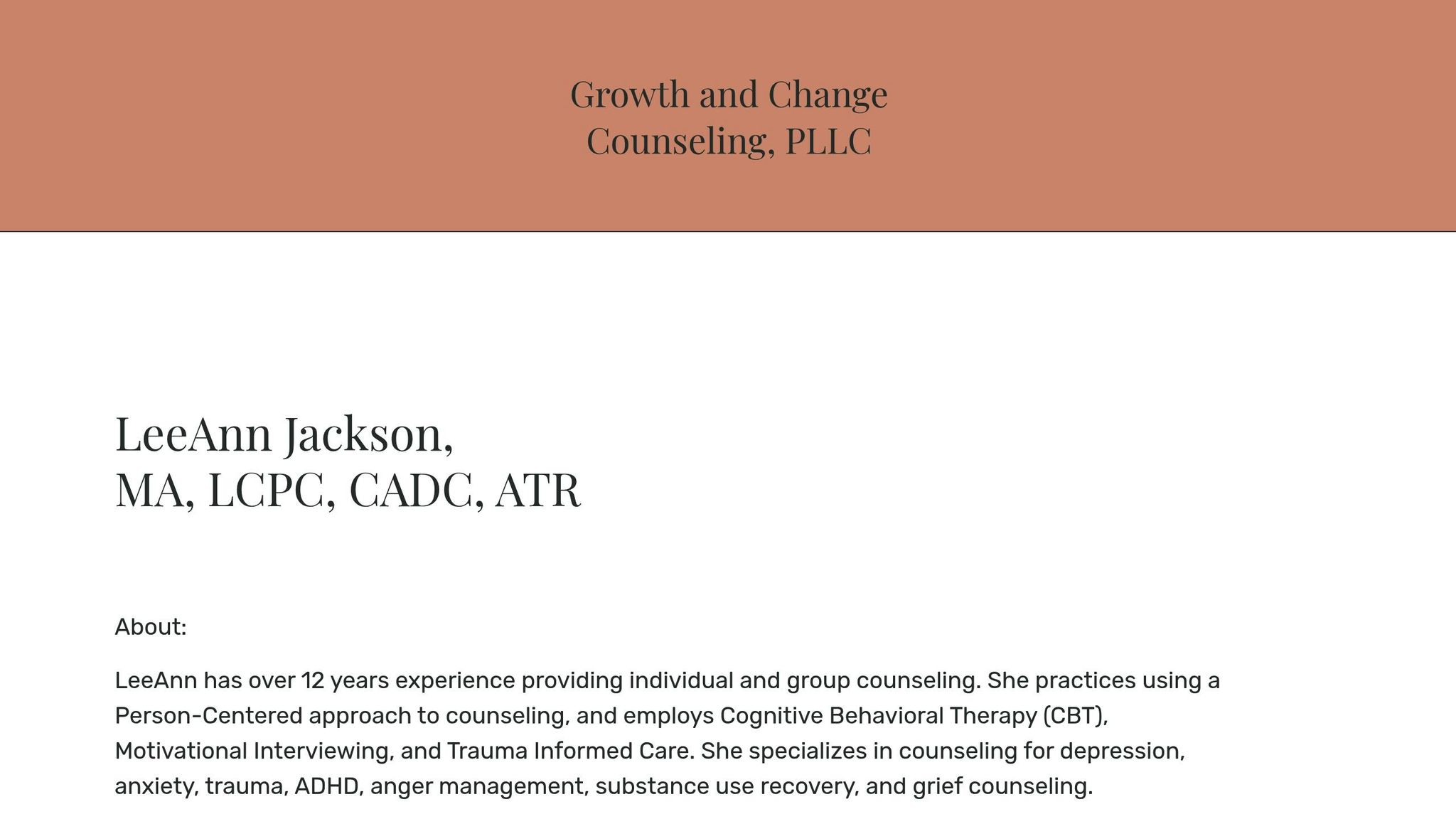
When these challenges arise, professional guidance can provide the clarity and tools needed to move forward. Growth and Change Counseling serves clients in Campbell, San Jose, Los Angeles, Roseville, and throughout California via telehealth. Their approach focuses on relational intelligence, helping couples shift from unhealthy patterns to honest communication and firm, respectful boundaries [13].
For couples in particularly difficult situations, the Marriage Rescue Institute offers a focused 12-week coaching program. This solutions-oriented process is designed to rebuild trust while allowing each partner to maintain their independence – an essential balance when personal healing goals conflict with relationship needs. Research shows that approximately 70% of couples who pursue marriage counseling report meaningful, lasting improvements [11].
Growth and Change Counseling also provides specialized support for addiction, trauma, and anxiety, which are often intertwined with relationship struggles. Individual therapy sessions with a Licensed Marriage and Family Therapist cost $200 for a 45-minute session, while sessions with an Associate Marriage and Family Therapist are $150. For those facing financial challenges, sliding scale options start at $100 per session.
Conclusion: Finding Balance Between Individual and Shared Goals
Balancing personal desires with shared goals is key to maintaining a strong, healthy relationship. Successful partnerships thrive when both unity and individuality are respected. Research shows that couples who effectively resolve conflicts and find compromises tend to experience greater satisfaction in their relationships [14].
Honest communication plays a vital role here. Sharing personal needs as strengths that contribute to the relationship can foster deeper understanding. As The Gottman Institute wisely puts it, "Maintaining your individuality isn’t about loving your partner less. It’s about loving yourself enough to stay whole while you grow together" [1]. This approach helps distinguish between core, non-negotiable needs and the flexible ways to address them [5].
To nurture this balance, consider practical steps. For instance, treating solo time as a priority – like scheduling an appointment – can help maintain individuality. Regular check-ins to discuss evolving dreams and adjust shared goals can keep the connection strong [6]. And when conflicts arise, remember that compromise isn’t about winning or losing; it’s about finding solutions that work for both partners [14].
If recurring conflicts feel overwhelming, seeking professional support can make a difference. Growth and Change Counseling offers various options, from individual therapy to couples counseling, and even an intensive 12-week Marriage Rescue Institute program designed for relationships in crisis.
The aim isn’t to achieve perfection but to make steady progress – building a partnership where both individuals can grow while creating something meaningful together.
FAQs
How can I meet my personal needs while working toward shared relationship goals?
Balancing your personal needs with your relationship goals starts with open and honest communication. Make it a habit to talk about what success looks like for each of you – both individually and as a couple. These conversations can help you recognize where your goals align and where they might clash. Practice active listening by paraphrasing what your partner says to show you’re truly understanding them. And when conflicts arise, try to see them as moments to reevaluate priorities and find balance, rather than as roadblocks.
Here are a few practical ways to keep things on track:
- Write down a short list of your personal needs and share it with your partner.
- Use a simple worksheet to map out where your individual and shared goals overlap or diverge.
- Establish a “pause-and-reflect” rule for tense situations, giving both of you time to cool off before continuing the discussion.
If these conversations feel stuck or unproductive, professional guidance can help. Growth and Change Counseling offers couples coaching through The Marriage Rescue Institute, along with individual therapy. These services are designed to support your personal growth while helping you build a stronger relationship. By respecting each other’s boundaries, aligning your expectations, and knowing when to reach out for help, you can create a rewarding balance between your own aspirations and your partnership.
How can couples communicate effectively to resolve conflicts?
Effective communication plays a central role in resolving conflicts and building stronger relationships. Shifting your approach from confrontation to collaboration can create an environment where both partners feel respected and understood. Couples who handle disagreements with empathy and care often find it easier to address issues and strengthen their bond.
Some practical ways to improve communication include starting discussions gently with "I" statements, which focus on your feelings rather than placing blame. Actively listening by reflecting back what your partner shares can also help them feel heard. Simple repair attempts – like offering a kind gesture or making a lighthearted comment – can ease tension during tough moments. Additionally, responding positively to your partner’s bids for connection, such as maintaining eye contact or reciprocating affection, and staying curious about their perspective can promote deeper understanding.
If communication feels like a struggle, seeking structured support might be beneficial. Growth and Change Counseling offers a 12-week couples coaching program through The Marriage Rescue Institute, as well as individual and family therapy, to help partners strengthen their relationships while addressing personal and shared goals.
When is it time for couples to seek professional help for relationship challenges?
Couples might want to think about getting professional help when conflicts start to feel like a recurring pattern or begin to damage the emotional bond and overall health of the relationship. Some red flags to watch for include constant arguments, ongoing emotional distance, feelings of loneliness even when you’re together, a decline in intimacy, trust issues, or challenges in resolving deeper differences like lifestyle choices or core values.
If communication keeps breaking down – whether it’s because one partner feels unheard, conversations turn hurtful, or conflicts remain unresolved – it’s a strong indicator that reaching out to a therapist could be beneficial. Tackling these problems early can make a big difference and stop them from becoming long-term issues.
Growth and Change Counseling offers tailored couples counseling through The Marriage Rescue Institute. This targeted 12-week program is designed to help partners rebuild trust, strengthen communication, and align their personal and relationship goals. They also provide individual and family therapy to support emotional health and strengthen relationships.
Related Blog Posts
- Individual vs Couples Therapy: Which Is Right?
- Addiction Recovery and Marriage Communication
- Emotional Intelligence for Neurodiverse Couples
- Trust-Building Exercises for Couples in Recovery
