Technology is straining relationships, but it doesn’t have to. Constant screen time, social media jealousy, and tech addiction are creating distance between partners. The good news? You can rebuild trust and connection by making small, intentional changes.
Here’s how:
- Set boundaries: Create phone-free zones (like during meals or in the bedroom) and limit screen time during shared moments.
- Reconnect offline: Replace scrolling with shared activities like walks, game nights, or device-free conversations.
- Talk openly: Discuss how tech use affects your relationship and agree on clear expectations.
- Seek help if needed: Professional counseling can address deeper issues caused by "technoference."
Screens don’t have to come between you and your partner. By prioritizing each other over devices, you can restore emotional closeness and strengthen your bond.
How Social Media Is Damaging Relationships: A Therapist Explains
How Technology Creates Relationship Conflicts
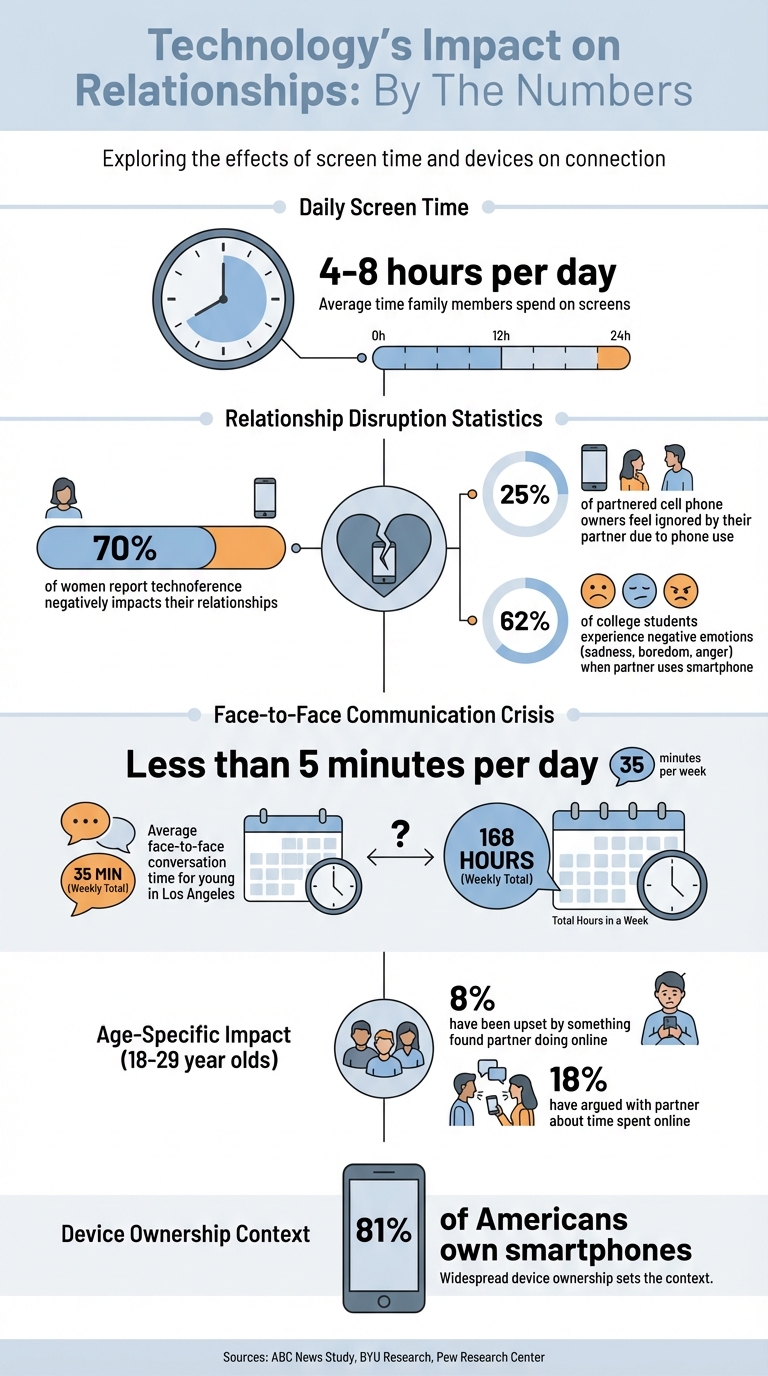
How Technology Affects Relationships: Key Statistics and Impact Data
Technology doesn’t just disrupt conversations – it transforms the way partners connect with one another. Understanding how screens can strain a relationship is a crucial step toward repairing those bonds. Let’s dive into how excessive screen time, online behaviors, and technology addiction can weaken connections.
Too Much Screen Time Reduces Intimacy
When devices take the place of face-to-face interaction, emotional closeness can slowly fade. For instance, handheld devices in the bedroom often replace the intimate "pillow talk" that helps couples reconnect at the end of the day [8]. Instead of turning to each other, many partners find themselves lost in endless scrolling or email-checking.
This habit of missing small moments of connection can add up over time. When one partner is glued to their phone, it sends a message – whether intentional or not – that the device is more important than the person sitting beside them. Sarah M. Coyne, a Family Life Professor at BYU, puts it this way:
"If you feel like your partner is choosing technology over you – that’s the message it sends – it doesn’t make you feel valued or wanted or important" [8].
Work-related stress only adds fuel to the fire. Technology blurs the line between professional and personal life, making it hard for partners to truly be present, even when they’re physically at home [3]. A study conducted for ABC News revealed that family members spend an average of 4 to 8 hours per day on screens [7]. That’s a lot of time that could otherwise be spent nurturing relationships.
Online Infidelity and Social Media Jealousy
Beyond general screen use, online interactions bring their own set of challenges. Social media and dating apps have created new opportunities for conflict in relationships. For example, 4% of all internet users in committed relationships have been upset by something they found their partner doing online. Among young adults aged 18–29, that number jumps to 8% [9].
These incidents aren’t always tied to physical infidelity. Emotional affairs – whether through private messages, flirtatious comments, or maintaining active profiles on dating apps – can lead to serious trust issues. Even without outright betrayal, technology can strain relationships. A quarter of partnered cell phone owners have felt ignored by their partner due to phone use during shared time [9]. For young adults, 18% have argued with their partner about the time spent online [9]. Clearly, navigating trust and boundaries in the digital age requires new approaches.
Technology Addiction Creates Emotional Distance
Compulsive technology use adds another layer of complexity. When one or both partners rely on their devices as an escape, it can create emotional distance. Many people turn to their phones to avoid uncomfortable feelings or even intimacy itself [1] [4]. Over time, this avoidance can become a deeply ingrained habit.
The effects are significant. In a study involving 143 women in committed relationships, most reported frequent "technoference" – interruptions caused by technology – which was linked to higher levels of depression and lower life satisfaction [8]. Another study found that 62% of college students experienced negative emotions, such as sadness, boredom, or anger, when their partner used a smartphone [10].
Couples dealing with technology addiction often describe their relationship as feeling more like a roommate arrangement than a romantic partnership. Even when they share the same space, they can end up living in "separate spheres", each absorbed in their own digital world [8]. The partner being ignored – often referred to as the "phubbed" partner – may feel excluded and undervalued [10]. What might start as a minor distraction can snowball into a chronic pattern, leaving both partners feeling disconnected and alone.
How to Rebuild Trust Through Better Technology Habits
If technology has created distance in your relationship, it’s time to rethink your habits. Rebuilding trust takes effort and intention, but by making thoughtful changes to how you use technology, you can restore emotional closeness and strengthen your connection.
Set Boundaries and Create Phone-Free Zones
Start by setting clear guidelines around tech use. Couples therapist Kyle Benson suggests creating a formal agreement together:
"The fastest solution is to sit down together and create a tech agreement." [2]
Designate certain areas, like bedrooms and dining spaces, as device-free zones. These small changes can make a big difference by reducing interruptions that often harm relationship satisfaction [3].
Another helpful strategy is the "60-Minute Rule." For the first hour after coming home, avoid screens entirely to focus on reconnecting. A study of young couples in Los Angeles revealed that they spent less than five minutes a day in face-to-face conversation – just 35 minutes a week [2]. Protecting that initial hour at home can help prioritize your partner over digital distractions.
Be upfront about times when work-related phone use is necessary. Setting clear boundaries around this can prevent misunderstandings. A good rule of thumb? Avoid any phone activity you wouldn’t feel comfortable sharing with your partner.
Once these boundaries are in place, focus on using shared time to step away from technology together.
Take Regular Breaks from Technology Together
Beyond setting limits, replacing screen time with shared experiences can deepen your bond. Research highlights that active leisure – like socializing, exercising, or pursuing hobbies – provides a bigger happiness boost than passive activities like scrolling through social media [11].
Take inspiration from a 2019 study by the Gottman Institute and ABC News. Cameras tracked a family’s screen usage, revealing that members spent 4 to 8 hours daily on devices. With guidance from Certified Gottman Therapists Don and Carrie Cole, the family introduced new routines, such as weekly meetings to set screen limits and interactive activities like hiking and game nights [7].
You don’t need a complete lifestyle overhaul to see positive changes. Start small by carving out 5 to 20 minutes each evening for a device-free conversation about your day [5]. Gradually increase this time as it becomes a habit. You can also set "techno-curfews", such as putting devices away after 8 p.m. or during meals.
Instead of spending evenings glued to screens, try physical activities together. Go for a walk, join a recreational sports league, or follow a workout video as a couple. These activities not only release endorphins but also create natural moments to connect.
Another effective practice is the "Stress-Reducing Conversation" – a dedicated time for each partner to share external stressors while the other listens [2]. This can prevent work stress from seeping into your relationship and reduce the temptation to retreat into devices.
Once you’ve established shared routines, open communication about technology use can further strengthen your understanding of each other.
Talk Openly About Technology Expectations
Even with boundaries in place, lasting change requires open and honest conversations about why these limits matter. Clear communication ensures both partners are on the same page.
When addressing concerns about tech use, approach the topic gently. Therapists recommend using "softened start-ups" – phrases like "I’ve noticed", "I miss you", or "I feel a distance between us" – instead of diving straight into criticism [1]. Kyle Benson underscores the importance of taking your partner’s concerns seriously:
"If your lover is complaining that you’re more focused on your phone than your relationship, that’s an issue you need to take seriously, even if you don’t agree." [2]
Consider holding a weekly check-in to review and adjust your tech boundaries [7]. Use this time to understand the reasons behind each other’s device habits. Is your partner using their phone for stress relief, work, or simply out of boredom? Understanding these motivations can help you address the root cause rather than just the behavior.
You might also try a joint self-assessment. Ask questions like, "How often am I on my device during family time?" or "How do you feel when I’m on my phone?" Acknowledging each other’s feelings can lead to a more empathetic discussion. For instance, if your partner expresses frustration, respond with something like:
"You seem disappointed about our screen time limit. Tell me what’s upsetting you", [7]
to create a supportive and understanding dialogue. This kind of openness can help bridge gaps and bring you closer together.
sbb-itb-596b85d
How Professional Counseling Helps Resolve Technology Conflicts
When personal strategies fail to resolve recurring issues, turning to professional counseling can make all the difference. Technology conflicts, especially when deeply rooted or persistent, often require expert guidance to break harmful patterns and rebuild meaningful connections.
Therapy Approaches for Technology-Related Problems
Therapists have developed effective methods to tackle what researchers call "technoference" – the interruptions in daily interactions caused by digital devices [3]. With 81% of Americans owning smartphones and 70% of women in one study reporting that technoference negatively impacted their relationships [3], this issue is far from uncommon and demands specialized attention.
To address this, therapists often use approaches like Emotionally Focused Therapy (EFT) and Cognitive-Behavioral Therapy (CBT). These methods help couples identify and break cycles where technology use triggers feelings of neglect or conflict. They also guide couples in setting healthy digital boundaries and strengthening their in-person connections [6][12][13]. Therapist Tiara Lipps highlights the pivotal moment in therapy:
"Once both partners see the cycle as the enemy (instead of each other), they can begin to interrupt it." [6]
Such therapeutic techniques work hand-in-hand with strategies for setting digital boundaries, offering couples a comprehensive path to healing.
Counseling sessions provide a structured, distraction-free environment where couples can openly discuss issues, address stress, and rebuild their bond [5][12]. This dedicated time away from screens fosters deeper communication and understanding.
The Marriage Rescue Institute: 12-Week Couples Coaching

For couples facing technology-driven challenges, professional coaching can take conflict resolution to the next level. Growth and Change Counseling offers The Marriage Rescue Institute, a 12-week intensive coaching program designed to rebuild trust and connection.
Studies show that digital interventions for couples are far more effective when paired with a dedicated coach [14]. The Marriage Rescue Institute uses a structured, three-phase approach:
- Observe phase: Identifies specific relationship challenges.
- Understand phase: Develops a deeper understanding of those issues.
- Respond phase: Implements strategies like boundaries and new rituals for connection [14].
This program delivers personalized support tailored to each couple’s circumstances. Whether technology has created emotional distance or replaced quality time, the focus is on addressing the underlying causes rather than just the symptoms. Services are available in Campbell, CA, San Jose, CA, Los Angeles, CA, Roseville, CA, and through telehealth across California, ensuring accessibility no matter where clients are located.
Maintaining Progress and Connection Over Time
Resolving tech-related conflicts is just the first step. The real challenge lies in maintaining healthy habits over the long haul. With 81% of Americans owning smartphones [3], the lure of digital distractions is ever-present. The goal is to create intentional practices that help couples stay connected and turn potential interruptions into moments of deeper bonding.
Build Healthy Technology Habits Together
Instead of treating technology as the enemy, use it to bring you closer. Send each other "digital bids for connection" throughout the day – whether it’s a sweet text or a funny meme that shows you’re thinking of your partner.
Set clear boundaries by creating a tech agreement that identifies device-free times, like during meals or important conversations [2]. Research on young couples in Los Angeles revealed they spend an average of just 35 minutes per week in face-to-face conversation [2]. That’s a sobering reminder of how crucial it is to carve out intentional time together. Swap scrolling for shared physical activities, like taking a walk after dinner or going for a bike ride on the weekend [1][5].
Use Mindfulness to Strengthen Emotional Connection
Once boundaries are in place, mindfulness can deepen your emotional bond. It helps shift your focus from being task-oriented to simply being present with your partner [15]. When you feel tempted to check your phone during a conversation, pause and take a deep breath. This small act of mindfulness can prevent conflicts before they even start [15].
Try simple rituals, like a 2–4 minute hug when you reunite at the end of the day. This brief moment not only lowers stress but also signals your body to shift into connection mode [2]. Engage your senses – listen to your partner’s voice, feel their touch [16]. These mindful practices can help you recognize and respond to your partner’s small bids for attention, steering you away from the urge to turn to your screen [3].
Get Support When You Need It
Sustaining progress requires a mix of personal effort and external support. Set up a weekly "State of the Union" meeting to review and tweak your tech agreements, and don’t hesitate to seek professional help if recurring issues arise [7][2]. Structured agreements and regular check-ins are essential, but professional guidance can ensure these habits stick. Growth and Change Counseling offers therapy and coaching to help couples navigate ongoing challenges. Services are available in Campbell, CA; San Jose, CA; Los Angeles, CA; Roseville, CA; and via telehealth throughout California.
As relationship expert Paul Stanford explains:
"A relationship that has been carefully fostered to sustain that connection is very durable and shielded from such attacks" [5].
Investing in your relationship through counseling or workshops can equip you with the tools to handle whatever digital distractions come your way.
Conclusion
Technology doesn’t have to come between you and your partner. The real challenge lies not in the devices themselves but in how you choose to use them. While statistics paint a stark picture of how "technoference" has crept into relationships, there’s hope – small, intentional changes can make a big difference.
Consider setting up tech-free zones during meals or keeping devices out of the bedroom. Instead of scrolling aimlessly, use your phone to send thoughtful messages to your partner. When the urge to check notifications arises during meaningful conversations, pause and practice mindfulness. These consistent, small steps can strengthen your bond and protect your relationship from digital distractions. If maintaining these changes feels overwhelming, seeking professional guidance can provide the extra support you need.
As Zach Brittle, a Certified Gottman Therapist, puts it:
"Relationships in the Digital Age are going to get more – not less – complicated… but with a little bit of creativity and courage, honest to goodness flesh and blood intimacy is always possible" [4].
This reminder highlights the importance of taking proactive steps – whether independently or with expert help. If technology has created trust issues or progress feels hard to sustain, Growth and Change Counseling offers therapy and couples coaching through The Marriage Rescue Institute. Their services are available in Campbell, CA; San Jose, CA; Los Angeles, CA; and Roseville, CA, as well as through telehealth across California.
Your partner deserves more of your attention than your screen. Start the journey today – disconnect to reconnect.
FAQs
How can couples set healthy boundaries around technology use?
Setting boundaries around technology is a smart way for couples to protect their relationship and avoid unnecessary arguments. A good starting point? Have an open and calm conversation about each other’s tech habits. Talk about what feels supportive and what might come across as intrusive. For instance, you could discuss things like how quickly to respond to texts during work hours (e.g., "I’ll get back to you within an hour") or what’s okay to share on social media, like posts or location updates. Framing these boundaries as tools to strengthen your connection, rather than as rules or restrictions, can make the process feel more like teamwork.
To carve out quality time together, consider creating device-free zones or moments. Maybe it’s no phones at the dinner table, keeping screens out of the bedroom, or cutting back on social media after 9 p.m. Another idea is to set shared "tech-check" times – like 10 minutes after work to handle messages – before shifting focus to each other. If disagreements pop up, resist the urge to retreat into your devices. Instead, pause and address the issue face-to-face. Making eye contact and having honest conversations can go a long way in preventing small misunderstandings from turning into bigger problems.
If sticking to these boundaries feels tough, a couples therapist can provide support. Growth and Change Counseling offers a structured 12-week coaching program specifically designed to help couples rebuild trust and improve communication when technology starts to interfere with their relationship.
What are some offline activities to help reconnect with my partner?
Spending time together without the distractions of technology can do wonders for reconnecting and easing the tension that screens often bring. Simple activities like walking in nature, cooking a meal as a team, playing board games, or tackling a DIY project together can create shared experiences that lead to deeper conversations. Setting aside regular date nights – whether it’s a trip to a museum, enjoying a live event, or wandering through a local market – can also help create lasting memories and strengthen your relationship.
Building in device-free moments is a powerful way to nurture intimacy. Small habits, like taking a nightly walk, having a quick chat after work, or reading quietly side-by-side, can make a big difference in how connected you feel. Even dedicating one hour each evening to being screen-free allows you to focus on each other and rebuild that valuable face-to-face connection.
If finding your rhythm with these habits feels challenging, professional support might be the boost you need. Growth and Change Counseling offers couples counseling through The Marriage Rescue Institute, a 12-week program designed to help couples rebuild trust and connection. With expert guidance, you can work through obstacles and develop strategies to strengthen your relationship.
When should couples seek counseling for technology-related issues?
Couples might want to think about counseling when technology starts creating frequent arguments, emotional distance, or mistrust in their relationship. If setting boundaries – like agreeing on screen-free times or shared device rules – doesn’t resolve the issues, or if one partner feels neglected, anxious, or even resentful because of device use, it could be a sign to bring in a professional.
Here are some clear indicators that counseling might be helpful:
- Regular tech-related arguments, happening several times a week
- Disputes about technology affecting other areas like finances, intimacy, or parenting
- Ongoing feelings of mistrust, anxiety, or emotional detachment
A skilled therapist can guide couples in rebuilding trust, establishing healthier boundaries, and improving communication. Growth and Change Counseling offers a focused 12-week couples coaching program through The Marriage Rescue Institute, specifically tailored to help partners reconnect and tackle challenges brought on by technology-related conflicts.
Related Blog Posts
- Rebuilding Emotional Intimacy After Addiction
- Trust-Building Exercises for Couples in Recovery
- Signs Screen Time Hurts Your Marriage
- Best Practices for Video Counseling with Couples
