Neurodiverse children – those with autism, ADHD, or sensory processing differences – often face unique challenges that can deeply impact their self-esteem. Everyday situations, like sensory overload or social rejection, can accumulate into trauma over time. Studies show that neurodiverse kids are 2-3 times more likely to experience traumatic events, with nearly 90% of autistic youth reporting at least one traumatic experience.
Key issues include sensory sensitivities, bullying (experienced by neurodiverse kids at 3x the rate of their peers), and masking behaviors, where children hide their true selves to fit in. These factors can lead to emotional dysregulation, hypervigilance, and even long-term effects like PTSD. Misunderstanding these behaviors as inherent traits rather than trauma responses often leaves their struggles unaddressed.
Parents can help by creating safe, validating environments, reducing sensory triggers, and supporting their child’s strengths. Therapy options like EMDR and neurodivergent-affirming approaches, along with parent coaching, can further aid healing and growth. Building resilience starts with recognizing their needs and offering tools to navigate the world confidently.
A neurodivergent-affirming approach to children’s mental health | Emerging Minds Podcast

Identifying Signs of Trauma and Low Self-Esteem
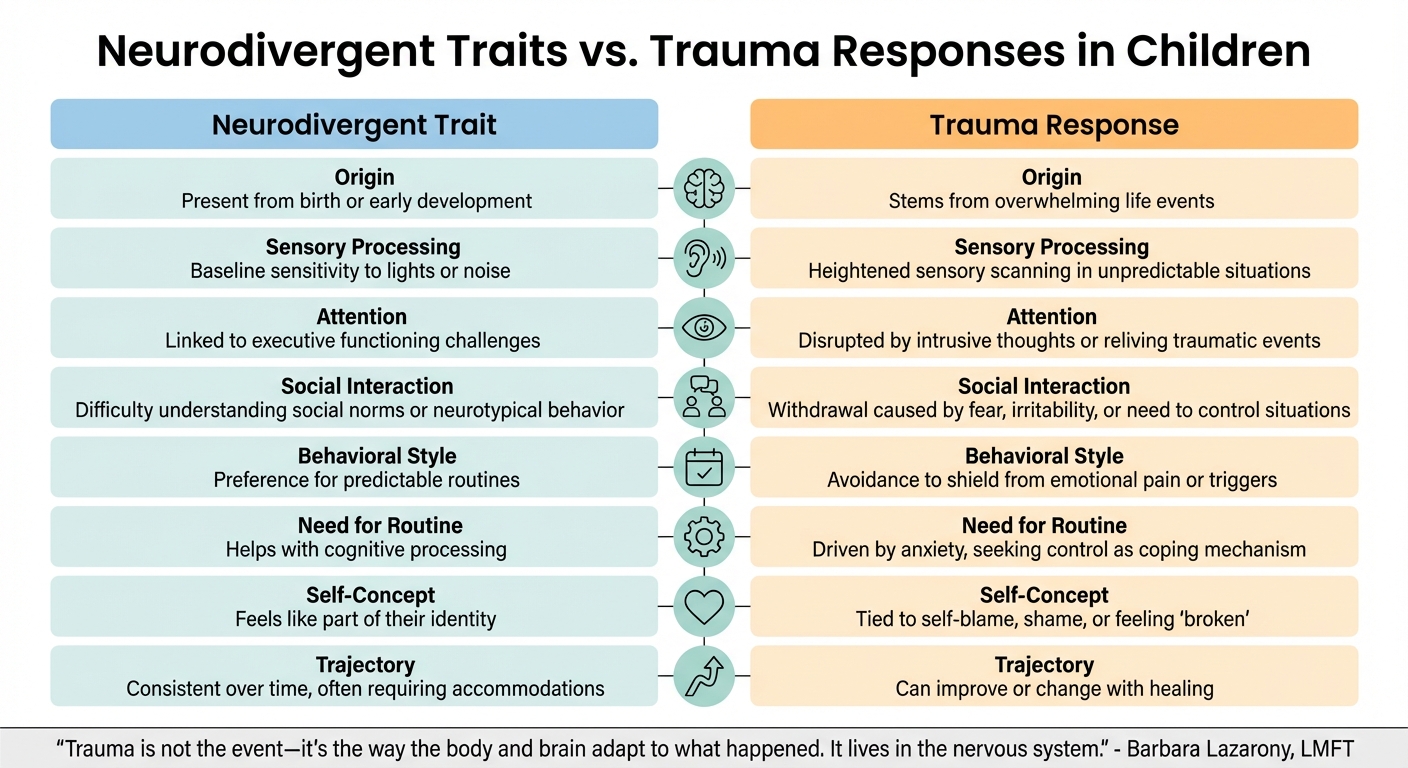
Neurodivergent Traits vs Trauma Responses in Children
Spotting trauma in neurodiverse children can be tricky because its symptoms often overlap with traits that are part of their natural neurodivergence. However, there are some key behaviors that can point to trauma and its effects on self-esteem.
Warning Signs of Trauma in Neurodiverse Children
Trauma often reveals itself in ways that might catch you off guard. For example, your child might suddenly seem restless or have a wide-eyed, alert look, which could indicate hypervigilance – a state where their nervous system is constantly on edge. They might also start avoiding activities or people they used to enjoy, which suggests avoidance behaviors [3].
Another telltale sign is regression. If your child suddenly loses skills they had previously mastered – like speaking in full sentences, engaging socially, or sticking to daily routines – it could be a sign of trauma. According to clinical psychologist Nicole Hisaka, Psy.D., this kind of inattention is sometimes mistaken for ADHD, but it may actually be your child mentally revisiting a traumatic moment [3].
Emotional dysregulation is another red flag. This might show up as intense tantrums, uncontrollable crying, a need for excessive control, or even physical symptoms like chronic fatigue, headaches, or stomachaches. These are all ways the body can hold onto unprocessed trauma. Alarmingly, about 35 million children and adolescents in the U.S. have experienced at least one adverse childhood experience [3]. Low self-esteem can make things even harder, increasing the likelihood of loneliness, anxiety, depression, and even eating disorders [4].
Neurodivergent Traits vs. Trauma Responses
It can be difficult to tell whether certain behaviors are part of your child’s neurodivergence or a response to trauma. To help clarify, the table below outlines the differences between neurodivergent traits and trauma-driven behaviors:
| Feature | Neurodivergent Trait | Trauma Response |
|---|---|---|
| Origin | Present from birth or early development [6] | Stems from overwhelming life events [6] |
| Sensory Processing | Baseline sensitivity to things like lights or noise [1] | Heightened sensory scanning in unpredictable situations [3] |
| Attention | Linked to executive functioning challenges [1] | Disrupted by intrusive thoughts or reliving traumatic events [3] |
| Social Interaction | Difficulty understanding social norms or neurotypical behavior [1] | Withdrawal caused by fear, irritability, or the need to control situations [3] |
| Behavioral Style | Preference for predictable routines [1] | Avoidance to shield themselves from emotional pain or triggers [3] |
| Need for Routine | Helps with cognitive processing [1] | Driven by anxiety, seeking control as a coping mechanism [3] |
| Self-Concept | Feels like part of their identity [6] | Tied to feelings of self-blame, shame, or being "broken" [5][6] |
| Trajectory | Consistent over time, often requiring accommodations [6] | Can improve or change with healing [6] |
Trauma therapist Barbara (Blaze) Lazarony, LMFT, offers insight into the nature of trauma:
"Trauma is not the event – it’s the way the body and brain adapt to what happened. It lives in the nervous system" [6].
Even if the traumatic event is long over, your child’s body might still react as if it’s happening in the present. Keeping track of when behaviors like withdrawal, communication loss, or new sleep issues began can help you figure out if these challenges are tied to trauma rather than neurodivergence [7]. Recognizing these patterns is an important step toward helping your child heal and rebuild their self-esteem.
How Parents Can Support Healing and Growth
Once you’ve noticed signs of trauma or low self-esteem in your neurodiverse child, the next step is creating an environment that encourages recovery. This means shifting your perspective to view behaviors as survival responses to stress or unmet needs [10][11][12]. Your child isn’t being difficult on purpose – they’re navigating a world that can often feel overwhelming. Understanding this lays the foundation for practical steps to support their healing journey.
Building Safe Communication and Validation
Before your child can open up emotionally, they need to feel safe. This starts with co-regulation: using your calm presence to help steady their emotions. When your child is upset, your slowed breathing, gentle voice, and steady demeanor can send "cues of safety" that help them feel less threatened [12]. As Integrative Counsellor Jolene Ironside explains:
"When a child feels unsafe in their environment, their threat response is activated… they’re in that survival mode" [12].
Use clear, straightforward language – avoiding sarcasm or vague expressions – to help your child understand and feel validated. For example, you could say, "I can see you’re upset because your sister didn’t include you", while still setting limits on unacceptable behaviors like yelling [8][9][11]. This approach separates your child’s feelings from their actions, reducing shame and fostering a sense of acceptance [9].
Instead of expecting your child to adapt to a challenging environment, make adjustments to reduce sensory overload. Dim the lights, lower noise levels, or create a quiet, calming space. Think of their stress like a "backpack" that fills up throughout the day with things like uncomfortable clothes, noisy classrooms, and social pressures. Scheduling regular breaks can help "empty the backpack" before it gets too heavy [12]. Activities like bouncing on a trampoline, rolling on a yoga ball, or doing wall push-ups can also help release stress hormones like cortisol [12].
Understanding Masking and Social Difficulties
In addition to fostering safe communication, it’s essential to recognize how masking – the act of hiding neurodiverse traits to meet social expectations – can take a toll on your child. Masking often leads to exhaustion and diminished self-esteem. If your child seems particularly drained after social interactions, it may be a sign they’re masking [13].
Focus on your child’s "islands of competence" – the areas where they naturally shine. Whether it’s drawing, building with blocks, or memorizing facts about a favorite topic, encouraging these strengths can help balance out the challenges that might lower their confidence [14][16]. Set aside regular "special time" each week to focus on their interests without distractions like phones. This reinforces that they are valued for who they are, not just for what they do [13][14][15].
For social struggles, try role-playing scenarios together. For instance, you can help your child think about how a peer might feel in a certain situation, act out the scenario, and brainstorm alternative behaviors to avoid conflict [13][14]. Additionally, create a "chill-out" toolbox filled with calming strategies like deep breathing, drawing, weighted blankets, or even simple exercises like push-ups. This gives your child tools to manage overwhelming social demands [8].
Leveraging Parent Coaching for Long-Term Support
Beyond these day-to-day strategies, parent coaching provides a structured way to support your child’s growth over time. Coaching helps parents move from reactive responses to proactive approaches that encourage emotional recovery and resilience.
One key aspect is developing reflective parenting skills – learning to understand and respond to your child’s internal experiences rather than just their outward behavior [13]. For example, if your child gets upset over something minor, coaching can help you recognize the anxiety driving the reaction instead of focusing solely on the tantrum.
Emotion coaching is another valuable tool. It involves helping your child identify and name their feelings. As Dr. Grossman, a SKLD board member, explains:
"Naming a feeling makes us feel more in control of that feeling" [8].
Growth and Change Counseling offers parent coaching services in Campbell, San Jose, Los Angeles, and Roseville, CA, as well as telehealth options throughout California (https://johnmarkkane.com). Their coaching sessions are tailored to neurodiverse families, providing tools to shift from solving problems for your child to teaching them problem-solving skills that build lasting confidence [16]. These sessions can also address the "rupture and repair" process – essential for rebuilding trust after communication breakdowns and preventing attachment challenges in families where misunderstandings are common [18].
sbb-itb-596b85d
Therapy and Practical Methods to Build Self-Esteem
Professional therapy takes the support offered by home strategies and parent coaching to a deeper, more personalized level. The focus is on finding therapeutic approaches that align with your child’s unique neurological needs. As Elizabeth Solomon Loyola, PsyD, and Kaitlyn Vo, AMFT, emphasize:
"The goal of therapy should be to respect and support these differences rather than forcing people to fit into a ‘standard’ mold." [19]
Neurodivergent-Affirming Therapy Approaches
Therapy that respects neurodiversity adapts traditional methods to better suit natural processing styles. For example, standard CBT is adjusted to include calming routines and behavior-focused techniques tailored to neurodiverse children.
EMDR (Eye Movement Desensitization and Reprocessing) is another effective approach. It targets deeply rooted beliefs that can damage self-esteem. Unlike traditional talk therapy, EMDR uses bilateral stimulation – like following a therapist’s finger with your eyes or alternating taps – to help the brain reprocess painful memories. This method is particularly helpful for neurodiverse children because it addresses how trauma is stored in both the body and the nervous system.
Family Therapy and Individual Treatment
Family therapy focuses on improving how everyone in the household understands and responds to trauma’s effects on your neurodiverse child. It encourages healthier communication, provides opportunities to practice new interaction styles, and helps repair past misunderstandings or conflicts. On the other hand, individual therapy gives your child a private space to process their experiences in a way that feels safe and personal.
Growth and Change Counseling offers options for both family and individual therapy, including telehealth services throughout California. Their therapists specialize in working with neurodiverse relationships and trauma, tailoring their methods to meet unique sensory and communication needs. Individual sessions with a Licensed Marriage and Family Therapist (LMFT) are $200 for 45 minutes, while sessions with Associate Marriage and Family Therapists (AMFT) are $150. Sliding scale rates, starting at $100, are available for families with financial challenges.
Tools for Managing Emotions
Beyond therapy, practical tools can help your child manage emotions in their daily life. A "calming toolbox" might include items like noise-canceling headphones to minimize overwhelming sounds, weighted blankets for a sense of grounding, or fidget tools to channel extra energy. Activities involving "heavy work" – such as wall push-ups, carrying groceries, or jumping on a trampoline – can also help release built-up stress and regulate the nervous system.
Visual aids are another powerful resource. Tools like pictures, charts, or step-by-step instructions can make routines and transitions easier to understand. For instance, a visual schedule showing a morning routine – complete with images of brushing teeth, getting dressed, and eating breakfast – can ease anxiety by clarifying what comes next. These strategies not only help manage symptoms but also build confidence by providing clear, actionable steps for your child to follow.
Building Long-Term Strength in Neurodiverse Families
Finding Supportive Communities
Connecting with families who share similar experiences can make a world of difference. Being part of a community helps protect against the isolation and emotional toll that often come with raising a neurodiverse child [7]. In these spaces, you’ll find shared stories, practical advice, and the comfort of knowing you’re understood and valued [1].
You can explore neurodivergent-affirming communities both online and in-person. Social media groups and online forums provide quick and easy access to support, while local parent or caregiver meetups can offer hands-on guidance for challenges like navigating school accommodations or finding therapy options [10][11]. These groups can help reduce the feeling of being an "outsider" in a world built around neurotypical norms, while fostering pride in your family’s unique neurotype [1][23]. This sense of belonging lays the groundwork for tackling the evolving challenges of raising a neurodiverse child.
Ongoing Parent Coaching for Continued Growth
In addition to community support, parent coaching can help you adapt to your child’s changing needs over time. Raising a neurodiverse child requires flexibility, and ongoing guidance can help you develop the resilience needed to face new challenges as they arise. As Paul LeBuffe, Director of the Devereux Center for Resilient Children, says:
"Resilience [is] a balance between the challenges in our lives and the resources we have to face them – some internal, some external" [21].
Growth and Change Counseling offers parent coaching tailored to the specific needs of your child. These sessions focus on understanding your child’s sensory and emotional needs while also helping you manage the stresses that come with caregiving [2].
Telehealth Services for Convenient Access
Telehealth services can be a game-changer for families looking for specialized care without the barriers of location or rigid schedules. Virtual therapy and coaching sessions allow you to access expert support from the comfort of your home, bypassing many of the sensory and logistical challenges of traditional in-person settings [1][22]. This is especially helpful if local resources are limited or if your schedule makes it hard to attend in-person appointments.
Growth and Change Counseling extends its services across California through telehealth, ensuring quality care is accessible no matter where you live. This approach makes it easier for families to prioritize their well-being without sacrificing convenience, helping to build long-term resilience.
Conclusion: Helping Neurodiverse Children Heal and Grow
Raising a neurodiverse child who has experienced trauma often means shifting your mindset – from trying to "fix" their differences to understanding and supporting their unique needs. Many struggles with self-esteem can arise when their learning styles clash with neurotypical expectations. Instead of focusing on those differences, aim to boost their confidence by validating their feelings, celebrating their strengths, and creating an environment where they feel safe and valued [1][16].
Healing starts with practical, evidence-backed strategies at home. Spend time together in weekly, child-led one-on-one sessions to strengthen your bond. Encourage problem-solving by inviting their input, and set SMART goals to recognize and celebrate even the smallest milestones [14][16][20]. Pairing these efforts with neurodivergent-affirming therapy and parent coaching lays the groundwork for building long-term resilience.
Research highlights the power of connection: having at least one adult who makes a child feel special and appreciated plays a key role in fostering resilience and hope [14]. If you’re looking for support, Growth and Change Counseling offers individual therapy, family therapy, and parent coaching specifically designed for neurodiverse children. These services are available across California, including Campbell, San Jose, Los Angeles, and Roseville, as well as through telehealth.
Your own resilience is just as important. How you manage stress and care for yourself directly affects your child’s healing journey. Prioritize your well-being and seek support when needed to model healthy coping mechanisms [4][17][24]. With the right tools and guidance, rooted in affirming your child’s identity, you can help them build the confidence and resilience they need to thrive.
FAQs
How can parents tell the difference between neurodivergent traits and trauma-related behaviors in their child?
Understanding the distinction between neurodivergent traits and trauma-related behaviors is crucial for parents aiming to better support their child. Traits linked to neurodivergence, like autism or ADHD, are part of a child’s natural development. These traits remain steady over time and shape how a child thinks, behaves, and connects with others.
Trauma-related behaviors, on the other hand, often emerge following a stressful or adverse experience. These might include increased anxiety, emotional outbursts, or avoidance. Such behaviors are usually tied to specific triggers and can vary over time, unlike the stable nature of neurodivergent traits.
Parents can reflect on whether their child’s behaviors have been consistent and aligned with their neurotype or if they seem to have developed or worsened after a particular event. Seeking guidance from a mental health professional can help clarify the situation and ensure the child gets the right kind of support to thrive.
How can I help boost my neurodiverse child’s self-esteem?
Supporting your neurodiverse child’s self-esteem begins with creating a safe and welcoming space where they feel valued and understood. Spend meaningful time together, celebrate their efforts – not just their accomplishments – and encourage them to discover and embrace their strengths. Recognizing their persistence can help nurture a growth mindset and boost their confidence.
Promote independence by giving them opportunities to make choices and express their thoughts. Acknowledge their feelings, model positive self-talk, and gently guide them away from negative self-perceptions. Consistent routines and steady emotional support can provide a sense of security and help them build resilience. By focusing on their individual needs and unique abilities, you can empower them to develop a strong sense of self-worth and emotional well-being.
How can EMDR therapy help neurodiverse children heal from trauma?
EMDR, or Eye Movement Desensitization and Reprocessing therapy, is a powerful tool for helping neurodiverse children process trauma and lessen its emotional weight. By using bilateral stimulation – like guided eye movements – EMDR taps into the brain’s natural ability to heal, allowing painful memories to be reprocessed in a way that feels less overwhelming.
For neurodiverse children, this therapy can be adjusted to suit their individual needs, such as accommodating sensory sensitivities or cognitive differences. These personalized adjustments make it easier to address how trauma impacts emotional regulation and self-esteem. With proper support, neurodiverse children can work through their challenges, build resilience, and develop greater confidence in themselves.
Related Blog Posts
- Trauma, Addiction, and Neurodiverse Relationships
- Trauma and Advocacy: Supporting Neurodiverse Families
- Parenting Stress: Solutions for Neurodiverse Families
- Trauma vs. Neurodiversity: Key Counseling Differences
