When anger damages trust in relationships, therapy offers proven solutions to rebuild connections. Here’s what you need to know:
- Cognitive Behavioral Therapy (CBT) provides tools to manage anger, improve communication, and challenge negative thoughts. It’s structured and results-focused, ideal for couples seeking practical solutions.
- Emotionally Focused Therapy (EFT) addresses deeper emotional wounds and attachment issues. It helps couples create emotional safety and repair trust by understanding underlying feelings.
- Marriage Rescue Institute is an intensive 12-week program combining techniques from CBT and EFT. It’s designed for couples in crisis who need immediate and focused intervention.
Each approach offers unique strategies to help couples navigate anger and repair trust. Choosing the right method depends on your relationship’s specific challenges and goals.
Quick Comparison
| Therapy | Focus | Best For | Duration |
|---|---|---|---|
| CBT | Thought patterns, anger triggers | Couples seeking practical tools | 12-20 weeks |
| EFT | Emotional bonds, deeper issues | Couples with emotional wounds | 8-20 sessions |
| Marriage Rescue | Intensive crisis intervention | Couples in severe relationship distress | 12 weeks |
Each therapy requires commitment and participation from both partners to succeed. For couples ready to rebuild, these options provide structured paths to healthier, stronger relationships.
1. Cognitive Behavioral Therapy (CBT)
Core Features
Cognitive Behavioral Therapy (CBT) serves as a foundation for addressing anger and rebuilding trust by targeting the thought patterns that fuel conflict. At its core, CBT operates on the idea that our thoughts, emotions, and behaviors are deeply connected. When couples struggle with anger and trust issues, CBT helps pinpoint and challenge negative or distorted thought patterns.
This method encourages couples to recognize automatic and often inaccurate thoughts that arise during conflict. For instance, one partner might catastrophize by thinking, "This relationship is hopeless," or assume they know their partner’s feelings with thoughts like, "They don’t care about me anymore." CBT helps couples question the accuracy of these assumptions and develop more balanced, constructive perspectives.
In terms of anger management, CBT emphasizes practical techniques. Couples learn to identify their triggers before anger escalates, label their emotions accurately instead of defaulting to anger, and use structured time-outs to prevent situations from spiraling. Another key element is the concept of "repair attempts" – small efforts to reconnect after a conflict, which are essential for rebuilding trust and creating a sense of safety in the relationship.
Effectiveness for Trust Repair
Studies show that about 70% of couples who participate in therapy, including CBT-based approaches, experience measurable improvements in their relationships [2]. When it comes to anger management, the results are particularly striking. For example, anger scores on the DSM-5 Level 2 – Anger scale have been shown to drop from 15.29 to 10.23 after 20 weeks of CBT, with an effect size of 1.23. Additionally, distress tolerance scores improved significantly, going from 47.33 to 58.67 during the same period [4].
CBT is highly effective for trust repair because it goes beyond surface-level anger, helping couples explore the deeper emotions often hidden beneath it – such as fear, hurt, or feelings of abandonment [5]. By addressing these underlying emotions, couples can engage in more genuine conversations about trust breaches. These emotional breakthroughs, combined with measurable progress, provide a solid foundation for long-term relationship improvement.
Session Structure and Duration
CBT sessions follow a structured format that provides a sense of stability during turbulent times. Sessions typically last 50–60 minutes and are held weekly, with treatment lasting 12 to 20 weeks depending on the severity of the couple’s challenges [2].
Each session includes a review of homework, discussion of recent triggers, and the introduction of CBT techniques like thought records for managing anger in the moment. This structured, skills-focused approach equips couples with tools they can use immediately, which is particularly important when trust is fragile.
Homework plays a key role in solidifying these skills. Assignments might include keeping thought records, testing catastrophic assumptions about a partner’s behavior, or practicing new communication strategies during conflicts [5]. These real-world applications help couples build confidence in navigating difficult situations.
Suitability for Couples in Crisis
CBT works particularly well for couples who prefer a structured, skills-based approach and want to see clear, measurable progress [2]. It’s most effective when both partners are motivated to change their thought patterns and behaviors and are open to directive guidance.
This approach is especially helpful for couples caught in reactive anger cycles that escalate conflicts and block trust repair. CBT’s practical strategies can quickly defuse these situations. However, for couples facing severe crises, such as immediate safety concerns, or when one partner is unwilling to participate, more intensive interventions may be necessary.
The success of CBT also depends heavily on the therapeutic alliance between the couple and their therapist. Research shows that alliance scores improve over time, averaging 6.54 at the start of therapy and 6.78 after 20 weeks on a 7-point scale [4]. A strong, collaborative relationship with a therapist creates a safe space for couples to confront vulnerability and work through feelings of shame, which are often barriers to progress.
2. Emotionally Focused Therapy (EFT)
Core Features
Emotionally Focused Therapy (EFT) centers on strengthening the emotional bonds between partners. It digs beneath surface-level conflicts to uncover the deeper fears and hurts that fuel negative patterns. Often, anger is just a mask for more vulnerable emotions like fear of rejection or abandonment. EFT identifies these patterns, showing how one partner’s actions can trigger defensive reactions in the other, creating a cycle that feels impossible to break.
Rather than focusing on immediate problems, EFT therapists guide couples to recognize these underlying emotional dynamics. A key part of the process is establishing emotional safety. Partners are encouraged to share their most vulnerable feelings – like a fear of being left behind – without fear of judgment or retaliation. For instance, instead of expressing anger about a partner’s withdrawal during a conflict, one might share the sadness or fear that withdrawal creates.
Therapists facilitate conversations that promote empathy and reflective listening. Couples learn to validate each other’s emotions, even when they don’t see eye to eye on specific events. The goal is to help each partner understand how their actions impact the other’s sense of security and connection. These insights lay the groundwork for building trust and repairing the relationship.
Effectiveness for Trust Repair
EFT has a strong track record when it comes to rebuilding trust. Research shows that 70-75% of couples move from distress to recovery during EFT treatment, with 90% experiencing significant improvement [6]. These results make EFT one of the most thoroughly studied and effective approaches for couples therapy.
Part of EFT’s success lies in its focus on healing attachment injuries – those deep emotional wounds caused by moments when one partner failed to meet the other’s needs. Whether the issue stems from infidelity, emotional withdrawal, or broken promises, EFT offers a structured way to address and heal these breaches.
The process helps couples move from acknowledgment of the hurt to deeper emotional processing and, ultimately, rebuilding. Partners are guided to express their pain in ways that invite understanding rather than defensiveness. The betrayed partner can share their feelings of hurt without resorting to blame, while the other partner learns to respond with genuine remorse and a commitment to change.
At Growth and Change Counseling, EFT is a central part of their Marriage Rescue Institute program. This 12-week intensive program has helped couples in even the most challenging situations, including those who had separated but were able to reconcile and rebuild their relationship.
Session Structure and Duration
EFT sessions typically run 50-60 minutes and follow a phased approach that unfolds over 8-20 sessions, depending on the severity of the trust issues and the couple’s level of engagement [1][7]. This timeline allows couples to process their emotions deeply while maintaining the momentum needed for meaningful change.
The early sessions are focused on creating emotional safety and identifying the negative interaction cycles that drive conflict. Couples work to step back from reactive behaviors and begin expressing their emotions more openly and clearly.
In later sessions, the focus shifts to building new patterns of interaction. Couples practice exercises and engage in guided conversations designed to validate each other’s pain and rebuild transparency. Activities might include daily check-ins to strengthen honesty or discussions about emotional triggers and needs.
Between sessions, couples are often given homework assignments, such as journaling about their emotional responses or practicing new communication techniques during smaller disagreements. These exercises help solidify the skills learned in therapy and apply them in everyday life.
Suitability for Couples in Crisis
EFT is particularly effective for couples in crisis because it prioritizes emotional stabilization and safety [7]. When trust has been severely damaged – whether due to infidelity, ongoing conflict, or emotional withdrawal – therapists often start with practical steps like setting boundaries or creating transparency agreements. For example, ending contact with an affair partner or agreeing to share schedules can help create the safety needed for deeper emotional work.
This approach is best suited for couples willing to engage emotionally and explore their own vulnerabilities. Both partners need to be open to examining their roles in the relationship’s negative cycles, rather than solely focusing on each other’s faults.
However, EFT does have its limitations. It may not be as effective if one partner is unwilling to engage or if untreated individual mental health challenges interfere with the process [1][7]. In such cases, combining individual therapy with EFT can lead to better outcomes.
For couples who have grown emotionally distant or defensive, EFT creates a safe space for authentic expression. By addressing the root causes of disconnection, it helps partners rediscover the love and commitment that brought them together in the first place. This approach not only rebuilds trust but also strengthens the emotional foundation of the relationship, helping couples move forward with a renewed sense of connection and understanding.
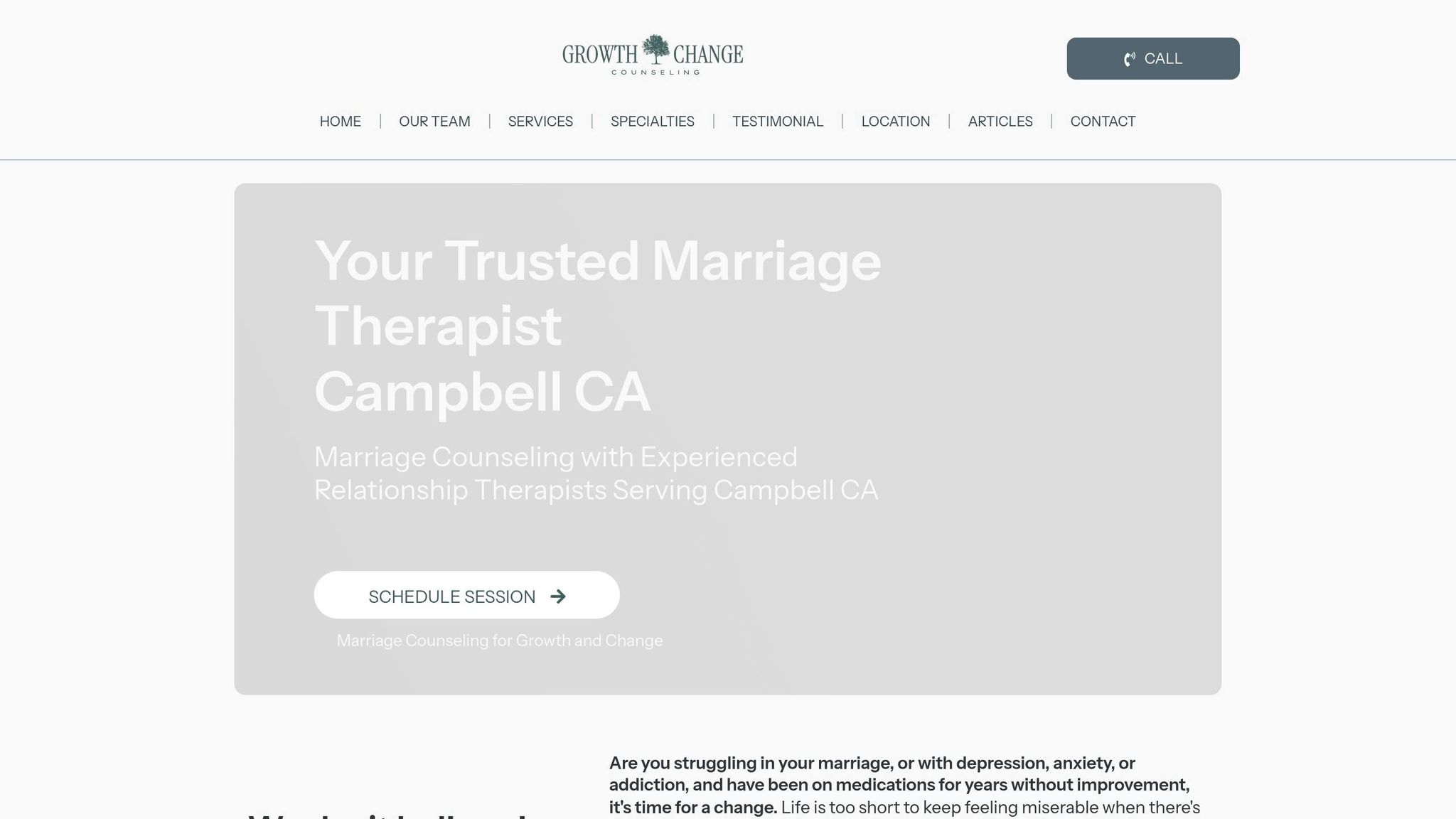
3. Growth and Change Counseling‘s Marriage Rescue Institute
Core Features
The Marriage Rescue Institute offers a focused, 12-week program designed specifically for couples in crisis. It provides a structured approach to rebuilding relationships when traditional methods have fallen short. This model is rooted in integrative and solutions-focused therapy, drawing from recent research and blending elements from various psychological frameworks, including Emotionally Focused Therapy (EFT).
A standout feature of the program is its focus on developing "relational intelligence" – the ability to navigate and understand the complexities of relationship dynamics. As John Kane, LMFT, founder of Growth and Change Counseling, puts it:
"The Marriage Rescue Institute, our 12-week marriage program, is in the habit of putting marriages in dire circumstances back together!"
The program builds on techniques like Cognitive Behavioral Therapy (CBT) and EFT, offering fast and customized interventions for issues like breaches of trust. It also incorporates specialized anger management strategies, addressing both surface-level outbursts and the deeper emotional undercurrents driving conflict. This approach doesn’t just manage anger but aims to resolve the root causes of dysfunction.
Couples are encouraged to engage in practical homework between sessions, where they apply newly learned skills in their daily lives. These exercises are designed to foster healthier communication and create lasting behavioral changes. This intensive format equips couples with immediate tools for coping while laying the foundation for deeper trust repair.
Effectiveness for Trust Repair
The Marriage Rescue Institute zeroes in on trust repair, addressing severe issues like infidelity, emotional withdrawal, and repeated betrayals. The program emphasizes three crucial components: emotional safety, full disclosure, and structured repair conversations.
Couples work through a series of stages, including setting healthy boundaries, processing trauma, and practicing empathy. This step-by-step approach helps them identify the root causes of trust breakdowns while collaboratively building healthier patterns for the future.
One of the program’s key strengths is its ability to deliver intensive, immediate support during critical moments. Unlike traditional therapy, which can take months to show progress, this 12-week model offers concentrated help when couples need it most. This structured and focused approach often leads to higher rates of relationship stabilization compared to standard weekly therapy sessions.
Arione Capolupo, LMFT, a therapist at Growth and Change Counseling, highlights the program’s efficiency:
"We don’t believe in endless therapy. Our goal is to get you in and out as quickly as reasonably can be done and do it in a way that hopefully you will never need to come back!"
Session Structure and Duration
The Marriage Rescue Institute operates on a 12-week timeline, offering rapid and targeted coaching. Each session is structured to guide couples through assessment, intervention, and follow-up phases. This directive approach ensures clear progress and accountability throughout the program.
Couples can choose between in-person and telehealth sessions, with services available in locations like Campbell, San Jose, Los Angeles, and Roseville, or remotely via secure video calls. This flexibility ensures accessibility, allowing couples to receive help without geographic limitations.
Sessions incorporate cognitive-behavioral techniques for emotional regulation, trauma-informed strategies, and structured communication exercises. The directive nature of the program means therapists actively guide couples, helping them navigate complex emotional challenges with clear and actionable steps.
"What we can tell you is that basic Marriage Rescue Institute Coaching Package is usually 12 weeks and is sufficient for couples to experience significant growth in their relationships."
Suitability for Couples in Crisis
This program is specifically designed for couples facing severe challenges, such as repeated infidelity, trust issues related to addiction, or emotional disconnection that persists despite prior therapy attempts. It offers a hands-on, solutions-driven approach, making it particularly effective for those who haven’t responded to traditional therapy.
The Marriage Rescue Institute also accommodates couples dealing with complex issues, including neurodiverse relationships, trauma, addiction, anxiety, and depression. By addressing these layered challenges, the program creates a holistic path to trust repair, especially for those grappling with anger-induced conflicts.
However, the program’s intensive nature requires a strong commitment from both partners. Success depends on their willingness to engage in vulnerable emotional work, examine their own roles in relationship problems, and implement meaningful behavioral changes. For couples ready to dive into this process, the Marriage Rescue Institute offers a structured and effective way to rebuild trust and connection.
sbb-itb-596b85d
Heal Your ANGER Reflex BEFORE It Destroys Your Relationships
Benefits and Drawbacks
Anger management therapies come with their own sets of strengths and limitations, making it important to choose an approach that aligns with your relationship’s unique needs. Below, we break down the key aspects of Cognitive Behavioral Therapy (CBT), Emotionally Focused Therapy (EFT), and Growth and Change Counseling’s Marriage Rescue Institute to help you decide.
Cognitive Behavioral Therapy (CBT) takes a highly structured, research-backed approach, delivering measurable results. Over a 20-week period, clients experience significant reductions in anger, with a large effect size of 1.23 [4]. This method is practical and cost-effective, offering tools that can be applied right away. However, its structured nature may not dive deep enough into the emotional wounds that often fuel trust issues [2][3].
Emotionally Focused Therapy (EFT) is particularly effective for couples aiming to rebuild emotional intimacy after trust has been broken. It focuses on the underlying causes of anger and mistrust, creating a safe space for vulnerability and healing. Research consistently shows EFT improves relationship satisfaction and trust [1]. While its benefits are profound, EFT requires a significant emotional investment and can be time-consuming, which might slow progress compared to more skills-focused approaches [1].
Growth and Change Counseling’s Marriage Rescue Institute offers a crisis-focused, intensive 12-week program designed for couples in urgent need of intervention. This approach effectively tackles complex issues like addiction, trauma, and repeated betrayals. Therapeutic alliance scores in this program increase from an average of 6.54 to 6.78 on a 7-point scale over 20 weeks [4]. While its fast-paced, directive style can drive rapid progress, it demands a high level of commitment, which may overwhelm some couples. Additionally, the program is only available to California residents, though telehealth services make it accessible statewide.
The table below summarizes the strengths and limitations of each therapy to help you compare options at a glance:
| Therapy Name | Core Features | Advantages | Disadvantages | Best Suited For |
|---|---|---|---|---|
| Cognitive Behavioral Therapy (CBT) | Skills training, cognitive restructuring, homework assignments | Practical tools, measurable progress, cost-effective, evidence-based | May feel rigid, limited focus on emotional attachment, requires high motivation | Couples needing immediate tools to manage anger |
| Emotionally Focused Therapy (EFT) | Emotional safety creation, attachment focus, structured repair conversations | Builds deep intimacy, addresses root causes, fosters lasting change | Time-intensive, emotionally demanding, slower initial progress | Couples recovering from betrayal seeking emotional reconnection |
| Marriage Rescue Institute | 12-week intensive program, integrative approach, directive coaching | Rapid intervention, combines multiple methods, available via telehealth | High commitment required, limited to California residents, fast pace may overwhelm | Couples in severe crisis needing structured, immediate solutions |
Ultimately, the success of any therapy heavily depends on the quality of the therapeutic relationship. Research highlights that a strong connection between therapist and client is a key predictor of positive outcomes [4]. For the best results, both partners must fully engage in the process – whether that means completing CBT homework, embracing emotional vulnerability in EFT, or committing to the intensive format of the Marriage Rescue Institute.
Notably, distress tolerance scores show significant improvement, rising from 47.33 to 58.67 over 20 weeks [4]. This reinforces the critical role of mutual commitment and a strong therapeutic alliance in repairing trust and rebuilding relationships.
Conclusion
When anger starts to erode trust in a relationship, finding the right therapy can shift harmful dynamics into healthier ways of communicating. The three approaches we’ve explored each offer unique benefits for couples grappling with anger-fueled trust issues.
Cognitive Behavioral Therapy (CBT) is ideal for couples seeking immediate strategies to manage heated conflicts. It provides practical tools that can lead to noticeable improvements quickly [4]. This method works best when both partners are ready to address the specific behaviors and thought patterns driving their anger. However, for couples dealing with deeper emotional wounds, a different approach may be more effective.
Emotionally Focused Therapy (EFT) is particularly helpful for couples whose anger stems from unresolved emotional pain or attachment issues. While the progress may take longer, EFT dives into the underlying causes of recurring hurt and retaliation cycles [1]. By fostering emotional vulnerability, it creates a safe space for partners to rebuild trust on a deeper level.
For couples in severe crisis, a more intensive option may be necessary. Growth and Change Counseling’s Marriage Rescue Institute offers a 12-week intensive program that combines the practical strategies of CBT with the emotional depth of EFT. This approach is designed for couples who need significant progress within a short timeframe. With therapeutic alliance scores averaging over 6.5 out of 7, it has proven highly effective for those willing to fully commit to the process [4].
Research consistently shows that these therapeutic methods help couples manage frustration without resorting to destructive anger [4]. This ability is critical for repairing trust and creating a foundation for a healthier, more connected relationship.
Whether you choose CBT for its actionable tools, EFT for its emotional healing, or the Marriage Rescue Institute for its intensive structure, the goal remains the same: to rebuild trust and move past chronic anger. For California couples in crisis, the Marriage Rescue Institute offers a structured and integrative approach to foster meaningful change.
Choosing the Right Path with Growth and Change Counseling
How can I choose the right therapy approach to address my relationship’s unique challenges and goals?
When it comes to selecting the best therapy approach, it’s crucial to pinpoint the specific challenges in your relationship and clarify your goals. Growth and Change Counseling offers a specialized option through The Marriage Rescue Institute – a 12-week coaching program crafted to support couples navigating tough times. This structured program is designed to rebuild trust and rekindle connection, offering personalized guidance to address your unique situation and set you on a path toward healing and renewal.
How can I create a sense of emotional safety in my relationship while attending therapy?
Building emotional safety in a relationship requires effort, understanding, and open communication. A great place to start is by practicing active listening. This means giving your partner your undivided attention, acknowledging their feelings, and resisting the urge to interrupt. When someone feels truly heard, it strengthens their sense of respect and connection.
Honesty is equally important – share your thoughts and emotions openly, but do so in a calm, non-confrontational manner. Clear communication about boundaries and respecting each other’s needs also plays a huge role in building trust and security. On a personal level, learning to manage your emotions is key. Techniques like deep breathing or mindfulness can help you stay composed during disagreements, creating a more supportive and understanding atmosphere for both of you.
What makes the Marriage Rescue Institute program different from traditional therapy in terms of structure and results?
The Marriage Rescue Institute program takes a different approach from traditional therapy by offering a focused, 12-week coaching plan tailored for couples facing serious marital challenges. Instead of the more open-ended style often seen in therapy, this program delivers structured guidance with clear, actionable steps aimed at helping couples rebuild trust, enhance communication, and repair their relationship.
What sets this program apart is its emphasis on achieving tangible results within a set timeframe. It’s specifically designed for couples who need immediate help to tackle critical issues in their marriage. With a solutions-driven approach, participants walk away equipped with practical tools to nurture long-term growth and strengthen their connection.
Related Blog Posts
- Overcoming Trust Issues After Betrayal
- Attachment Styles in Couples Counseling
- Managing Anger During Addiction Recovery in Marriage
- Relationship Trauma: Root Causes and Solutions
