Addiction can severely damage relationships, especially trust and intimacy. Rebuilding these bonds requires more than just stopping harmful behaviors – it demands accountability. This means taking responsibility for past actions, being transparent, and consistently following through on commitments. Accountability helps rebuild trust, reduce anxiety, and create emotional safety, which are essential for restoring intimacy.
Key takeaways:
- Addiction often leads to isolation, secrecy, and broken trust.
- Accountability involves owning mistakes, making amends, and maintaining consistent behavior.
- Structured routines, like daily check-ins and transparency, help reduce uncertainty and rebuild connection.
- Emotional safety grows when both partners communicate openly and validate each other’s feelings.
- Recovery programs, such as Behavioral Couples Therapy, provide tools to support relationship healing.
Accountability isn’t about control or punishment – it’s a pathway to healing, emotional closeness, and restored intimacy.
Building Accountability with Growth and Change Counseling
Research on Accountability, Trust, and Intimacy
These principles are at the heart of therapeutic approaches aimed at helping couples navigate addiction recovery. Relationship science has long emphasized that trust isn’t built on words alone – it stems from consistent, honest actions over time. When addiction disrupts a relationship, accountability serves as the pathway back to intimacy. The following sections delve into how accountability practices rebuild trust and strengthen relationships.
How Accountability Builds Trust
Research in relationship science consistently shows a connection between accountability – like admitting mistakes, keeping promises, and being transparent – and increased trust and intimacy in couples. When partners reliably own up to their errors and actively work to repair them, it reduces defensiveness and fosters a sense of reliability. These qualities are essential for cultivating intimacy in long-term relationships [3][5].
Brené Brown’s work on vulnerability and connection highlights that couples practicing emotional honesty and accountability often experience stronger relational outcomes [6]. This concept plays out in everyday moments: openly acknowledging missteps, validating your partner’s feelings, and following through with behavioral changes over time. These actions create a sense of emotional safety and deepen the bond between partners [3][4][6].
Accountability means owning your behavior and placing the relationship above personal pride. This approach lays the groundwork for trust, mutual respect, and emotional security [5][6]. Key components include predictability (your partner knows what to expect), emotional safety (they feel secure being vulnerable), and reduced defensiveness (conflicts become opportunities for growth rather than escalation).
In the context of addiction recovery, accountability takes on even greater significance. Both partners committing to transparency, open communication, and consistent follow-through fosters emotional safety and intimacy [8][9][10][13][14]. Simple, everyday actions – like showing up on time, keeping promises, and maintaining sober routines – often speak louder than words in rebuilding trust [9][10][14].
The sections below explore how accountability repairs trust and strengthens emotional connections.
Repairing Relationships Through Taking Responsibility
When emotional wounds occur in a relationship, taking responsibility and making amends are critical steps for healing and restoring intimacy [9][13][14]. Research underscores that breaches of trust are repaired through ownership of actions, genuine apologies, and consistent behavioral changes over time [9][10][13][14].
Real-life examples illustrate how this works. Take Sarah, for instance. She shifted from blaming her partner during arguments to acknowledging her role in conflicts. This change opened the door to constructive conversations, bringing relief and a renewed sense of connection. Her willingness to take ownership showed her commitment to the relationship, prioritizing it over being "right" [4].
Another example is Jamal, who recognized that his poor time management was causing stress in his relationship. He adopted practical strategies – using calendars, setting alarms, and communicating proactively – to ensure he followed through on commitments. These consistent actions reduced his partner’s anxiety and strengthened their bond [4].
In addiction recovery, making amends goes beyond simply saying "I’m sorry." It involves taking active responsibility, understanding the pain caused, and listening to how your actions affected your partner. This process, when done thoughtfully, deepens emotional intimacy [13]. Effective apologies are specific and behavior-focused, clearly acknowledging harm and its impact, rather than being vague or defensive [13][14]. Inviting your partner to share their feelings and listening without defensiveness validates their experience, fostering emotional closeness [13][14].
Rebuilding Trust Through Consistent Behavior
While taking responsibility is crucial, trust ultimately hinges on consistent behavior. Trust is rebuilt through a pattern of dependable actions over time – staying sober, being punctual, and honoring boundaries. These behaviors often carry more weight than verbal reassurances in the process of restoring trust [9][10][14].
Addiction and betrayal can leave partners feeling hypervigilant and fearful. Structured accountability – such as setting clear boundaries, maintaining transparent communication, and establishing routines – helps to counteract this uncertainty. It reintroduces predictability and emotional security into the relationship [8][9][12][14]. When partners see consistent accountability, they begin to feel safer and more willing to rely on one another.
In recovery, accountability does more than support sobriety; it strengthens relationships. Loved ones are more likely to invest in someone who consistently owns their actions and follows through on commitments [11]. Clinicians often note that couples who engage in regular check-ins – like asking, "How are we doing?" – and use reflective language, such as "I can see how that hurt you", tend to develop stronger intimacy and recover more quickly from conflicts [6][15].
Rebuilding trust is a gradual process. Recovery experts emphasize that it can take months or even years to fully restore trust, depending on ongoing transparency, accountability, and respect for boundaries [9][10][13][14]. Partners often need prolonged evidence of change before they feel secure again. Emotional intimacy may take even longer to reestablish, as it often follows sustained accountability [9][10][14].
Behavioral Couples Therapy (BCT) for substance use is an evidence-based approach that incorporates accountability through behavioral contracts, shared monitoring, and regular check-ins. Research shows that BCT is associated with higher abstinence rates and improved relationship functioning compared to individual-focused treatments. This structured model not only supports sobriety but also reinforces relational trust and intimacy [8][9][10][13][14].
Accountability in Sexual Addiction and Betrayal Trauma Recovery
Sexual addiction and betrayal can leave deep scars on relationships. When a partner uncovers chronic infidelity or compulsive sexual behavior, the resulting impact often mirrors trauma rather than a mere disagreement. To rebuild intimacy and trust after such betrayal, understanding the role of accountability is key. Below, we explore structured strategies that can help couples navigate this journey toward healing.
How Sexual Addiction and Betrayal Affect Relationships
The fallout from sexual addiction and repeated betrayal can shatter trust, emotional safety, and intimacy – both emotional and physical. Partners who discover ongoing infidelity often experience symptoms akin to post-traumatic stress, such as intrusive thoughts, hypervigilance, and emotional numbing [16].
Betrayal trauma theory sheds light on why these reactions can be so intense. When someone you deeply trust – like a spouse or long-term partner – violates fundamental relational agreements, your nervous system may respond as though a major trauma has occurred. This can manifest in various ways, including heightened arousal (e.g., being easily startled, angry, or unable to sleep), recurring mental images of the betrayal, or avoidance behaviors like shutting down emotionally or dissociating during intimate moments [5][7].
Adding to the complexity, the person responsible for the harm is often the same individual the betrayed partner relies on for emotional or financial support. This dynamic can lead the injured partner to downplay or compartmentalize the betrayal, sometimes even questioning their own perceptions. Such responses can delay full disclosure and amplify the shock when the truth eventually comes to light [5][7].
Clinical data highlights that most partners of individuals with sexual addiction exhibit trauma symptoms significant enough to warrant intervention [16]. As a result, treatment must focus on validation, clear communication, and a "safety-first" approach rather than rushing toward forgiveness or resuming physical intimacy. It’s crucial for the betrayed partner to have control over how and when they receive information, ensuring they aren’t overwhelmed during the accountability process [5][7].
Modern therapeutic practices have moved away from outdated "codependency" models that labeled betrayed partners as enablers. Instead, betrayal-trauma-informed approaches view these individuals as trauma survivors, with responses like hypervigilance, anger, and fear seen as natural reactions to deceit [16].
Using Honesty and Transparency in Recovery
Accountability in recovery hinges on honesty and consistent transparency. While telling the truth is fundamental, one-time admissions are insufficient after a history of chronic deception. Effective accountability requires a structured, layered approach rather than relying on verbal assurances alone.
The process often begins with a well-defined sobriety plan. This plan clearly outlines which sexual behaviors are off-limits and distinguishes between a slip and a relapse. It also includes concrete recovery actions, such as attending support groups, therapy sessions, or scheduled check-ins [2][4][5][7].
A crucial next step is a formal therapeutic disclosure. This therapist-guided process allows the unfaithful partner to provide a comprehensive and non-defensive account of their actions. By preparing carefully, this approach minimizes the risk of sporadic revelations that could retraumatize the betrayed partner [16].
To sustain progress, ongoing accountability measures are introduced. These might include regular check-ins, using accountability software, or shared digital tools to maintain transparency and ease anxiety. In certain cases, polygraph-assisted verification is employed to validate disclosures and sobriety, provided it’s used ethically [2][4][5][7]. These practices shift the focus from vague reassurances like "trust me" to observable commitments.
Many couples in recovery establish predictable routines to rebuild trust. For instance, daily check-ins might involve the addicted partner sharing any triggers or recovery efforts while the betrayed partner expresses their emotional needs. Weekly meetings can further reinforce progress by reviewing therapy updates, support group attendance, and adjustments to boundaries [4][5][6].
Practical transparency measures also play a key role. Examples include shared calendars, location-sharing apps to avoid misunderstandings, and agreed-upon technology practices, such as using accountability software or eliminating secret devices and accounts. Financial transparency – like shared access to accounts or monitoring spending linked to addictive behaviors – can also be crucial [4][5][6]. Initially, many betrayed partners may require "full transparency", including access to devices and detailed recovery updates. Over time, these measures can be renegotiated as trust begins to rebuild [16].
Approaches That Center the Betrayed Partner
While transparency is a cornerstone of recovery, centering the betrayed partner’s needs is essential for long-term healing. Accountability structures must prioritize their safety, emotional well-being, and pace of recovery, rather than focusing solely on the progress of the unfaithful partner. This approach acknowledges the betrayed partner’s trauma and ensures that recovery efforts align with their specific needs [5][7].
Modern frameworks emphasize that betrayed partners are trauma survivors with adaptive responses, moving away from outdated notions of "enabling." These betrayal-trauma-informed models often separate treatment into distinct tracks – one addressing addiction recovery and another focused on trauma – before or alongside couples work. Formal processes like therapeutic disclosures and impact letters are used to center the betrayed partner’s emotional experience, ensuring safety and stabilization before diving into reconciliation [2][5][7].
Behavioral and relational contracts are another tool. These agreements outline specific commitments the addicted partner must uphold, such as attending therapy, participating in support groups, or adhering to transparency practices. They also establish clear consequences for broken commitments, allowing the betrayed partner to set firm boundaries and timelines. This helps rebalance the power dynamics created by the betrayal and fosters a sense of security [2][5][7].
In practice, this might mean granting the betrayed partner control over the timing and depth of disclosures, as well as collaboratively setting boundaries – such as limits on physical intimacy, financial access, or independent activities – until safety is restored. Couples sessions should avoid pressuring the betrayed partner into forgiving too quickly or focusing on the relationship before their individual trauma is addressed [5][7].
Under this approach, the unfaithful partner must accept the consequences of their actions, answer agreed-upon questions, and demonstrate consistent change over time [5][7]. Effective clinicians balance accountability with compassion, making it clear that meaningful repair is impossible without genuine effort while framing the process as an opportunity for growth. They validate the betrayed partner’s trauma and right to set boundaries, ensuring therapy doesn’t become a space for pressuring them to "move on" [16].
For couples in high-distress situations, structured programs can offer intensive support. For instance, Growth and Change Counseling’s Marriage Rescue Institute provides a 12-week coaching process designed to help couples rebuild their relationships. These programs combine clear behavioral commitments with frequent accountability check-ins, offering structure to stabilize relationships when both partners are committed.
Research consistently shows that strong family and relationship dynamics improve addiction recovery outcomes. Relationship distress and lack of support often increase relapse risks, while structured, supportive involvement from partners enhances long-term sobriety and adjustment [8][9]. This highlights why accountability systems that prioritize the betrayed partner’s experience are not only compassionate but also effective in fostering healing for both individuals and their relationship.
sbb-itb-596b85d
How Accountability Restores Intimacy
Rebuilding intimacy after betrayal or addiction isn’t something that happens automatically with time or a simple apology. It requires deliberate, consistent accountability to address the specific ways trust and safety were broken. Research highlights that accountability plays a key role in restoring intimacy by reducing uncertainty, fostering empathy, and reestablishing secure attachment.
Creating Predictability and Reducing Uncertainty
Betrayal or addiction leaves the betrayed partner in a constant state of uncertainty. They may question the truth of what they’re told, feel uneasy when their partner is out of sight, and worry whether the harmful behavior will recur. This ongoing unpredictability keeps their nervous system on edge, making genuine intimacy nearly impossible.
Accountability helps by aligning words with consistent actions. Instead of relying on verbal reassurances alone, it builds a track record of reliable behavior. For example, regular therapy sessions or transparent scheduling show a commitment to change. Research on trust repair confirms that consistent, transparent, and reliable actions are far more effective in rebuilding trust than one-time apologies or promises.
Structured routines also play a big role in creating predictability. Daily or weekly check-ins provide a set time for both partners to discuss emotional needs, recovery progress, and potential triggers. These check-ins don’t have to be lengthy, but they do need to happen regularly. When the recovering partner honors agreements – like device transparency, openness about finances, or avoiding risky situations – they create a sense of stability. This helps the betrayed partner begin to relax their constant vigilance.
Over time, this predictability reduces the chaos and anxiety caused by betrayal. As the betrayed partner sees consistent accountability, their nervous system starts to settle. They no longer need to constantly ask, "What’s really going on?" Instead, they can say, "What I see matches what I’m being told." This shift allows both partners to invest in emotional closeness without bracing for the next hurtful incident.
Building Emotional Closeness and Empathy
Accountability isn’t just about predictable actions – it also fosters emotional connection by encouraging vulnerability. When the recovering partner takes responsibility for their actions and listens to their partner’s pain without defensiveness, it creates a powerful shift in the relationship.
This process, often called empathic attunement, involves accurately reflecting the other person’s emotional experience and showing genuine concern. Trauma research shows that this kind of validation is critical for healing after betrayal. Acknowledging the betrayed partner’s pain strengthens their sense of being seen and cared for, which is essential for rebuilding emotional safety.
True accountability goes beyond saying "I’m sorry." It includes sharing fears, motives, and triggers openly – without making excuses. For instance, saying, "I felt ashamed and hid my relapse instead of asking for help", provides insight while still taking responsibility. This kind of self-disclosure, paired with behavioral change, shifts the relationship away from secrecy and toward shared emotional understanding.
Research highlights that mutual self-disclosure, when paced appropriately, is a strong predictor of closeness and satisfaction in relationships. In recovery, this means the recovering partner shares honestly about their struggles while the betrayed partner expresses their pain and needs. These moments of vulnerability, when met with empathy rather than criticism, help rebuild the emotional bond.
The recovering partner’s willingness to be fully seen – including their mistakes and shame – creates cycles of openness. Both partners begin to feel heard and valued, which strengthens the foundation for both emotional and physical intimacy. Over time, these conversations help bridge the gap between emotional closeness and physical connection, as both partners feel safer being fully known.
Accountability also builds empathy in both directions. The recovering partner gains a deeper understanding of how their actions affected their partner, while the betrayed partner, seeing genuine remorse and effort, may find it easier to respond with compassion instead of anger. This doesn’t mean rushing forgiveness, but it does allow both partners to reconnect with each other’s humanity.
Restoring Secure Attachment and Safety
Accountability not only reduces uncertainty and fosters empathy – it also rebuilds the safety required for secure attachment. Intimacy thrives when both partners feel safe with each other. According to attachment theory, secure attachment is built on consistent responsiveness, reliability, and emotional attunement. Betrayal and addiction often shatter this foundation, leaving the betrayed partner feeling anxious or fearful, even if they were previously secure.
Accountability serves as a corrective experience. When the partner who caused harm consistently acknowledges it, makes amends, and changes their behavior, they send a clear message: "You matter, and I am here for you." Over time, this consistent responsiveness helps repair the foundation for secure attachment.
For those with anxious attachment styles, betrayal can heighten fears of abandonment and lead to behaviors like constant checking or emotional outbursts. Accountability, through reliable actions and emotional availability, gradually eases these fears. The betrayed partner learns that their needs will be met and that they don’t need to stay on high alert.
For avoidant attachment styles, accountability often means moving toward emotional engagement rather than withdrawing. This shift from distancing to connection transforms the relationship into a safe space where vulnerability is welcomed, not rejected.
Therapeutic models like the Atonement-Attunement-Attachment framework emphasize accountability as the pathway to secure bonding. In this model, atonement (making amends and demonstrating change) leads to attunement (emotional responsiveness and connection), which ultimately restores attachment (secure bonding that supports intimacy).
Safety in a relationship includes both emotional safety – freedom from gaslighting, blame, or unpredictable reactions – and practical safety – clear boundaries, transparency, and reduced risks tied to addictive behaviors. Accountability strengthens both. When harm is acknowledged and addressed, emotional safety grows. When agreed-upon structures like therapy or monitoring reduce the chance of future harm, practical safety increases.
As safety is restored, many couples find they can reconnect physically and emotionally without ignoring red flags or betraying their own boundaries. Research on forgiveness and repair rituals shows that when accountability is paired with consistent change, couples often report greater intimacy and satisfaction than those who rely on time alone to heal.
This renewed safety also encourages open conversations about sexual needs and boundaries. The betrayed partner can express what they need to feel secure, while the recovering partner can share their struggles with intimacy without fear of judgment. These honest, grounded discussions further strengthen connection.
Programs like Growth and Change Counseling’s Marriage Rescue Institute offer structured support for couples navigating this process. Their 12-week intensive coaching program helps couples rebuild trust and intimacy through clear commitments and regular accountability check-ins. Such programs provide a framework for couples who may struggle to maintain accountability on their own, offering the stability needed for secure attachment to gradually return.
Rebuilding intimacy after betrayal is a journey that takes time – often months or even years. But with consistent accountability – through predictable actions, emotional engagement, and responsiveness – couples can create the conditions for intimacy to not only return but deepen in ways they may not have thought possible.
Applying Research in Counseling Settings
Research on accountability and restoring intimacy plays a critical role in shaping therapeutic interventions. Structured counseling programs take these insights and turn them into actionable steps, helping couples transition from crisis to connection. When accountability becomes a central part of therapy, couples gain the tools and guidance needed to rebuild trust and intimacy. Below, we’ll explore how research informs practical treatment programs.
Treatment Programs for Couples in Addiction Recovery
Couples-based addiction treatment focuses on both personal accountability and healing the relationship. Instead of isolating the addicted partner in treatment, these programs involve both individuals, addressing the damage addiction causes to the relationship as a whole. This dual focus acknowledges that recovery requires attention to both personal and relational healing.
Behavioral Couples Therapy (BCT) is one of the most studied approaches in this area. BCT introduces "positive behavior change agreements", which outline specific recovery actions like attending support group meetings, doing daily check-ins, and engaging in substance-free activities together. These agreements make accountability clear and measurable, replacing vague promises with concrete commitments. Research shows that couples participating in BCT achieve higher abstinence rates and report stronger relationship satisfaction and stability compared to those in individual-only treatments [8].
For example, couples might agree to actions like texting upon arrival at meetings or sharing schedules. These visible, predictable behaviors help rebuild the trust necessary for intimacy.
Programs addressing sexual addiction and betrayal trauma focus on the needs and safety of the betrayed partner. Specialized workshops and treatment tracks validate the trauma responses – such as hypervigilance, intrusive thoughts, and difficulty trusting – that often follow sexual betrayal. These programs implement tools like transparency agreements, regular disclosure schedules, and no-contact rules tailored to the unique dynamics of sexual betrayal [16].
The "Betrayal Model" used in some programs helps couples understand how secrecy and broken promises erode trust and intimacy. This framework highlights the importance of strict boundaries and accountability measures, reframing transparency requirements as essential steps for rebuilding trust rather than as punitive or controlling actions [8].
To reduce the emotional burden on the relationship, many programs incorporate accountability partners and support groups. This ensures the recovering partner has external support, while the betrayed partner can focus on healing rather than monitoring. Weekly check-ins with an accountability partner help the recovering individual stay on track, easing the strain on the relationship [11][17].
Growth and Change Counseling‘s Approach
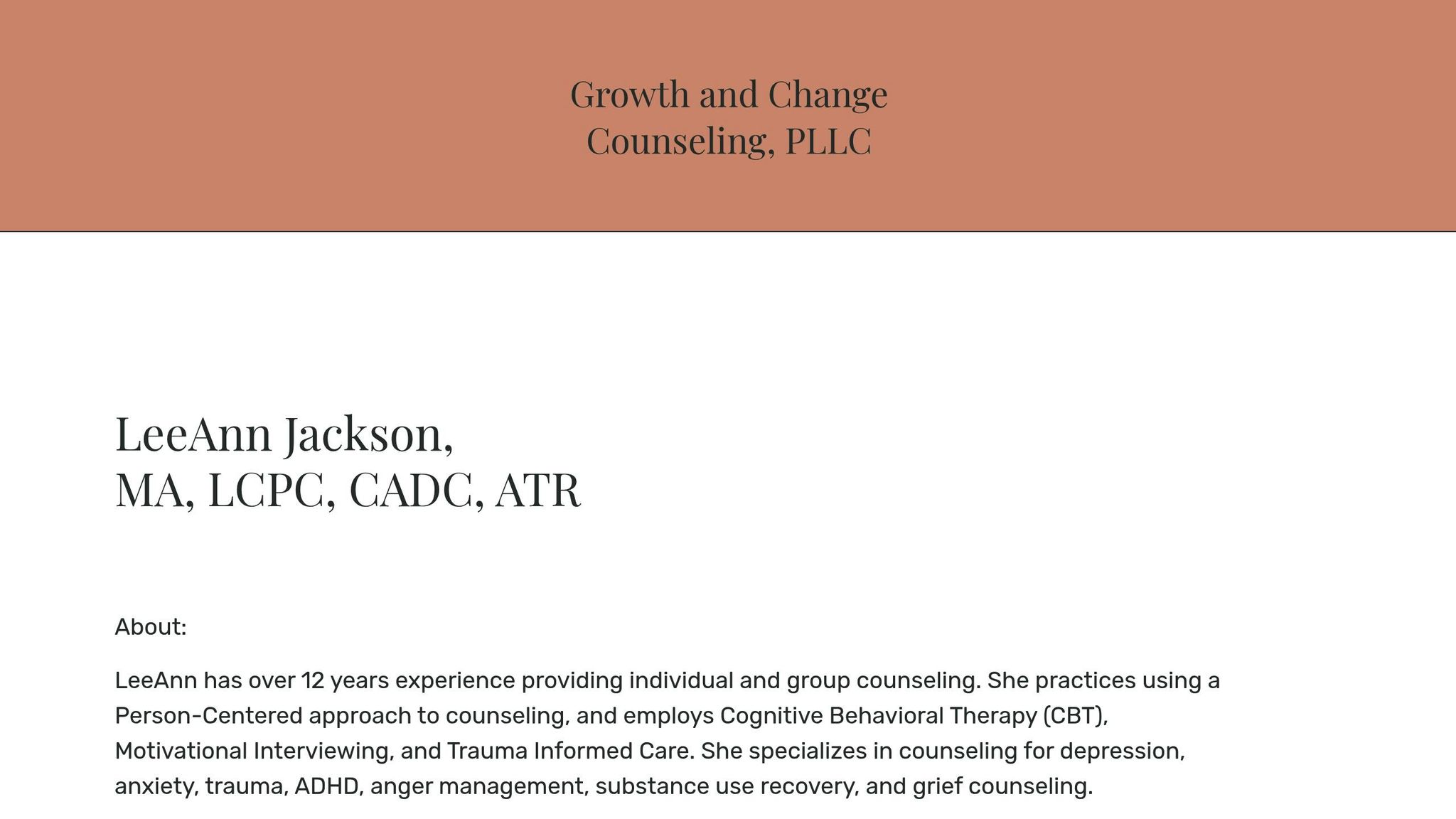
Building on these established models, Growth and Change Counseling offers a personalized roadmap for recovery. This practice recognizes that issues like addiction, anxiety, and depression often stem from relational challenges, so their treatment approach targets both personal recovery and relationship restoration.
Founder John Mark Kane, LMFT, emphasizes the concept of "relational intelligence", which he describes as the skills and awareness needed to develop healthy connections. As Kane explains:
"You are a relational being, wired for healthy relationship. The more relationally healthy people are, the less anxious, addicted, and depressed they are" [1].
This philosophy shapes their work with couples dealing with addiction, addressing both the addiction itself and the relational damage it causes. Karin Wiese, LMFT, adds:
"We have a foundational process that we take couples, individuals, addicts, and parents through. This process is tailored to the situation that you are dealing with and helps you develop the relational intelligence to put your relationships and mental health back together" [1].
For couples in crisis, Growth and Change Counseling offers The Marriage Rescue Institute, a 12-week intensive coaching program. This structured intervention provides the focus and urgency that struggling couples often need. Unlike open-ended therapy, this time-limited program creates a clear path for change.
The program combines couples sessions with individual work, addressing personal barriers to accountability and vulnerability while fostering connection. Individual sessions might focus on a recovering partner’s feelings of shame or a betrayed partner’s trauma responses, while couples sessions practice communication skills and establish accountability agreements. Between sessions, couples complete "relational homework" like daily check-ins, reflective language exercises, or implementing transparency agreements. These practical steps help couples apply what they’re learning in real time.
Growth and Change Counseling also specializes in treating media and sex addiction, offering therapy to help individuals regain control over their behaviors and work toward full recovery. Their expertise in these areas ensures that therapists understand the unique challenges of sexual betrayal and can implement the necessary transparency and boundary-setting protocols.
Services are available in Campbell, San Jose, Los Angeles, and Roseville, California, as well as through telehealth statewide. Sliding scale options are offered for those with financial constraints.
Benefits of Structured Counseling Programs
Structured, research-based counseling approaches provide several advantages for couples working to rebuild trust and intimacy after addiction. The structure itself fosters safety. Knowing what to expect – like weekly sessions, specific homework, and clear accountability agreements – allows couples to focus on emotional healing without uncertainty.
These programs also help contain crises more quickly. Couples in distress need immediate tools to establish boundaries, stop harmful behaviors, and create safety through clear communication and predetermined protocols. This predictability helps both partners regulate their emotions, enabling deeper healing.
Additionally, structured programs address a common challenge in therapy: the desire to change without knowing how. These programs teach practical techniques, such as reflective language, structured apologies, and boundary-setting. For instance, a recovering partner might learn to say, "I can see how that would hurt you", instead of becoming defensive. Similarly, a betrayed partner might practice expressing boundaries without guilt or apology [6].
Written agreements and behavioral contracts make accountability tangible. Rather than abstract discussions about trust, couples create measurable commitments – like attending therapy or adhering to transparency measures – that allow both partners to track progress over time [8][9].
Importantly, these programs emphasize that accountability is not about control. Therapists guide couples in creating agreements that respect both partners’ needs and limits. These agreements are revisited regularly, evolving as trust is rebuilt and circumstances change [8][16].
Time-limited formats, like the 12-week Marriage Rescue Institute, create a sense of urgency and focus, which can increase engagement and motivation for couples in crisis. By integrating individual and couples work, these programs address both personal growth and relational repair, reinforcing their interconnected nature [3].
Finally, these programs aim to equip couples with sustainable practices – such as regular check-ins, reflective communication, and boundary-setting – that they can continue using long after therapy ends. The goal is to help couples build the skills and habits needed for long-term accountability and connection without becoming dependent on therapy [6].
Conclusion
Accountability isn’t just a helpful tool in restoring intimacy after addiction – it’s the cornerstone of rebuilding trust. When addiction fractures trust, the path to repair begins with taking clear responsibility for past actions. Research shows that trust is rebuilt through consistent, observable behaviors. Small, intentional steps – like keeping promises, attending therapy sessions, openly discussing triggers, and maintaining daily check-ins – can gradually ease the anxiety and hypervigilance of a betrayed partner. These actions create the emotional safety needed for intimacy to reemerge [4][18].
When it comes to sexual betrayal trauma, accountability takes on an even deeper significance. For partners grappling with the effects of sexual addiction, the injured party often experiences symptoms similar to post-traumatic stress. In these cases, accountability must include complete transparency, clear boundaries, and a pace that respects the betrayed partner’s emotional needs. They are entitled to honesty, the ability to set limits on contact or intimacy for their well-being, and structured disclosure supported by therapy. Importantly, rebuilding trust doesn’t hinge on premature forgiveness – it’s earned through consistent, trustworthy actions over time [7][18][15].
Healing doesn’t happen overnight. Rebuilding intimacy through accountability is a process that unfolds over months or even years. The early stages can be particularly painful as denial fades and the full impact of past harm comes into focus. Progress may not always be linear, and setbacks can occur. However, setbacks don’t mean failure if they are met with renewed accountability and professional support [4][5][18]. Many couples who embrace this journey often report a deeper, more genuine connection once accountability becomes a consistent practice [2][3][6][18].
Therapeutic frameworks can provide a structured approach to accountability, helping couples navigate these challenges without falling into blame or avoidance. Programs like the Marriage Rescue Institute at Growth and Change Counseling offer a clear, time-limited roadmap to break harmful patterns. Through a 12-week intensive process, they guide couples in identifying destructive cycles, establishing accountability routines, supporting behavioral changes, and intentionally rebuilding trust and closeness. Beyond couples therapy, Growth and Change Counseling also provides individual and family therapy, as well as specialized treatments for addiction, trauma, and neurodiverse relationships. Their services are available in Campbell, San Jose, Los Angeles, and Roseville, California, as well as statewide through telehealth. These resources can help reinforce accountability and accelerate the healing process.
If accountability feels fragile in your relationship, take a small but meaningful step this week. Privately reflect on one area where you could improve – whether it’s following through on a commitment, being more transparent about your triggers, or addressing an unresolved hurt. Then, schedule a calm and constructive conversation to discuss changes that can enhance the safety and trust in your relationship. If these discussions feel overwhelming, consider reaching out to a therapist or counseling program specializing in addiction and betrayal trauma. Accountability is the bridge that connects personal recovery to restored trust, emotional connection, and the intimacy that both partners deserve.
FAQs
How does accountability help rebuild trust and intimacy in relationships impacted by addiction?
Accountability is a cornerstone for rebuilding trust and intimacy in relationships impacted by addiction. When someone takes ownership of their actions, it shows a dedication to being truthful and making meaningful changes – key steps in mending a fractured foundation of trust. This journey often involves open and regular communication, being transparent about intentions and behaviors, and consistently keeping promises. These elements are crucial for addressing the emotional wounds caused by addiction.
For couples working through the challenges of addiction recovery, accountability creates a sense of security and dependability. It signals to both partners that progress is happening and that there’s a shared commitment to repairing the relationship. Over time, this shared effort can pave the way for a stronger emotional bond and a renewed sense of closeness.
What steps can couples take to build accountability and create emotional safety in their relationship?
Rebuilding trust and emotional safety in a relationship takes time, effort, and a commitment to open communication. Couples can begin by establishing clear expectations and boundaries, making sure that both individuals feel valued and heard. Taking time for regular, judgment-free check-ins – where each person can openly share their thoughts and emotions – can go a long way in restoring trust.
Creating shared routines is another helpful approach. This might include setting aside time for meaningful conversations or enjoying activities together that strengthen your bond. Honesty and openness are crucial here – both partners need to feel comfortable discussing challenges and celebrating progress. By focusing on these practices, couples can create an environment where connection and healing can thrive.
How can couples rebuild intimacy after experiencing betrayal trauma?
Rebuilding intimacy after betrayal is challenging, but it’s not impossible. It takes a shared commitment from both partners to engage in open communication, take responsibility for their actions, and allow themselves to be emotionally vulnerable. These efforts are key to rebuilding trust and laying the groundwork for healing.
Seeking professional help, like couples counseling, can play a crucial role in this process. Therapy offers a safe and structured environment to work through the emotional fallout of betrayal, improve communication, and reconnect in ways that strengthen the relationship over time.
Related Blog Posts
- Marriage Coaching for Trust After Addiction
- Trust-Building Exercises for Couples in Recovery
- 7 Boundaries for Intimacy After Sexual Addiction
- How Couples Build Accountability After Addiction
