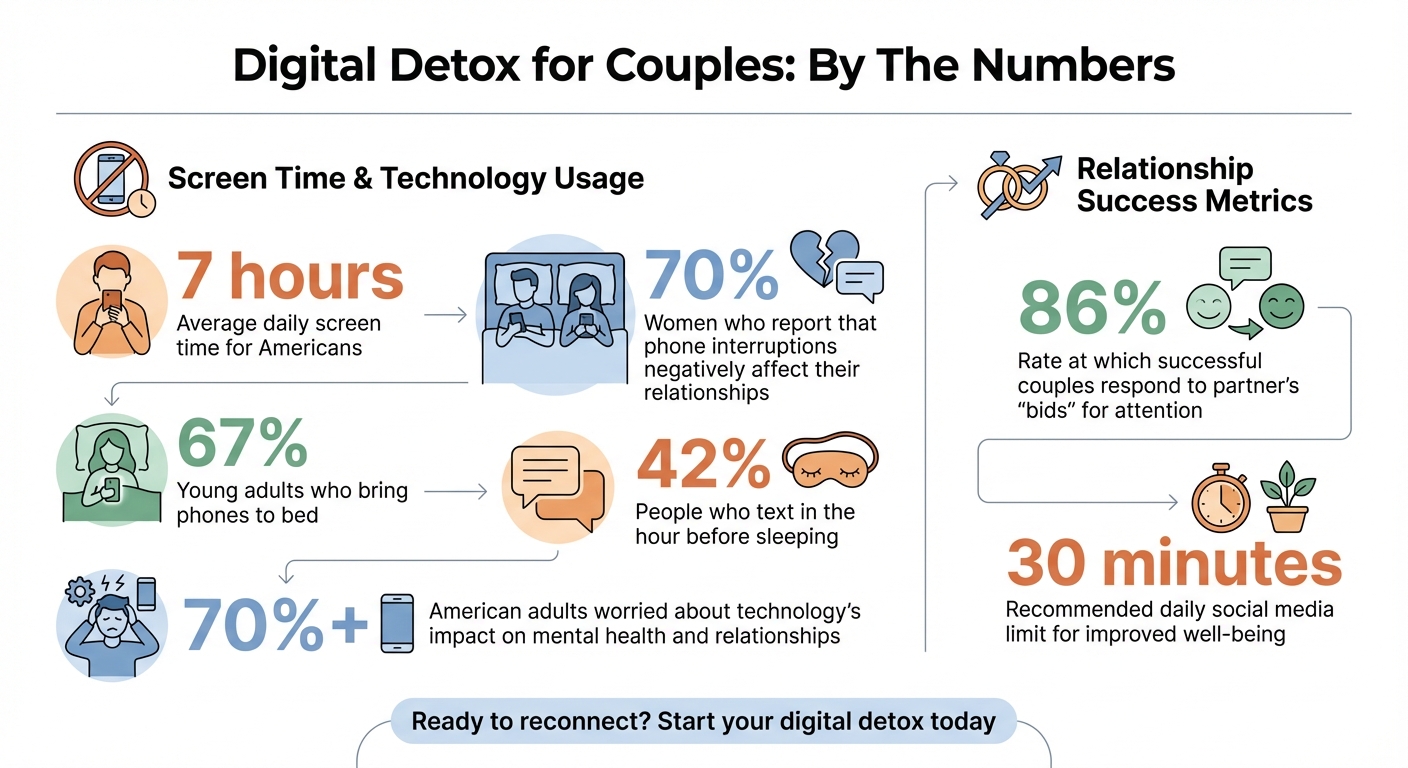
When was the last time you and your partner shared uninterrupted quality time? With the average American spending over 7 hours daily on screens, technology often intrudes on relationships. A digital detox – temporarily stepping back from devices – can help couples reconnect by reducing distractions and fostering deeper connections.
Here’s what you’ll take away:
- Why it matters: Overuse of technology can cause emotional distance, communication breakdowns, and stress in relationships.
- Signs you need a detox: Constant phone-checking, social media stress, or shallow conversations are red flags.
- Benefits of unplugging: Improved communication, reduced stress, better sleep, and stronger emotional bonds.
- How to start: Set tech-free zones, plan device-free activities, and gradually increase unplugged time.
The journey may feel challenging at first, but small steps – like leaving phones out of the bedroom or scheduling tech-free evenings – can make a big difference. If deeper issues arise, consider professional support to address underlying challenges. Ready to reconnect? Let’s dive in.
Digital Detox Statistics: How Technology Affects Couples and Relationships
Why Couples Need a Digital Detox
How Technology Affects Relationships
Technology can quietly erode intimacy in relationships. Take phubbing, for instance – the habit of prioritizing screens over your partner. This behavior creates emotional distance, making one partner feel sidelined. Similarly, technoference – those constant interruptions from notifications – chips away at shared moments. In fact, 70% of women report that these interruptions negatively affect their relationships[4].
"Excessive device usage acts as a barrier to quality communication, which leaves partners feeling ignored or unimportant." – Katie Golem, MSW, LSW[6]
Strong relationships thrive on recognizing and responding to "bids" – those small gestures for attention or affection. Research shows that successful couples respond to these bids about 86% of the time[6]. But when screens take center stage, partners may miss these bids, creating resentment. The stress from constant notifications can also spill over into home life, leaving the ignored partner feeling unvalued. Over time, this can lead to a "why bother" mindset, dulling the connection. Being aware of these dynamics can help couples recognize when it’s time to step back from their screens.
Warning Signs You Need a Digital Detox
The impact of overusing technology often shows up in predictable ways. Here are some common red flags:
- Overreliance on devices: If you find yourself constantly checking your phone – whether during your partner’s story, first thing in the morning, or right before bed – it may signal an unhealthy dependence on technology[2][3]. Using your phone as a go-to stress reliever only reinforces this behavior.
- Emotional reactions to social media: Scrolling through curated "highlight reels" on social media and feeling sad, anxious, or even envious can harm both your mental health and your relationship satisfaction. If you feel stressed when you can’t find your phone or prefer online interactions over spending time with your partner, it’s a sign that your digital habits might need an overhaul[2].
- Breakdown in communication: When conversations with your partner become limited to logistics – like managing schedules or chores – rather than meaningful exchanges, it’s a sign that technology might be interfering. If your partner stops sharing their day or seeking your attention, it could be because they feel consistently ignored[6][7].
Recognizing these signs is the first step toward addressing the strain technology can place on your relationship.
Benefits of Digital Detox for Couples
Better Communication and Emotional Connection
Setting your phone aside creates room for meaningful conversations that deepen your bond. Without constant interruptions, you can move from half-hearted listening to fully engaging with your partner. This shift allows you to notice and respond to the small, everyday moments that strengthen intimacy and trust. Plus, when you’re not using your phone as a way to dodge uncomfortable emotions, you and your partner can process feelings together more honestly.
"Instead of saying, ‘You’re always on your phone, you don’t pay attention to me,’ try saying, ‘I miss you, I would love to connect.’ That sends a very different signal." – Evie Shafner, Licensed Marriage and Family Therapist [8]
This renewed focus on each other not only improves your connection but also helps reduce stress and makes handling disagreements easier.
Less Stress and Better Conflict Resolution
Constant notifications can make you feel like you’re always "on", adding to stress levels. Taking a break from screens helps ease that pressure, allowing you to approach conversations with more calm and intention. Without digital distractions, couples can practice active listening, where one speaks, and the other offers genuine validation and empathy. This approach encourages "softened start-ups" for raising concerns. Instead of letting frustrations simmer, you might say something like, "I feel a bit distant from you", which opens the door for connection and resolving issues. By reducing stress and improving communication, a digital detox also promotes better sleep and mental well-being.
Better Sleep and Mental Health
Avoiding screens before bed helps regulate your natural sleep-wake cycle, leading to more restful nights [9]. Statistics show that 67% of young adults bring their phones to bed, and 42% text in the hour before sleeping – habits that can seriously disrupt sleep patterns [9]. Better rest directly supports mental health, and research indicates that cutting social media use to about 30 minutes a day can improve overall well-being [9]. Replacing evening screen time with shared activities like walking or biking not only benefits mental health but also strengthens emotional bonds. With over 70% of American adults worried about how technology affects their mental health and relationships [3], a digital detox provides a practical way for couples to reconnect and nurture their relationship.
Benefits and how to go about digital detox for your relationship #relationship #marriage #love
How to Do a Digital Detox
Embarking on a digital detox requires clear boundaries and a shared sense of purpose. It’s all about defining what you’re stepping away from, why it matters, and how long you’ll commit – without a plan, it’s too easy to fall back into old routines. Dr. Gregory Jantz, Founder of The Center: A Place of HOPE, highlights this approach:
"The key word is intentional. You want to go into this with eyes wide open so you can monitor and respond to your reactions to digital deprivation" [1].
Start by identifying the apps or habits that negatively impact you – like late-night TikTok scrolling or checking emails during meals – and focus on addressing those first. This sets a foundation for reshaping your relationship with technology and reclaiming meaningful connections.
Set Up Tech-Free Zones and Times
Create areas in your home where devices are off-limits, such as the bedroom or dining table. Keeping your devices physically out of reach can help break the cycle of constant checking. Try the "First and Last" rule: avoid screens during the first 30 minutes after waking and the last 20 minutes before bed. Turn off non-essential push notifications – like social media or shopping alerts – and consider using a traditional alarm clock instead of your phone to reduce distractions. When you’re out, like at a restaurant or a kid’s soccer game, leave your phone in the car. Small tweaks like these can make a big difference over time.
Replace Screen Time with Shared Activities
Instead of just cutting out screen time, fill that space with activities that bring you closer to others. Keep physical books, board games, or magazines handy to avoid the temptation to turn back to screens. Choose activities that naturally discourage device use, such as hiking in areas without Wi-Fi, swimming, or practicing yoga. Shared experiences like cooking a meal together, tackling a home project, hosting a game night, or enjoying a distraction-free dinner party can help create lasting memories and strengthen your bonds.
Plan Regular Digital Breaks
Set aside specific times to unplug completely and enjoy uninterrupted moments together. Start small – declare one evening a week as "Tech-Free Tuesday" or commit to a full day without devices every other weekend. Over time, you can extend these breaks as you become more comfortable. Let friends and family know about your unplugged periods to stay accountable. It’s normal to feel restless or even bored at first, but those feelings usually pass, leaving you with a deeper sense of presence and freedom to connect with the people around you.
sbb-itb-596b85d
Common Challenges and How to Overcome Them
Starting a digital detox might sound straightforward, but putting it into practice can be surprisingly tough. In the first few days, you may catch yourself instinctively reaching for your phone, feeling uneasy when it’s out of reach, or even struggling with the quiet that replaces the constant buzz of notifications. These feelings of discomfort are completely normal – they’re part of the withdrawal process. Recognizing this can help you approach the experience with patience and understanding, both for yourself and your partner. Let’s dive into some strategies to handle these initial hurdles.
Managing Withdrawal and Resistance
For many, the phone becomes a go-to solution for boredom, stress, or even habit. Without it, you might feel an emptiness that’s hard to ignore. Dr. Gregory Jantz, Founder of The Center: A Place of HOPE, highlights this challenge:
"The more things you’re hooked into, the harder a voluntary reduction in your use of technology will be and the more anxiety it will produce" [1].
The trick isn’t just to ditch your phone but to fill that gap with activities you both genuinely enjoy. Karen Anne Wallach, Ph.D., Assistant Professor of Marketing at the University of Alabama in Huntsville, emphasizes this point:
"Willpower just isn’t enough. We recommend identifying specific goals for yourself related to your own digital well-being. These aren’t productivity goals but goals to be unproductive" [3].
Start with small steps. Instead of going cold turkey, extend your tech-free time in 15-minute increments. And if one of you slips up? No big deal. Have a plan in place to reset – this could mean talking about what caused the slip or simply restarting your tech-free period. Building a new habit takes time, patience, and teamwork. Once you’ve got a handle on the withdrawal phase, mindfulness can become a game-changer.
Using Mindfulness Practices
When the urge to check your phone strikes, pause for a moment and take three deep breaths. This simple act can help you shift from an automatic reaction to a deliberate choice. Famous Erwin, LMHC, LPC at Talkspace, offers this advice:
"Small changes in how we use our phones can really help us feel better and sleep better. Turning off extra notifications can make it easier to focus and feel less stressed" [10].
You might also try the HALT method – ask yourself if you’re Hungry, Angry/Anxious, Lonely, or Tired. These feelings often drive the impulse to pick up your device.
Mindfulness doesn’t need to be complicated. It can be as simple as holding hands during a walk or sitting quietly together before bed. If you’re open to meditation, even a short five-minute session as a couple can help you stay present and connected. The goal here isn’t to be perfect – it’s about understanding what pulls you toward your phone and choosing real connection instead.
If you’re finding it especially hard to navigate these challenges, don’t hesitate to seek professional support. Services like Growth and Change Counseling offer personalized strategies to help couples work through their digital detox journey together.
Maintaining Healthy Technology Habits Long-Term
After taking those initial steps to detox and adopt mindful tech practices, the real challenge begins: sticking with it for the long haul. A short-term detox is one thing, but maintaining these habits over time requires dedication. Once the novelty fades, it’s easy to slip back into old routines. The trick is to see digital well-being as a continuous process, not a one-time goal. As Kelley Cours Anderson, Ph.D., Assistant Professor of Marketing at the College of Charleston, explains:
"Digital well-being is a journey. It is not a checklist that, once completed, means you are fulfilled." [3]
Your needs will naturally change over time, and that’s okay. What works today might need tweaking tomorrow. The key is to create a system that grows with you.
Track Progress and Celebrate Wins
One way to stay on track is by monitoring your progress. You don’t need anything fancy – a simple journal or a habit-tracking app can help you mark tech-free days. Apps like Moment can give you clear data on your screen time, and seeing those numbers go down over time can be incredibly motivating [5].
Set aside a regular time to reflect on what’s working and what isn’t. For example, you could use Sunday mornings over coffee as a weekly check-in. Celebrate milestones, like a week of reduced screen time, with meaningful rewards. These small celebrations can keep you motivated and make the journey feel rewarding [5]. If you need extra guidance, incorporating expert advice can be a helpful addition to your routine.
Combine Digital Detox with Professional Support
Sometimes, heavy screen use can point to deeper issues. If you’re struggling to stick to boundaries or find that technology is being used to avoid tough conversations, professional support might help. A therapist can assist in uncovering emotional triggers – like stress, boredom, or unresolved conflicts – that may be driving your reliance on devices [3][5].
For couples, excessive screen time can often mask relationship struggles. In California, Growth and Change Counseling offers specialized programs like The Marriage Rescue Institute. This intensive 12-week coaching process helps couples rebuild their relationships by addressing not just technology use but also the emotional and relational patterns impacting their connection. Services are available in cities like Campbell, San Jose, Los Angeles, and Roseville, as well as through telehealth across the state.
Whether you choose to work individually or as a couple, professional guidance can make a big difference.
Individual vs. Joint Detox Strategies
Choosing between an individual or joint approach to a digital detox depends on your situation. Here’s a quick breakdown to help you decide:
| Strategy | Pros | Cons | Best For |
|---|---|---|---|
| Individual Detox | Offers space for personal reflection and flexibility for work needs [3][5]. | Can feel isolating if your partner continues using devices nearby; less built-in accountability [3]. | Those with specific work-related tech needs or highly personal digital habits. |
| Joint Detox | Reduces feelings of missing out and helps strengthen relationships [3][4]. | If one partner struggles, it may discourage the other [3]. | Couples dealing with "technoference" or seeking to rebuild emotional closeness [4]. |
Many people find that a mix of both works best. For example, you might set shared boundaries – like no phones at the dinner table – while allowing for individual flexibility when it comes to work or personal needs. The most important thing is to keep communicating and adjusting your approach as needed. This adaptability helps reinforce your commitment to staying connected in meaningful ways.
Conclusion: Rebuild Your Connection Through Digital Detox
In today’s world, technology is everywhere – so much so that it can quietly chip away at our relationships and mental well-being. But constant distraction doesn’t have to be your reality. A digital detox isn’t about being perfect; it’s about making deliberate choices that prioritize your connection with your partner.
The key lies in being present, communicating openly, and creating shared moments together. By setting boundaries like tech-free zones, swapping endless scrolling for meaningful activities, and sticking to these habits, you’re doing more than cutting back on screen time. You’re making a conscious decision to choose each other over the constant buzz of notifications.
You don’t have to overhaul everything at once. Start small – try something like Tech-Free Tuesdays or leaving your phone out of reach during meals. It won’t be seamless at first; feeling a bit of withdrawal or resistance is completely normal. What matters is treating this as a journey, not a quick fix. As your needs evolve, staying committed to the process will make all the difference.
If you notice that technology is covering up deeper relationship challenges, it might be worth seeking extra support. For couples needing guidance, programs like Growth and Change Counseling’s Marriage Rescue Institute offer focused help. Their 12-week coaching process is designed to help couples reconnect, with services available in places like Campbell, San Jose, Los Angeles, Roseville, and even statewide through telehealth.
FAQs
How can couples tell if they should take a digital detox?
Couples might need a break from technology when it starts to hinder their relationship instead of enhancing it. Some red flags include reaching for your phone or tablet first thing in the morning or right before bed, feeling uneasy without a screen nearby, or having conversations constantly interrupted by notifications. If you often find yourselves sitting together but glued to separate screens, or if disagreements about screen time are becoming a regular occurrence, it’s time to take a closer look at your habits.
One way to assess the impact of technology on your relationship is by tracking how much time each of you spends on devices daily. Pay attention to when this usage disrupts meals, bedtime routines, or moments meant for connection. If screens are consistently intruding on these times, it’s a sign to hit pause and make some changes. Couples who feel emotionally distant or overwhelmed by constant connectivity often find relief by setting aside intentional, tech-free moments. In some cases, seeking professional guidance can also be incredibly helpful.
Growth and Change Counseling offers specialized couples counseling, including the 12-week Marriage Rescue Institute program, designed to help couples identify problematic digital habits and rebuild their bond with structured, focused support.
What are the best ways for couples to start a digital detox together?
Starting a digital detox as a couple works best when you treat it as a team effort. Start by agreeing on a shared goal – whether it’s spending more quality time together or cutting down on stress. Decide together which devices or apps to limit and for how long. Writing down your plan can add clarity and help keep you both on track.
Next, set clear boundaries that work with your daily routines. Maybe that means turning off non-essential notifications, keeping phones out of sight during meals, or dedicating a specific time each evening to unplug and focus on each other. Starting small – like a phone-free breakfast or an hour without screens – can make the process feel more manageable and less overwhelming.
Lastly, swap screen time for activities you both enjoy. This could be cooking a meal together, going for a walk, or planning a weekly device-free date night. If you’re finding it hard to stick to the detox, you might want to consult a couples therapist. Growth and Change Counseling offers coaching specifically designed to help couples strengthen their bond and create a healthier balance with technology.
What are some practical ways couples can build healthy technology habits together?
Building healthy technology habits as a couple begins by setting clear boundaries and committing to them. Start by turning off non-essential notifications to reduce distractions and establish device-free mealtimes. Dedicate at least 20 minutes each evening to focused, screen-free conversation. You could also introduce regular “tech-free hours,” like the first hour of the morning or the hour before bedtime, to carve out consistent moments for connection.
To make these habits easier to maintain, start small and build up over time. Consider planning a weekly “digital date night” where you both set aside devices and enjoy an offline activity together. Writing down your goals – what you’ll limit, why it’s important, and how you’ll track your progress – can also help. Revisit these goals monthly to make adjustments as needed. If sticking to these habits feels tough, a couples therapist can offer helpful support. For example, Growth and Change Counseling provides programs designed to help couples build emotional connections while setting healthy digital boundaries.
The key to success lies in consistency, open communication, and holding each other accountable. By approaching this as a shared journey, a digital detox can become an opportunity for growth rather than a burden.
Related Blog Posts
- Signs Screen Time Hurts Your Marriage
- Best Apps for Couples in Counseling
- How Couples Heal After Technology-Driven Conflicts
- Screen Time vs. Family Time: Finding Balance
