When trauma affects individuals, it often impacts entire communities, breaking down relationships and social bonds. However, shared practices like ceremonies, storytelling, and group rituals can help people process pain, rebuild connections, and find strength. These approaches provide safe spaces for emotional expression and use familiar values, stories, and traditions to guide recovery.
Key insights include:
- 80%–90% of women in substance abuse treatment report personal trauma.
- Programs blending shared practices with therapy reduce substance use and improve mental health.
- Activities like drumming and prayer foster connection and emotional release.
- Studies show better outcomes when recovery aligns with participants’ values and traditions.
These methods address trauma on personal and community levels, offering pathways to heal through connection and shared experiences.
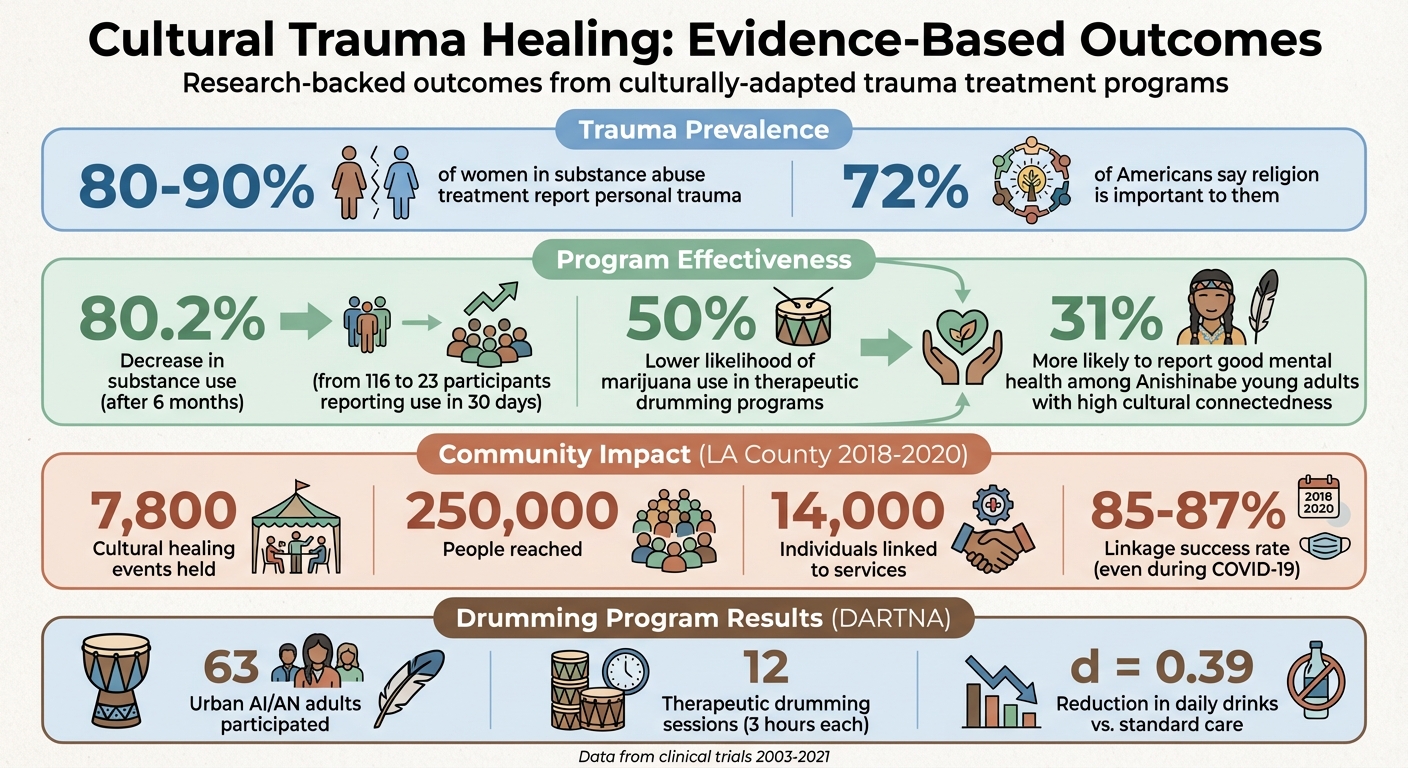
Cultural Trauma Healing Practices: Key Statistics and Outcomes
Indigenous Health: How Native Traditions are Healing Trauma | Doctors on Call
How Shared Cultural Practices Support Trauma Recovery
Cultural practices play a crucial role in trauma recovery by addressing pain on multiple levels. They help survivors reinterpret their experiences, rebuild connections, and find strength in shared values. By exploring traditional stories, fostering community ties, and grounding recovery in core values, these practices create pathways for healing.
Creating Meaning Through Cultural Stories
Stories passed down through generations offer trauma survivors a way to see their pain through a different lens. For example, Islamic trauma healing programs often draw on narratives about prophets, like Prophet Ayyub, who endured immense hardship. These stories encourage individuals to shift their focus from suffering to personal growth, using familiar cultural frameworks to reshape how their minds process traumatic memories. Symbolic rituals, such as sweat lodges (inipi or temazcal), also provide a structured way to process emotions. Elements like fire, stones, and water are used to tap into "archetypal energy", creating a safe and meaningful space for emotional release. Studies even show that group drumming can help reduce PTSD symptoms, ease anxiety, and foster a sense of collective connection [4].
Ceremonies often serve as powerful tools for healing by creating boundaries around trauma processing and fostering reconnection. David Read Johnson, a trauma expert from the National Center for PTSD, explains:
Ceremonies compartmentalize the review of the trauma, provide symbolic enactments of transformation of previously shattered relationships, and reestablish connections among family and with society in general [3].
Finding Strength in Community Support
Cultural narratives lay the groundwork, but shared rituals take healing a step further by building strong community bonds. Trauma often isolates people, but group activities bring them back into a supportive network. Participating in rituals cultivates accountability, reinforces positive group behaviors, and fosters a deep sense of belonging [9][1]. For instance, among Anishinabe young adults with a family history of residential school attendance, those with high cultural connectedness were 31% more likely to report good mental health [7]. This suggests that cultural engagement can protect against the mental health effects of intergenerational trauma.
A study conducted between 2016 and 2019 with 52 Mexican American adults in Los Angeles and California’s Central Valley highlighted the power of sweat lodge ceremonies. These ceremonies, which include group singing and drumming, were found to stimulate "symbolic memory" and evoke positive emotions. Participants often described the experience as "collective purification", emphasizing how it supports both individual healing and group unity [4].
Processing Trauma Through Core Values
At the heart of trauma recovery are core cultural values that provide stability and direction. Values like endurance, family unity, and spiritual connection offer a foundation for individuals to rebuild their lives. Cultural identity acts as a vital coping mechanism, while traditional practices such as singing, drumming, and dancing evoke joy and emotional release [4].
Spiritual practices, in particular, can feel more natural than clinical approaches for many individuals. For example, dua (informal prayer) allows people to process painful memories while seeking comfort from a higher power. This aligns with the belief systems of many Americans – 72% of whom say religion is important to them – making it an essential component of trauma recovery [8][5].
The significance of cultural practices in healing was highlighted by a 2018 initiative from the CDC’s National Center for Chronic Disease Prevention and Health Promotion. Over three years, this program supported tribal practices in 12 Indian Health Service regions. It focused on intergenerational learning and seasonal traditions, aiming to build resilience and address chronic disease risks tied to historical trauma [10].
Research on Cultural Practices and Trauma Healing
Expanding on earlier discussions about community-based approaches, current research highlights the effectiveness of integrating cultural practices into trauma recovery. These studies confirm what many communities have long understood: incorporating cultural elements into treatment plans leads to better outcomes.
Examples from Culturally Adapted Programs
Programs that combine traditional practices with modern therapeutic methods show measurable success. For instance, between 2003 and 2011, researchers studied a mental health and substance abuse program involving 490 urban participants. This program incorporated talking circles, sweat lodges, and traditional healers. Results were striking – participants reporting drug or alcohol use in the previous 30 days dropped from 116 at the start to just 23 after six months, an 80.2% decrease [6].
Another example is the "Drumming for American Indians/Alaska Natives in Recovery" (DARTNA) program, evaluated in a 2021 clinical trial led by Daniel Dickerson. This program involved twelve 3-hour therapeutic drumming sessions with 63 urban AI/AN adults. Compared to those receiving standard care, participants in the drumming group reported fewer daily drinks (d = 0.39) and had a 50% lower likelihood of marijuana use [6].
In a separate study from October 2017, Ava LaVonne Vinesett and her team at Duke University compared an African Ngoma healing ceremony to Mindfulness-Based Stress Reduction (MBSR). Conducted with 21 women over eight weeks, the Ngoma group showed similar improvements in depression and anxiety scores as the MBSR group, with benefits persisting one month later [12].
These examples underscore how culturally specific interventions not only alleviate symptoms but also encourage greater participation and commitment to treatment.
Culturally Adapted vs. Standard Treatment Approaches
The contrast between culturally adapted and standard treatments goes beyond outcomes; it significantly impacts engagement and retention. Standard evidence-based treatments often fail to connect with Indigenous and minority populations due to mistrust of Western systems and a shortage of local providers [2]. On the other hand, culturally adapted programs resonate with participants’ values and worldviews, leading to higher enrollment and retention rates.
For example, a 2019 survey of 147 Anishinabe young adults (ages 18–39) found that participating in traditional activities like dancing, drumming, and singing was linked to a 31% higher likelihood of reporting good mental health among descendants of Indian Residential School survivors [7]. This suggests that cultural practices address unique symptoms of historical trauma that Western treatments may overlook. The "culture as treatment" approach argues that cultural connectedness itself is a powerful therapeutic tool, not just an add-on to conventional care [7][6].
sbb-itb-596b85d
Using Cultural Practices in Therapy Settings
Tailoring Practices for Different Communities
Therapists often adjust their approaches to better resonate with the communities they serve. These adjustments can take two forms: surface-level changes, like incorporating culturally relevant symbols, language, or music, and deeper changes that weave core cultural values into the treatment process [2].
For example, the Islamic Trauma Healing Program in Seattle partners with local institutions to blend evidence-based PTSD treatments with Islamic traditions. This program uses stories of prophets, such as Prophet Ayyub, to help clients reframe their experiences of suffering. It also incorporates dua (informal prayer) as a familiar and meaningful way for clients to process traumatic memories [8].
In Native American communities, therapists have adapted Trauma-Focused Cognitive Behavioral Therapy (TF-CBT) to reflect traditional values and address historical trauma. This includes aligning therapy’s narrative components with indigenous storytelling practices [2]. Other culturally grounded approaches, like Tatreez (Palestinian embroidery) or traditional dances, act as body-based methods to help individuals work through trauma [11]. These adaptations not only make therapy more relatable but also amplify the healing power of shared cultural practices.
By tailoring therapy to align with cultural traditions, practitioners create more impactful and meaningful paths to recovery. Building on this foundation, engaging community networks ensures these benefits extend far beyond individual sessions.
Creating Community Networks for Long-Term Healing
Once therapeutic strategies are adapted to cultural values, the next step is to embed them within community structures for lasting impact. Working with existing networks fosters environments where healing can thrive outside the confines of therapy sessions. For instance, the National Compadres Network runs programs like "El Joven Noble" and "Xinachtli", which use healing circles (circulos de palabra) and rites of passage to promote youth leadership and prevent issues like substance abuse and violence. These programs center cultural traditions to create a sense of belonging and resilience [14].
A notable example of community-driven success comes from Los Angeles County. Between January 2018 and October 2020, the Department of Mental Health funded nine regional partnerships that brought together 100 community-based organizations. Over this period, these partnerships held 7,800 events, reaching 250,000 people and successfully linking nearly 14,000 individuals to services. Even during the challenges of the COVID-19 pandemic, they maintained an impressive linkage success rate of 85% to 87% [13].
Therapists can amplify these efforts by adopting a "train-the-trainer" model, where trusted community members, such as elders or leaders, are trained to facilitate sessions. This approach builds trust, reduces stigma, and ensures the interventions are sustainable [5][8]. Embedding therapy within community hubs also addresses logistical barriers, making mental health support more accessible and normalized [8]. By integrating therapy into the fabric of the community, long-term healing becomes a shared and ongoing process.
Conclusion
Shared cultural practices bring something to the table that standard trauma treatments often miss: deep healing and the rebuilding of community connections. Studies consistently show that therapies adapted to cultural contexts are more effective for minority groups [2]. For instance, one study on traditional practices like talking circles and sweat lodges found that participants significantly reduced substance use over six months [6].
Experts agree that rituals and ceremonies are powerful tools for processing the intense emotions tied to trauma [3].
These insights highlight how shared cultural practices fill gaps left by Western models of treatment. They address historical trauma, collective healing, and the restoration of identity – elements often overlooked in conventional approaches. While cognitive therapies zero in on individual symptoms, cultural traditions focus on mending relationships within families and communities. This holistic approach not only eases psychological pain but also strengthens the bonds that hold communities together. For example, among Anishinabe young adults, those with strong cultural ties were 31% more likely to report good mental health, even if they had family histories of residential school trauma [7].
By weaving together themes of community, history, and identity, culturally responsive therapy offers a way to create lasting change. Growth and Change Counseling provides trauma treatment that respects your heritage, integrating your values and traditions into the healing process. Whether you’re looking for individual therapy, family support, or specialized trauma care, their approach recognizes that healing extends beyond the individual to include meaningful connections to culture and community – the very practices explored in this article.
Healing isn’t one-size-fits-all. Choosing a therapy that honors your heritage and incorporates shared cultural practices paves the way for a recovery journey that feels authentic, grounded, and deeply connected to what matters most to you.
FAQs
How do shared cultural practices help people recover from trauma?
Shared practices like rituals and traditions hold a powerful place in helping people recover from trauma. They offer a structured way to process emotions, mend relationships, and regain a sense of belonging. Through ceremonies symbolizing forgiveness, healing, or renewal, individuals can symbolically release or transform painful experiences in a safe and predictable environment.
When done as a group, these practices reconnect individuals with their community, addressing the isolation that trauma often creates. This connection builds trust, provides comfort, and offers emotional support – key ingredients for long-term recovery. By integrating therapeutic approaches with someone’s cultural or spiritual roots – whether through ceremonies, guidance from elders, or storytelling – healing feels more personal and impactful, drawing strength from shared traditions and community bonds.
What are some cultural practices that help with trauma healing?
Cultural practices play a key role in trauma healing by offering connection, purpose, and ways to process emotions. These practices often involve rituals or ceremonies that help individuals and communities work through grief and rebuild strength together.
Take Native traditions, for instance. Activities like drumming circles, prayer fires, and storytelling gatherings are designed to bring people together, creating a shared sense of unity and healing. Another example is sweat-lodge ceremonies, where participants engage in guided breathing, prayer, and reflection inside a heated space, encouraging emotional release and grounding.
Faith-based approaches also weave cultural elements into their methods. Communal prayer and religious counseling provide safe and supportive environments for recovery. Other traditions, such as traditional dances, shared meals, and intergenerational storytelling, create informal networks of support. These shared experiences build trust and strengthen bonds within the community, offering a collective path toward healing.
Why are therapies tailored to cultural practices more effective for trauma recovery?
Therapies that incorporate a client’s cultural practices tend to be more effective because they resonate with the individual’s values, beliefs, and traditions. By weaving in elements like rituals, language, and perspectives specific to the client’s background, these approaches foster a stronger sense of connection and trust. This often leads to greater engagement and improved outcomes.
Studies highlight that treatments adapted to align with cultural contexts can significantly ease symptoms of anxiety, depression, and trauma. Programs that integrate traditional ceremonies, storytelling, or collective healing methods frequently show better results compared to generic, one-size-fits-all approaches. Since trauma recovery is closely tied to feelings of belonging, therapies emphasizing cultural connection play a key role in rebuilding the social support systems that trauma often disrupts.
Growth and Change Counseling embraces these ideas by customizing trauma-focused services to reflect the cultural traditions of the individuals, families, and communities it serves. This ensures that treatments not only feel meaningful but also remain grounded in proven, evidence-based practices.
Related Blog Posts
- Trauma Therapy for Immigrant Families: Challenges
- Cultural Healing for Addiction Recovery
- Trauma Recovery for Cross Cultural Couples
- Top Strategies for Culturally Sensitive Addiction Recovery
