Neurodiverse relationships require understanding, communication, and adjustments to thrive. These partnerships often involve one or both partners processing the world differently due to conditions like Autism or ADHD. This can lead to sensory challenges, communication gaps, and stressors from work, finances, or social obligations. But with the right strategies, these challenges can be managed effectively.
Here’s a quick summary of actionable steps to strengthen neurodiverse relationships:
- Pinpoint External Stressors: Identify triggers like workplace masking, financial pressures, or sensory overload (e.g., noise, lighting).
- Create Sensory-Friendly Spaces: Adjust your home environment to include quiet zones, soft lighting, and calming tools like weighted blankets.
- Improve Communication: Use regular check-ins, written communication, and clear signals for conflict resolution.
- Plan for Overload Recovery: Develop strategies for emotional resets, such as designated breaks or grounding rituals.
- Build Support Networks: Seek neurodiverse-informed counseling and engage with support groups or trusted friends.
These steps focus on collaboration, mutual respect, and creating environments where both partners feel supported. Start small – identify one area to work on this week and build from there.
Everyday Strategies That Strengthen Neurodiverse Relationships
Identifying External Stressors in Your Relationship
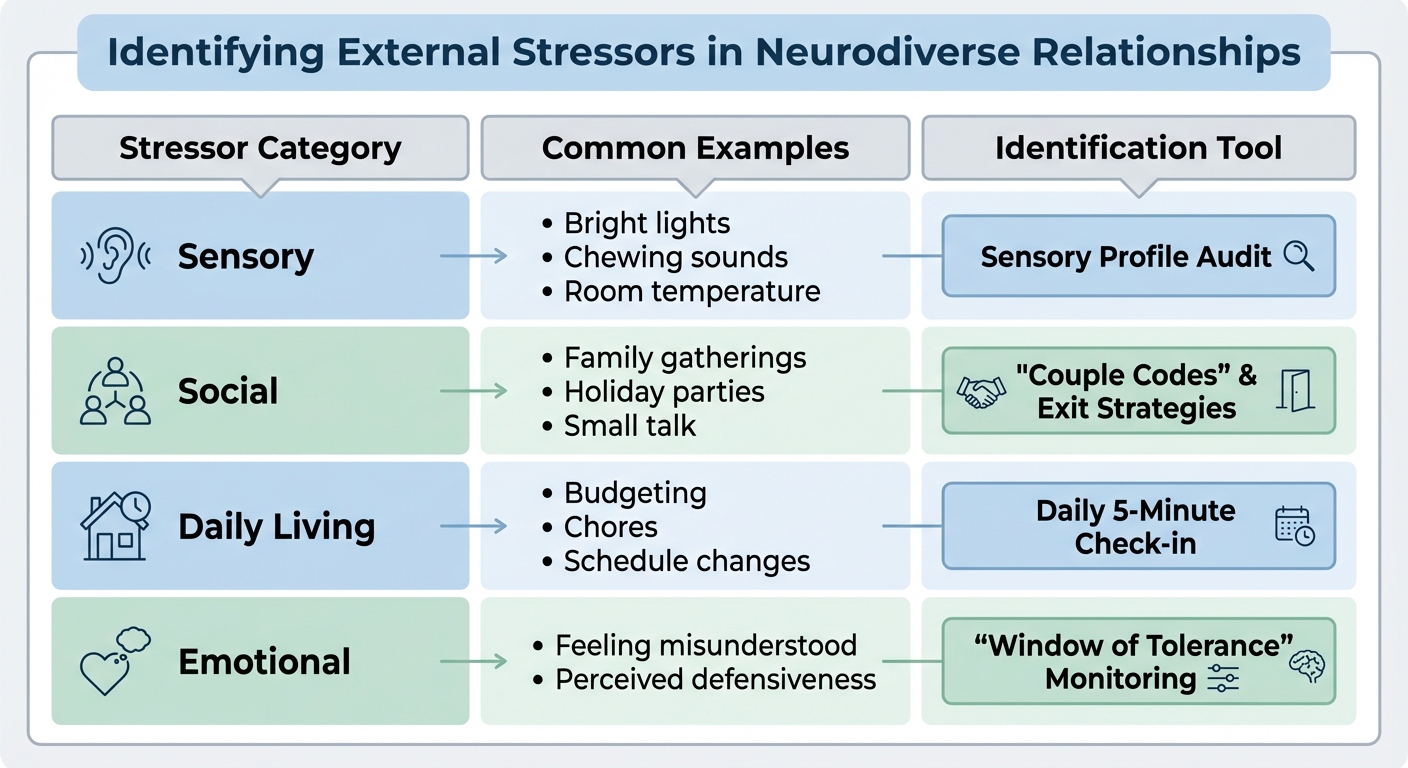
Identifying External Stressors in Neurodiverse Relationships: Categories and Solutions
Before tackling the strain in your relationship, it’s crucial to first pinpoint the external stressors at play. These stressors often creep in quietly, building up until they disrupt your connection. For neurodiverse couples, these challenges can feel even more intense due to differences in how each partner processes sensory input, handles tasks, and recovers from overwhelm.
Think of this process as mapping out your specific challenges. The goal isn’t to assign blame but to identify patterns that drain energy and create tension. As relationship expert Yolanda Renteria puts it:
"Neurodiverse relationships tend to grow apart due to the deep resentment of not being able to understand each other" [1].
Spotting these stressors early can help prevent that resentment from taking root. Let’s take a closer look at how work, finances, and social obligations might be adding to the strain.
Work and Career-Related Stressors
Workplace stress can be a silent energy drain in neurodiverse relationships. Many neurodivergent individuals have a "spiky profile", excelling in certain areas but struggling with others, such as time management and organization [5]. When jobs demand a wide range of skills, this mismatch can lead to daily battles that leave them mentally and emotionally drained.
Another factor is masking, where neurodivergent individuals suppress their natural traits to fit into neurotypical office environments. This constant effort can lead to exhaustion [6][7]. By the time they get home, they may have little energy left for their partner. Jodi Carlton, an expert in neurodiverse relationships, explains:
"The neurotypical partner might feel neglected or unappreciated, not fully understanding that their partner’s withdrawal is not a reflection of their feelings toward the relationship but rather a response to being overwhelmed" [6].
Workplaces with open-plan offices, harsh lighting, and constant noise can also cause sensory overload, which doesn’t just disappear when the workday ends. This overload can carry into home life, making someone more sensitive to sounds, lights, or even physical touch. These sensitivities can strain daily interactions and intimacy [6][7]. Watch for signs like chronic fatigue, irritability, difficulty managing routine tasks, or heightened sensory reactions at home [6].
Financial and Daily Living Pressures
Outside of work, everyday tasks and financial responsibilities can add another layer of stress. Managing money, paying bills, meal planning, and household chores all require executive functioning skills, which may already be depleted due to work demands [8][1].
Even the home environment can become a source of tension. Disagreements over things like thermostat settings, noise levels, or the textures of furniture and clothing can escalate over time [2]. These aren’t issues of carelessness but rather differences in sensory needs that require understanding.
If left unaddressed, these pressures can lead to what Yolanda Renteria describes as "deep resentment" caused by ongoing misunderstandings [1].
Family and Social Demands
Family events, holiday gatherings, and social obligations often pose unique challenges for neurodiverse couples. Catherine Pfuntner from Couples Therapy Inc. explains:
"The holidays can be a difficult time for neurodivergent couples for several reasons. One reason is that the holidays often involve a lot of overstimulation" [4].
Crowded spaces, complex social cues, overlapping conversations, strong scents, and unpredictable schedules can overwhelm neurodivergent partners. Tensions can rise when one partner prioritizes their family of origin over the relationship, especially during the holidays [4].
| Stressor Category | Common Examples | Identification Tool |
|---|---|---|
| Sensory | Bright lights, chewing sounds, room temperature | Sensory Profile Audit [2] |
| Social | Family gatherings, holiday parties, small talk | "Couple Codes" & Exit Strategies [4] |
| Daily Living | Budgeting, chores, schedule changes | Daily 5-Minute Check-in [4] |
| Emotional | Feeling misunderstood, perceived defensiveness | "Window of Tolerance" Monitoring [2][1] |
A good starting point is to identify sensory triggers and joys together. What overwhelms one partner might actually comfort the other. Recognizing these differences can help you create a home environment and social calendar that works for both of you [2]. Pay attention to early signs of stress, like jaw clenching, a racing heartbeat, or shallow breathing. Catching these signals early can prevent overload from escalating into a shutdown or meltdown [2].
Creating Sensory-Friendly and Emotionally Supportive Spaces
Building a supportive home environment starts with actively shaping your space to encourage emotional balance and nervous system regulation. The idea is to create areas where everyone can recharge and manage their emotions effectively. As Yolanda Renteria, LPC, NCC, highlights:
"Honoring and meeting these basic needs for nervous system regulation can play a huge role in developing intimacy and bringing the relationship closer." [1]
A well-designed home should work in harmony with the unique needs of its inhabitants. What calms one person might overwhelm the other, so finding ways to accommodate both is key. The following strategies focus on transforming your home into a sanctuary that supports both partners.
Auditing Your Home’s Sensory Environment
Start by walking through your home together to identify sensory triggers. Look at elements like lighting, sounds, smells, and textures, and assess whether they help or hinder comfort. For instance, harsh fluorescent bulbs or constant background noise might be disruptive. Daniel Dashnaw, a couples therapist, explains:
"Sensory overload is not a choice, and it can be highly disruptive if misunderstood." [3]
Once you’ve pinpointed these triggers, create at least one sensory-safe zone – a quiet, dimly lit space where either partner can retreat when needed [3][9]. Simple changes, like adding dimmer switches, blackout curtains, or noise-dampening materials, can make a big difference. Don’t forget to identify "sensory joys" too – things like soft lighting, calming scents, or a favorite weighted blanket that bring comfort and help prevent sensory overload.
Developing Individual Regulation Strategies
Each partner should have a personal "regulation toolkit" filled with tools that help maintain emotional balance. Items like noise-canceling headphones, fidget toys, or weighted blankets can support a calm and focused state [3][2]. Keep these tools accessible throughout your home.
Beyond physical aids, develop personal routines tailored to your neurological needs. This might include stimming behaviors like rocking or hand-flapping, deep breathing exercises, or even simple rituals like making a cup of tea. These practices aren’t just nice to have – they’re essential for emotional well-being [2].
Psychologist Crystal I. Lee advises:
"Create sensory-friendly spaces in your home for emotional regulation. Designating quiet, comfortable areas where either partner can retreat for self-care supports individual needs while maintaining the relationship dynamic." [9]
Planning for Overload and Conflict Recovery
Even with a well-prepared environment, moments of sensory overload are bound to happen. To handle these situations, agree on a universal signal or phrase to request a pause during high-stress moments [9].
In addition, establish shared "emotional reset" rituals. These could be as simple as taking a short walk together or practicing a grounding meditation. These rituals provide a way to reconnect and recover as a team after high-stress situations [9].
sbb-itb-596b85d
Improving Communication During Stress
When stress takes over, communication often becomes one of the biggest hurdles in neurodiverse relationships. Staying connected during these moments calls for structure, intentional planning, and a shared understanding of each other’s needs. One way to navigate this is by setting up clear communication routines that work for both partners.
Structured check-ins can also help maintain clarity and connection during stressful times.
Establishing Check-In Routines
Regular check-ins can prevent minor frustrations from growing into larger issues. You might want to create two types of routines: a quick daily check-in to talk about external stressors (like work deadlines or traffic) and a longer weekly session to focus on the relationship and upcoming plans. Keep the daily check-ins short and to the point, while using the weekly ones for deeper discussions. To make this easier, schedule the weekly check-ins on a shared digital calendar so both partners can prepare mentally. Sharing topics or concerns ahead of time can also give neurodivergent partners the extra processing time they might need. As Nicole Gurash, Psy.D., LMFT, explains:
"Consider sharing topics before discussions. Or follow up a discussion with the highlights as you saw them. When neurodiverse partners are allowed time to break things down, they do a more effective job of assessing the matter and responding appropriately and sensitively." [10]
Timing is everything. Avoid having important conversations when either of you is in a "HALT" state – hungry, angry, lonely, or tired. These states can make meaningful communication nearly impossible.
Using Clear and Written Communication
To complement other adjustments, clear and written communication can help ensure external stressors don’t muddle understanding.
Neurodivergent partners may need more time to process information, so written communication can be a game-changer. Shared calendars, text summaries of important conversations, or even letters about complex issues can reduce the pressure of responding on the spot. Be explicit in your language. For instance, instead of expecting your partner to guess what you need, you could say, "I need to talk about my boss for a few minutes – I’m not looking for advice, just someone to listen." Nicole Gurash emphasizes this point:
"Mindreading does not work well and is a sure way to create problems. Don’t use intuition to communicate, use your words." [10]
Managing Conflict with Pre-Event Planning
Planning ahead for conflict can make a world of difference. When things are calm, talk about common triggers – like interruptions, sensory overload, or feeling dismissed – and come up with a plan to handle them. Agree on a time-out signal, decide how long breaks should last, and establish how you’ll reconnect afterward. Before particularly stressful events, review potential challenges, set up a time-out signal, and plan check-ins for a post-event debrief. This kind of preparation can help both partners feel more secure and supported.
Building Support Networks and Seeking Professional Help
No single partner can fulfill every need in a relationship. That’s why creating a strong external support network is crucial. It helps prevent burnout and gives each partner the chance to recharge – especially during times of heightened stress[11].
Developing a Social Support Network
Start by identifying the kind of support you need. Connect with people who share your interests by joining clubs, community groups, or finding like-minded peers. It’s also important to maintain friendships outside your relationship. Spending time with your own friends not only strengthens your individual social skills but also eases the pressure on your partnership[11]. As Mona wisely put it:
"If there are some things you can’t get from each other, try to find them outside of the relationship… Find people who will support you"[11].
For those navigating neurodiversity, consider joining specific support groups, either online or in person. These groups create a space to connect with others who truly understand your experiences[12]. Additionally, having a few trusted confidants to check in with regularly can make a world of difference[11].
Exploring Workplace Accommodations
Stress from work often finds its way into personal relationships, so addressing it is essential. Reasonable workplace accommodations – like remote work, flexible hours, or using noise-canceling tools – can significantly reduce stress and improve focus. These adjustments aren’t about special treatment; they’re about creating environments that allow everyone to thrive and perform effectively[14]. Even small changes can preserve energy and make a big impact.
Seeking Specialized Counseling for Neurodiverse Couples
When personal efforts and external networks aren’t enough, specialized counseling can provide additional support. General therapy often falls short in addressing the unique dynamics of neurodiverse relationships. That’s why it’s important to find a counselor who understands neurological differences. Look for professionals who describe their practices as "neurodiversity-affirming" or "neurodiverse-informed"[2]. As Eva Mendes, LMHC, NCC, cautions:
"Working with someone who doesn’t understand ASD can even be harmful… find a couples counselor who is ASD informed"[11].
Interestingly, research shows that 90% of successful neurodiverse couples sought marital counseling within the first few years of their relationship[11]. To help with this, organizations like the Association for Autism and Neurodiversity (AANE) provide directories of certified counselors specializing in neurodiverse couples therapy[13].
For those seeking tailored support, Growth and Change Counseling offers a range of services, including individual therapy and The Marriage Rescue Institute – a 12-week intensive program for couples. These services are available in Campbell, CA; San Jose, CA; Los Angeles, CA; Roseville, CA; and via telehealth throughout California. You can learn more at Growth and Change Counseling.
Take the Next Step with Growth and Change Counseling
Strengthening a neurodiverse relationship starts with understanding and embracing differences. Liz Zhou, a holistic therapist, puts it perfectly:
"Communication difficulties are not due to the deficits of either autistic or allistic people, but due to the differences in neurotype."[2]
This perspective encourages a shift in how you approach your relationship.
The checklist we’ve explored highlights three key pillars: recognizing external stressors, creating sensory-friendly spaces, and fostering clear communication routines. These aren’t one-time fixes – they’re ongoing practices that grow alongside your relationship. Whether it’s conducting a sensory audit, scheduling regular conversations, or maintaining a "struggle inventory", these steps are meant to evolve and become part of your daily rhythm.
With approximately 15–20% of the global population being neurodivergent[1], these strategies have helped many couples move from frustration to deeper connection. As Yolanda Renteria, LPC, NCC, wisely notes:
"Honoring and meeting these basic needs for nervous system regulation can play a huge role in developing intimacy and bringing the relationship closer."[1]
The next step? Take action. Start by focusing on just one area from the checklist this week. Small, consistent efforts can turn challenges into opportunities for growth.
If personal efforts feel insufficient, seeking external support can be a game-changer. Professionals trained in neurodiverse relationships can provide the tools and guidance needed to navigate these complexities. Growth and Change Counseling, for example, offers specialized services tailored to neurodiverse couples. Remember, the goal isn’t perfection – it’s about creating a space where both partners feel seen, supported, and valued for who they truly are.
FAQs
How can I identify and address external stressors in my neurodiverse relationship?
To figure out what external stressors might be affecting your relationship, start by paying attention to your daily routines and surroundings. Look for common triggers such as noisy environments, shifting work schedules, financial pressures, family responsibilities, or even sensory issues like bright lights or strong odors. Keeping a journal or using a shared document to log moments of tension – what happened, how it felt, and when it occurred – can help identify patterns. Once you’ve spotted recurring stressors, you can rank them by their impact using a simple 1–5 scale to decide which ones need attention first.
When it comes to tackling these stressors, practical steps can make a big difference. Here are a few ideas:
- Create calming spaces with tools like weighted blankets or noise-canceling headphones to reduce sensory overload.
- Set boundaries and agree on signals to pause and regroup during tense situations.
- Schedule regular check-ins to talk about stressors and tweak your strategies as needed.
- Use visual aids like shared calendars or feelings charts to improve communication and understanding.
- Build consistent routines for daily tasks like meals and bedtimes to bring more predictability into your lives.
If these steps aren’t enough, reaching out for professional help could be the next move. Growth and Change Counseling provides specialized support for neurodiverse couples, offering tools to enhance communication, establish boundaries, and develop personalized coping strategies. They offer both in-person and telehealth services across California.
How can I create a sensory-friendly home for a neurodiverse relationship?
Creating a home that feels welcoming and comfortable for all the senses starts with identifying and reducing potential triggers. Bright lights, loud noises, strong smells, or clutter can overwhelm some people. To address lighting, consider using dimmable bulbs, warm-white LEDs, or blackout curtains to create a softer atmosphere. Replace harsh overhead lights with natural light or filtered alternatives. For noise reduction, add rugs, curtains, or acoustic panels, and set up a quiet corner with noise-canceling headphones or a white-noise machine. Keeping the space visually calm is also key – stick to neutral colors and minimize clutter.
Introduce soothing textures like soft blankets, weighted blankets, or beanbag chairs to add comfort. Choose unscented or low-scent cleaning products to avoid overwhelming smells, but if calming scents like lavender are appreciated, use them sparingly in a diffuser. Maintain a cozy temperature between 68–72°F, and ensure good airflow for comfort. Keep sensory tools like fidget toys or earplugs within easy reach, and use visual aids or schedules to create a sense of structure and predictability.
For couples looking to tailor these changes to their specific needs, Growth and Change Counseling offers guidance to help create a home environment that encourages connection and promotes well-being.
What are effective ways for neurodiverse couples to communicate during stressful situations?
Neurodiverse couples can navigate stressful moments more effectively by focusing on clear communication and establishing routines that reduce uncertainty. Using “I-statements”, such as “I feel overwhelmed when there’s too much noise”, can help express feelings without assigning blame, minimizing misunderstandings. Adding regular, short check-ins to the routine provides a consistent opportunity to share thoughts before tensions build.
To keep conflicts from escalating, couples might create a “pause signal” – a non-verbal cue, like a specific hand gesture, to pause and take a moment to regroup emotionally. Practicing active listening, such as paraphrasing what the other person said (“So, you’re saying…”), ensures both partners feel heard and understood. For times when verbal communication is hard, visual aids like written notes or emotion charts can bridge the gap.
By blending direct communication, attentive listening, and tools for emotional support, neurodiverse couples can handle challenging situations with greater ease and understanding.
Related Blog Posts
- 5 Ways to Support Your Neurodiverse Partner
- How Sensory Processing Affects Neurodiverse Relationships
- Emotional Intelligence for Neurodiverse Couples
- Q&A: Supporting Neurodiverse Couples with Mental Health Issues
