Faith-based practices like prayer, forgiveness, and gratitude can play a meaningful role in trauma recovery, especially for those experiencing spiritual distress. Research highlights that these methods not only address emotional pain but also foster mental health improvements, such as reduced PTSD symptoms and anxiety. For example:
- Prayer: Acts as a coping mechanism by redirecting focus and providing comfort. Techniques like Centering Prayer help manage intrusive thoughts.
- Forgiveness: Reduces anger and promotes emotional regulation, with studies showing significant drops in depression scores after forgiveness-based interventions.
- Gratitude: Offers strong protective effects against long-term trauma impacts, improving overall mental health.
Programs like Building Spiritual Strength (BSS) for veterans and therapies integrating Christian principles with established models show promise in addressing both PTSD and moral injury. Additionally, personal religious practices and community support enhance resilience and recovery. If you’re seeking trauma recovery that aligns with faith, Christian-integrated counseling could be an effective option.
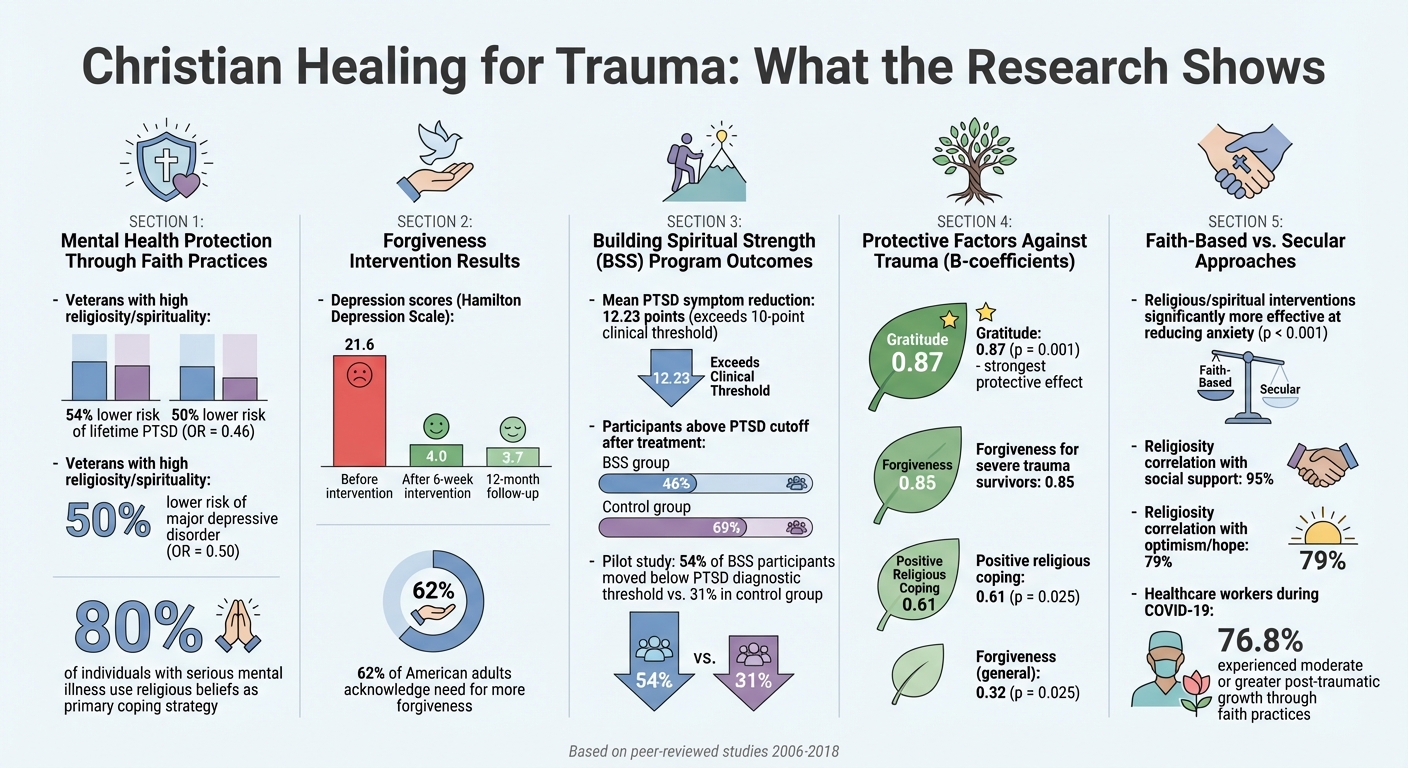
Christian Healing for Trauma: Key Statistics and Outcomes
Prayer and Forgiveness in Trauma Recovery
Prayer as a Coping Mechanism
Prayer offers a meaningful way to process trauma. Studies suggest that it acts as a form of "focused attention", and when paired with a religious outlook, it can enhance mental well-being[6]. Unlike secular mindfulness practices, prayer shifts attention toward God’s presence and the search for purpose.
One specific approach, Centering Prayer, helps manage intrusive thoughts by using a "sacred word" as a focal point. When traumatic memories surface, practitioners redirect their attention to this word, fostering an awareness of the divine. Many clinicians recommend this method as a calming strategy for individuals dealing with complex PTSD symptoms[6][7].
The Biopsychosocial Religion and Health Study (2006–2007) examined data from 10,283 Seventh-day Adventist adults across North America and found that positive religious coping – such as seeking God’s guidance to find meaning – significantly lessened the negative impact of early trauma on adult mental health (B = .61, p = .025)[5]. Alongside prayer, forgiveness emerges as another essential element in trauma recovery.
Forgiveness and Healing
Forgiveness is a powerful tool for healing, helping to reduce anger and restore a sense of hope. Karen Swartz, M.D., emphasizes the physical toll of holding onto anger:
"There is an enormous physical burden to being hurt and disappointed. Chronic anger puts you into a fight-or-flight mode, which results in numerous changes in heart rate, blood pressure and immune response"[11].
A study conducted in August 2016 by Harold G. Koenig, Ramiro Salas, and colleagues explored the effects of a six-week Christian prayer intervention centered on forgiveness. The results were remarkable: participants suffering from depression saw their Hamilton Depression Scale scores drop from 21.6 to 4.0 immediately after the intervention, with scores remaining at 3.7 during a 12-month follow-up in 2017[12]. Brain scans from the study revealed increased activity in the medial prefrontal cortex, indicating improved emotional regulation as participants confronted traumatic memories.
The same Biopsychosocial Religion and Health Study found that forgiveness significantly reduced the negative effects of early trauma on mental health (B = .32, p = .025). For individuals who had endured all five types of childhood trauma, forgiveness provided an even greater protective effect (B = .85)[5]. This is particularly relevant considering that 62% of American adults acknowledge a need for more forgiveness in their lives, and unresolved grudges have been linked to higher rates of severe depression and PTSD[11].
Trauma-Focused Christian Interventions and Their Effectiveness
Building Spiritual Strength (BSS) for Veterans
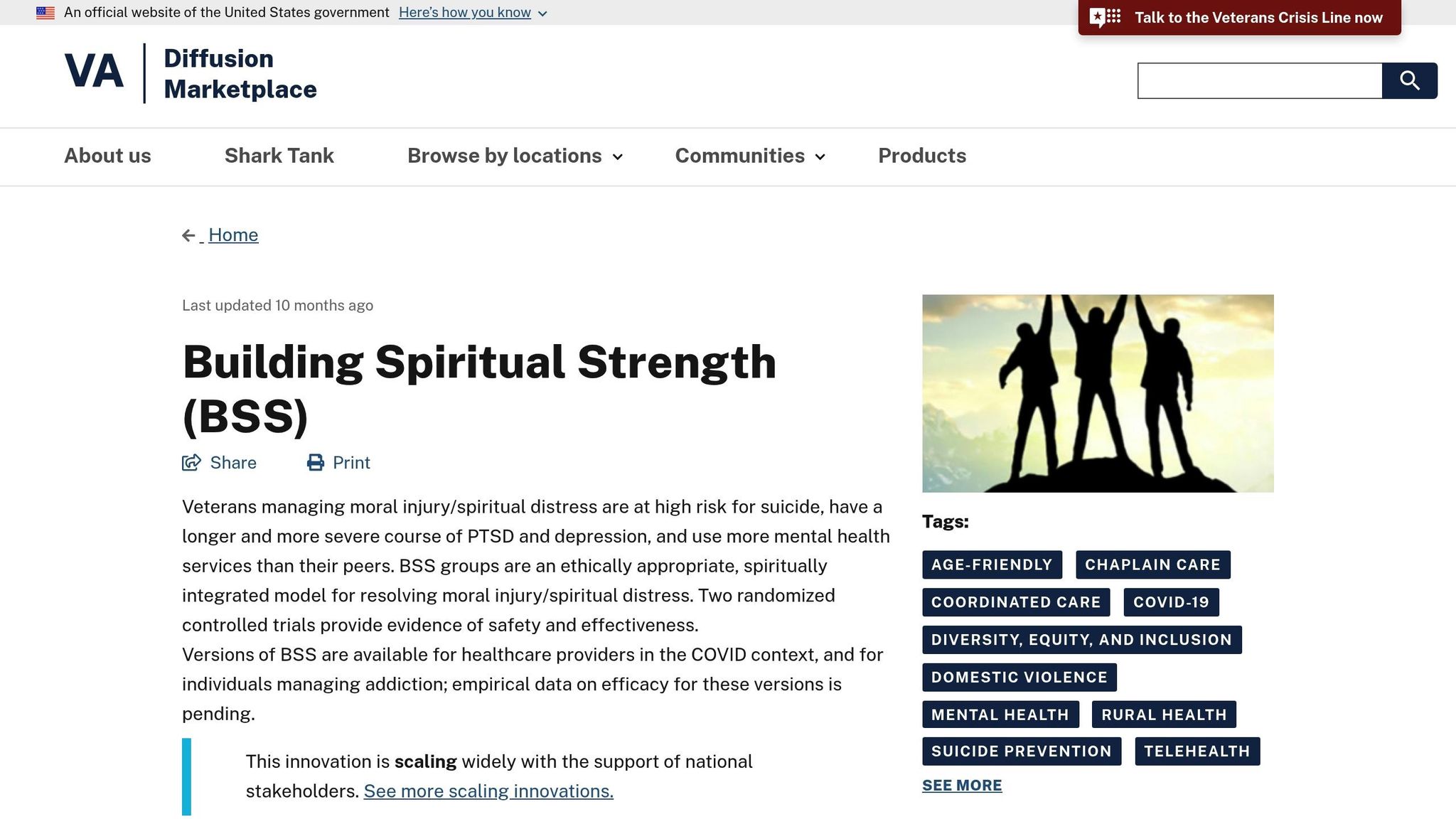
Building Spiritual Strength (BSS) is a structured, eight-session group program designed to address both PTSD symptoms and spiritual distress. Developed at the Minneapolis VA Healthcare System, it focuses on issues like feelings of divine punishment, struggles with forgiveness, and reconciling suffering with faith in a loving God [3][13].
In a pilot randomized controlled trial from February 2011, involving 54 veterans (26 in the BSS group and 28 in a wait-list control group), participants in the BSS program saw a mean reduction of 12.23 points on the PTSD Checklist (PCL-C). This improvement exceeded the 10-point threshold considered clinically meaningful [13]. After the treatment, 46% of those in the BSS group scored above the PTSD cutoff, compared to 69% in the control group [13].
A larger study conducted in 2018 with 138 veterans compared BSS to Present Centered Group Therapy. While both approaches reduced PTSD symptoms, BSS stood out by specifically easing distress related to veterans’ relationships with a higher power. The program is intentionally inclusive, respecting all religious affiliations and avoiding any proselytizing [3]. This approach highlights the potential for blending established therapeutic practices with Christian values in a way that remains respectful and effective.
Internal Family Systems with Christian Integration
Incorporating Christian principles into established therapy models offers another avenue for trauma recovery. Research combining Internal Family Systems (IFS) therapy with Christian teachings has demonstrated notable reductions in PTSD, anxiety, and depression. This approach is particularly effective in addressing moral injury – emotional and spiritual harm caused by traumatic events that conflict with deeply held beliefs [3][9]. By integrating faith with therapeutic practices, this method underscores the role of spirituality in the healing process, particularly for those grappling with moral injury.
When the Brain Can’t Hear God – Understanding Trauma and Disconnection – Dr. Beth Argot
sbb-itb-596b85d
Religiosity and Positive Religious Coping
Structured Christian interventions play a significant role in trauma recovery, but personal spiritual practices also provide a profound source of resilience. Beyond formal programs, individual religious coping can deeply support the journey of healing from trauma.
Gratitude and Forgiveness as Healing Tools
Gratitude and forgiveness stand out as powerful tools for protecting mental health in the aftermath of trauma. A study involving 10,283 adult survivors of early trauma, conducted by researchers at the Johns Hopkins University School of Nursing, revealed that gratitude had the strongest protective effect, with a B-coefficient of 0.87 (p = 0.001). Actively practicing both gratitude and forgiveness has been shown to significantly lower psychological distress [5].
"Adult survivors of early trauma experienced worse mental and physical health; however, forgiveness, gratitude, positive religious coping, and intrinsic religiosity were protective against poor mental health." – Katia G. Reinert, PhD, Johns Hopkins University School of Nursing [5]
The findings highlight gratitude as a particularly strong buffer against the long-term mental health challenges linked to trauma. When combined with forgiveness, these practices not only help mitigate the effects of trauma but also deepen the connection to faith and spiritual well-being.
Faith Practices and Resilience
Religiosity and spirituality consistently offer protection against mental health disorders. For instance, veterans with high levels of religiosity and spirituality had a 54% lower risk of lifetime PTSD (OR = 0.46) and a 50% lower risk of major depressive disorder (OR = 0.50) compared to those with lower levels of religiosity [8].
This protective effect is partly explained by cognitive reappraisal – the ability to reinterpret traumatic experiences in ways that lessen their emotional weight – and by fostering greater confidence in managing stress. Positive religious coping, which often involves seeking a deeper connection with God and finding meaning in suffering, was shown to reduce the harmful effects of early trauma, with a B-coefficient of 0.61 (p = 0.025) [5]. Additionally, around 80% of individuals with serious mental illness report relying on religious beliefs and practices as a primary strategy for managing their condition [8].
During the COVID-19 pandemic, spiritual practices proved to be a key factor in resilience. A study of healthcare workers found that 76.8% experienced moderate or greater post-traumatic growth, with faith practices driving much of this positive psychological change [8]. These findings illustrate how spiritual practices not only aid in recovery but can also lead to personal growth after trauma. Such insights lay the groundwork for exploring the differences between Christian and secular approaches to trauma recovery.
Christian Counseling vs. Secular Approaches in Trauma Recovery
Meta-Analysis of Faith-Based vs. Secular Programs
When comparing Christian counseling with secular methods, some intriguing differences emerge. A 2015 meta-analysis led by J.P.B. Gonçalves and colleagues at the University of São Paulo Medical School reviewed 23 randomized controlled trials with 2,721 participants. The study found that religious and spiritual interventions (RSI) were significantly more effective at reducing anxiety (p < 0.001) than secular approaches, particularly when methods like meditation or psychotherapy were included [4].
Another study, a randomized controlled trial published in September 2018, explored the effectiveness of "Building Spiritual Strength" (BSS) compared to secular Present Centered Group Therapy (PCGT). Conducted among 138 veterans at the Minneapolis VA Healthcare System, the trial found that both groups experienced similar reductions in PTSD symptoms as measured by the Clinician Administered PTSD Scale (CAPS). However, the BSS group showed significantly greater improvements in addressing spiritual distress and moral injury – areas often overlooked by secular therapies [3]. Notably, in the pilot study, 54% of participants in the BSS group moved below the diagnostic threshold for PTSD, compared to only 31% in the control group [3].
Christian-integrated therapies, such as Christian Religiously-Integrated Cognitive Behavioral Therapy (CRCBT), take a unique approach by using the patient’s faith as a tool to challenge trauma-related negative thoughts and behaviors. This method is particularly effective for individuals with strong religious beliefs, as it addresses spiritual pain and violations of sacred values – issues that secular approaches may not fully encompass [2][7]. These findings highlight the distinctive role faith-based interventions can play in trauma recovery.
Community and Well-Being Benefits
Faith-based trauma recovery doesn’t just stop at clinical improvements – it also brings significant community benefits. Studies show that religiosity has a strong correlation with social support (95%) and optimism or hope (79%) [4]. The "church body" often serves as a supportive network, providing encouragement, practical assistance, and a sense of belonging that extends well beyond therapy sessions [1].
Faith communities also offer a sense of spiritual connection that helps combat feelings of isolation. This aligns with what researchers describe as the "Society-to-Cell" approach, where individual healing practices are reinforced by a trauma-informed and supportive faith community [5][10]. Unlike secular therapy, which tends to focus on psychological stabilization, Christian counseling weaves biblical principles into the recovery process. This integration not only helps alleviate symptoms but also rebuilds a sense of purpose and meaning – especially critical for survivors of interpersonal violence [10].
Reconnecting Through Faith at Growth and Change Counseling
Christian-integrated approaches have been shown to reduce PTSD symptoms, alleviate spiritual distress, and address moral injury effectively [3]. As Professor Harold G. Koenig points out, Christian beliefs often act as valuable tools for therapists working with patients in distress [2]. Programs like Building Spiritual Strength demonstrate better outcomes in easing spiritual distress and lowering PTSD symptoms compared to secular methods [3].
Studies back this up with compelling data. Meta-analyses reveal that religious interventions significantly lower anxiety, stress, and depression (p < 0.001) [4]. They also promote healthier meaning-making and foster posttraumatic growth. Additionally, research highlights a 79% positive link between religiosity and factors like well-being, optimism, and hope [4]. Faith communities further enhance healing by offering practical support, encouragement, and a sense of belonging.
This evidence highlights the potential of faith-based approaches in fostering recovery and resilience.
If you’re dealing with trauma, particularly spiritual distress, guilt, or moral injury, Christian-integrated counseling may be an option worth exploring. Growth and Change Counseling provides trauma therapy that blends evidence-based psychological practices with biblical principles. With locations in Campbell, San Jose, Los Angeles, and Roseville, CA, as well as telehealth services throughout California, you can access care that supports your mind, body, and spirit. Visit https://johnmarkkane.com to learn more about how faith-based counseling can assist in your healing journey.
FAQs
What makes Christian counseling for trauma different from traditional therapy?
Christian counseling for trauma combines a biblical worldview with established therapeutic practices, creating a unique approach to healing. Unlike traditional therapy, which is rooted primarily in psychological science and often excludes spiritual dimensions, Christian counseling integrates methods like CBT (Cognitive Behavioral Therapy) or EMDR (Eye Movement Desensitization and Reprocessing) with prayer, Scripture, and spiritual reflection. This approach helps individuals see their healing journey as part of God’s redemptive work in their lives.
Research supports the benefits of incorporating spiritual elements into therapy. Studies reveal that spiritually integrated care can lead to greater symptom relief while nurturing hope, meaning, and a deeper sense of divine purpose. For Christians seeking emotional recovery alongside spiritual growth, this method offers a distinct and meaningful path. Growth and Change Counseling exemplifies this approach, blending faith-based principles with proven psychological techniques to guide clients toward comprehensive restoration.
How does forgiveness help trauma survivors heal?
Forgiveness is the deliberate choice to release feelings of anger, resentment, or even the urge for revenge. It’s a deeply transformative act that can ease the weight of past pain, opening the door to hope, self-kindness, and personal development. In Christian traditions, forgiveness serves as both a spiritual practice and a therapeutic pathway, echoing biblical principles of healing and reconciliation.
Studies have shown that forgiveness has a profound impact on mental health. It helps reduce anger, stress, and symptoms of depression while boosting hope and overall satisfaction with life. On a physical level, forgiveness has been linked to improved sleep and lower blood pressure. For those recovering from trauma, forgiveness – especially when connected to spiritual beliefs – can build emotional strength and deepen relationships.
At Growth and Change Counseling, forgiveness-based methods are woven into trauma-focused therapy. Through guided sessions, prayer, and reflection, individuals are supported in finding lasting relief and rediscovering a sense of purpose.
Can practicing gratitude help with trauma recovery?
Research indicates that gratitude can play a meaningful role in trauma recovery. Studies reveal that individuals who actively practice gratitude tend to experience fewer and less intense trauma-related symptoms over time. For instance, a review of several studies highlighted a clear connection between gratitude and reduced PTSD symptoms. Additionally, other research points to gratitude as a factor that can speed up emotional recovery and lessen depressive symptoms.
Simple practices like keeping a gratitude journal, engaging in reflective prayer, or cultivating mindful appreciation can be helpful tools as part of a larger recovery plan. While gratitude isn’t a standalone solution, it can strengthen resilience and support healing over the long term. When integrated into trauma-focused therapy – such as the services provided by Growth and Change Counseling – it can encourage meaningful strides toward recovery.
Related Blog Posts
- Christian Counseling vs. Secular Therapy for Marital Trauma
- Faith-Based Parenting for Generational Healing
- How Christian Counseling Supports Family Healing
- Healing Trauma Through Prayer and Reflection
