Telehealth is transforming addiction counseling, but it comes with challenges like building trust remotely, ensuring privacy, and managing crises. California now mandates 3 hours of telehealth training for mental health professionals, highlighting the growing need for specialized skills. Training programs focus on areas such as remote crisis management, adapting therapies for virtual platforms, and supporting clients with limited resources. These programs enable counselors to expand access to care, especially for those in remote areas or facing transportation barriers.
Key training options include:
- CALPCC Basic Competencies in Telehealth: 3 CEUs, $60, covers ethics, legal guidelines, and HIPAA compliance.
- eCare Behavioral Institute: 3.5 CE hours, $31.50, focuses on trauma-informed techniques and SAMHSA guidelines.
- PESI Telehealth Certification: Ranges from 6.25 to 16.5 CE hours, $29.99–$399.99, includes group interventions and therapy adaptations.
- Telehealth.org Group Therapy Workshop: 4 CE hours, $45–$59, addresses virtual group dynamics and crisis planning.
These programs equip counselors to overcome telehealth-specific challenges, improving outcomes for addiction recovery.
Virtual Addiction Group Therapy at Growth and Change Counseling
Telehealth Training Programs for Addiction Counselors
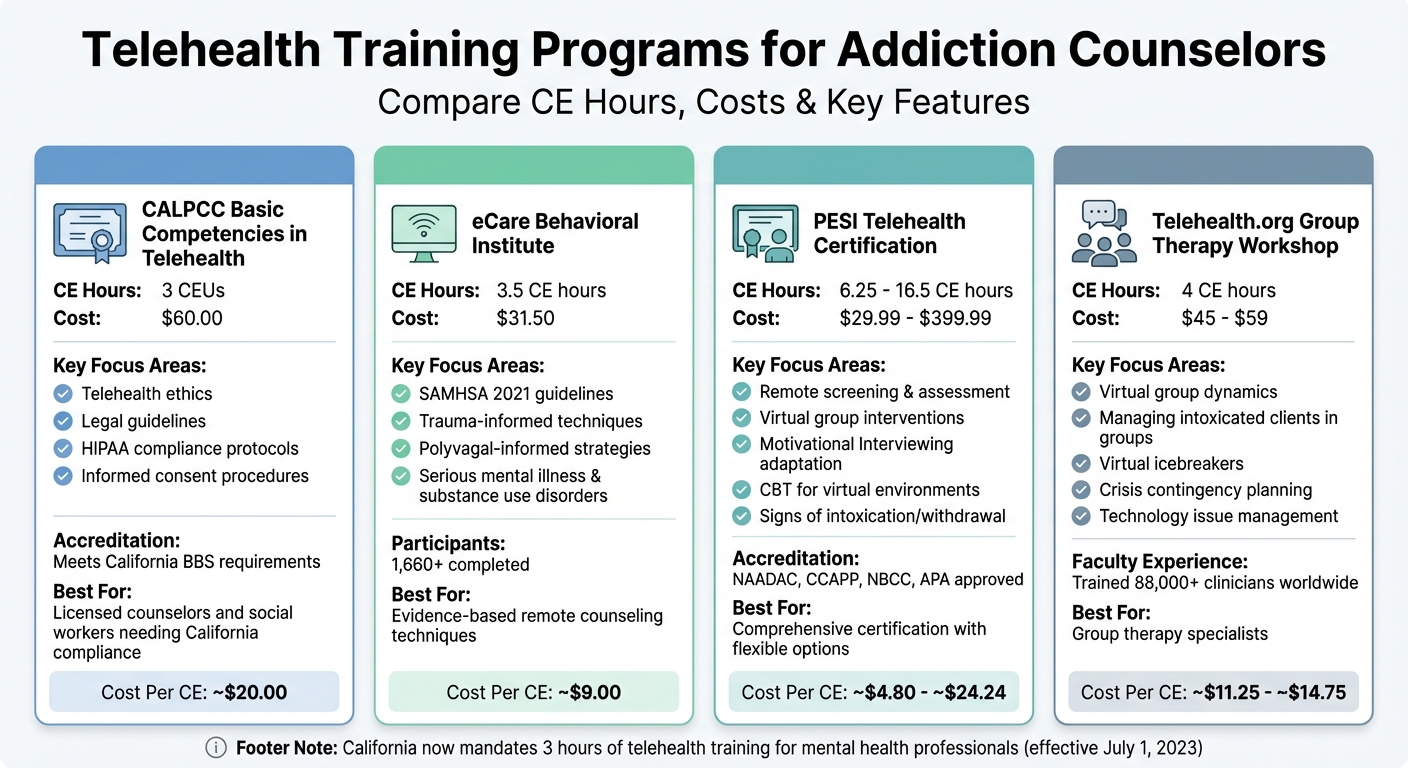
Telehealth Training Programs for Addiction Counselors: Comparison of CE Hours, Costs, and Key Features
Organizations are stepping up to provide specialized telehealth training tailored to the unique needs of addiction counselors. These programs go beyond teaching basic video conferencing skills to address challenges such as assessing intoxication remotely, managing group dynamics in virtual settings, and adapting evidence-based therapies for online platforms. Below are some standout programs designed specifically for addiction counseling professionals.
CET Training: Best Practices in Telehealth
The CALPCC Basic Competencies in Telehealth course is a valuable resource for addiction counselors navigating the complexities of virtual care. It offers 3 continuing education units (CEUs) and meets California BBS requirements for licensed counselors and social workers [10]. For $60.00, participants gain knowledge on telehealth ethics, legal guidelines, and protocols. The course also highlights the importance of using HIPAA-compliant platforms and obtaining informed consent, ensuring counselors are well-versed in the regulatory aspects of telehealth [6].
eCare Behavioral Institute: Telehealth CE Courses

eCare Behavioral Institute offers a course titled "Telehealth for the Treatment of Serious Mental Illness and Substance Use Disorders", which provides 3.5 CE hours and is based on 2021 SAMHSA guidelines [9]. Priced at $31.50, this training has been completed by over 1,660 participants and emphasizes evidence-based techniques for remote counseling. The curriculum includes polyvagal-informed strategies to help clients manage trauma and anxiety – essential tools for addressing the ways addiction often functions as a coping mechanism [7].
PESI Telehealth Certification for Addiction Counselors

PESI offers a range of telehealth training options, including the course "Treat Substance Use Disorders via Telehealth", which provides 6.25 contact hours for $29.99. This training focuses on remote screening, assessing substance use, and facilitating virtual group interventions. It is approved by NAADAC, CCAPP, NBCC, and APA [6].
For those seeking more in-depth training, PESI also offers the "Overcoming Addictions" certification course, which includes 16.5 CE hours and costs $399.99. This program has received hundreds of five-star reviews and equips counselors with skills to recognize signs of intoxication or withdrawal, as well as adapt therapies like Motivational Interviewing and Cognitive-Behavioral Therapy for virtual environments [7].
"You can remove some of the biggest barriers to substance use treatment by offering telehealth as a treatment lifeline to clients fighting for their lives!" – Paul Brasler, LCSW, CAIMHP [6]
Telehealth.org: Intensive Telehealth Group Therapy Workshop

For counselors focused on group therapy, Telehealth.org provides an Intensive Telehealth Group Therapy Digital Workshop. Priced between $45 and $59, this training offers 4 CE hours and addresses challenges such as managing intoxicated clients in virtual group settings, using virtual icebreakers to foster engagement, and preparing crisis contingency plans for technology issues. With faculty who have trained over 88,000 clinicians worldwide, this program is a strong option for those working in group therapy contexts [8].
Skills and Strategies for Telehealth Addiction Counseling
Telehealth training goes beyond mastering technical tools; it also enhances critical counseling skills that are essential for effective virtual care. The dynamics of online sessions require counselors to rethink approaches to building rapport, maintaining privacy, and managing emergencies. These areas demand tailored strategies that differ from traditional in-person methods.
Building Rapport in Virtual Sessions
Video conferencing creates a space for meaningful interaction while reflecting SAMHSA’s principles of motivational interviewing: empathy, compassion, and collaboration. These qualities are key to building trust in virtual settings [11][12]. Counselors are encouraged to act as a "guide on the side", offering support rather than adopting an authoritative role.
"Integrating the ‘spirit of motivational interviewing’… involves embodying characteristics of being: empathic, compassionate, non-judgmental and collaborative in their approach to working with patients." – SAMHSA [12]
Practical tools can also strengthen connections. For instance, Caring Contacts – personalized messages that show genuine concern for a client’s well-being – can help reduce feelings of isolation between sessions [2]. Even simple measures like text reminders for appointments have been shown to lower dropout rates in addiction treatment programs [11]. Telehealth also makes it easier to involve family members in the recovery process, providing an additional layer of support [4].
Once rapport is established, ensuring the privacy of these interactions becomes a priority.
Privacy and Confidentiality in Telehealth
Maintaining client confidentiality in telehealth involves both digital security and physical privacy. Counselors must use encrypted video platforms that comply with HIPAA and 42 CFR Part 2, two key laws regulating confidentiality in addiction counseling [12].
The "Third Space Toolkit" offers guidance on creating secure and private environments for sessions [2]. Before starting, counselors should confirm that both they and their clients have access to secure devices and software – a critical step, especially during emergencies [11]. The Center for Excellence on Protected Health Information (CoE-PHI) provides resources for transitioning to telehealth while staying compliant with privacy regulations [1].
Crisis Intervention in Virtual Addiction Counseling
In addition to privacy concerns, counselors must be prepared to handle emergencies effectively in a remote setting. Clear protocols are essential. At the beginning of each session, verify the client’s current location and keep an updated list of local emergency contacts, such as nearby hospitals or law enforcement agencies [14]. For high-risk situations, like severe withdrawal symptoms, virtual care teams can coordinate with local healthcare providers to ensure a combination of in-person and remote support [14].
The importance of crisis resources cannot be overstated. In 2020, SAMHSA’s National Helpline received 833,598 calls – a 27% increase compared to 2019 [13]. Providing clients with 24/7 resources, such as the SAMHSA National Helpline (1-800-662-HELP) and the HELP4U text service, can be life-saving during emergencies [13]. Digital tools, like dashboards that monitor attendance, task completion, and progress, can help counselors spot warning signs early. For clients in distress, shorter, more frequent sessions may be necessary [14][17].
When relapse occurs, it should be viewed as a natural part of the recovery journey rather than a failure. Adjusting the treatment plan and using motivational interviewing to explore triggers can help clients regain focus. Encouraging them to journal their emotions provides a practical way to reflect and manage future cravings [16].
sbb-itb-596b85d
How Growth and Change Counseling Uses Telehealth Training
Growth and Change Counseling goes above and beyond basic telehealth training requirements to provide top-tier addiction recovery services. Their counselors receive specialized telehealth training tailored specifically for addiction recovery, incorporating coursework from trusted providers like the Telehealth Certification Institute, a NAADAC-approved education provider (#193104) [5].
The training focuses on addiction-specific topics, equipping counselors to adapt traditional recovery approaches to virtual platforms. Key courses include "Addiction Counseling Competencies," "Mindfulness Workbook for Addiction," and "Enhancing Motivation for Change in Substance Use Disorder Treatment" [3, 24]. Additionally, the program addresses California-specific telehealth regulations, such as informed consent, privacy laws, and procedures for managing technology-related issues during sessions [18].
"As online mental health treatment becomes part of many providers’ service provision, it is important that they are aware of the legal and ethical issues related to telemental health." – Rachel Michaelsen, LCSW [18]
To ensure counselors are prepared for emergencies, the training includes crisis management modules like "Telebehavioral Health Crisis Management" and "Managing Suicidal Crisis with Confidence" [5, 25]. This comprehensive training ensures that every aspect of their virtual care delivery is handled with expertise and care.
Telehealth Services Across California
With this strong training foundation, Growth and Change Counseling offers telehealth services across California, reaching cities like Campbell, San Jose, Los Angeles, and Roseville. Using HIPAA-compliant platforms, their licensed professionals eliminate the need for travel, breaking down geographic barriers to provide consistent, home-based care. The telehealth model also allows for virtual family involvement, enabling loved ones to join recovery sessions from anywhere [4].
Affordable and Flexible Therapy Options
Committed to making care accessible, Growth and Change Counseling offers flexible pricing options. Telehealth sessions are available at $200 for a 45-minute session with an LMFT, $150 with an AMFT, and sliding scale rates start at $100 for clients with financial need.
The practice also invests in ongoing professional development, offering workshops for clinicians. These workshops are priced at $38 for students and pre-licensed individuals and $75 for licensed professionals [18]. This dedication to continuous education ensures their team stays updated on the latest telehealth tools and strategies for addiction counseling.
Conclusion
Patients who receive care from high-frequency telehealth clinicians experience fewer hospitalizations related to substance use disorders and maintain longer supplies of their prescribed medications compared to those treated by low-telehealth providers [19]. Virtual care platforms also enhance patient engagement, with clients being 9.2% more likely to stick to their care plans when obstacles like transportation and childcare are removed [20].
These results highlight the immediate benefits of focused telehealth training.
"Telehealth is not just the future of healthcare; it’s the present. 2020 showed the world just how effective and convenient virtual care can be, and there’s no going back." – Ryan Jackson, Recovery Centers of America [20]
The success of telehealth hinges on continuous education and specialized training. These training programs give counselors the tools to build meaningful connections remotely, handle crises effectively, and navigate the legal challenges of virtual care. They also address the "Telehealth Patient-Provider Gap", where patient demand for digital tools far outpaces clinician implementation [15]. With California now requiring a minimum of three hours of telehealth-specific training for mental health licensure as of July 1, 2023 [3], staying informed isn’t just beneficial – it’s mandatory.
Growth and Change Counseling exemplifies how targeted training leads to tangible results. By investing in accredited education and offering ongoing professional development workshops, the practice ensures its counselors are equipped to handle everything from routine sessions to urgent interventions. Their dedication to accessible care – offering sessions starting at $100 for clients in financial need – and their use of HIPAA-compliant platforms across California demonstrate how telehealth training directly benefits both professionals and the people they serve.
The pandemic spurred a 154% rise in telehealth adoption [21], a dramatic shift from its pre-pandemic usage of less than 1% [15]. Counselors who embrace specialized training are better positioned to deliver safer, more effective addiction recovery services, meeting patients where they are – both physically and emotionally.
FAQs
What challenges do addiction counselors face when using telehealth?
Addiction counselors encounter a range of hurdles when offering telehealth services. Protecting privacy stands out as a top priority, especially when working with clients dealing with substance use disorders. Creating secure, confidential virtual environments is essential – not just for client trust, but also to meet strict legal requirements like HIPAA and 42 CFR Part 2. These measures are vital to ensure client information remains private and to help minimize any feelings of stigma.
Another major challenge lies in navigating state-specific telehealth regulations. Licensing rules and policies can vary significantly from state to state, and they’ve been changing rapidly in recent years. This evolving landscape requires counselors to stay updated and adapt quickly. On top of that, the virtual setup can sometimes make it tougher to build a strong counselor-client bond, a critical element for successful recovery. Clients might also miss out on in-person support systems, like group meetings, which often play a key role in maintaining long-term progress.
Even with these obstacles, telehealth continues to be an important resource for making addiction counseling more accessible to those in need.
How does telehealth training benefit addiction counselors and improve recovery outcomes?
Telehealth training equips addiction counselors with the tools they need to deliver effective care through virtual platforms. These programs emphasize technical know-how, ethical standards, and clinical best practices, ensuring counselors can provide safe, private, and engaging treatment remotely. Training typically covers techniques for building trust, conducting assessments, and managing virtual sessions, helping counselors make the shift from in-person care to online services as smooth as possible.
These refined skills have a direct impact on recovery success by boosting client engagement, lowering dropout rates, and enabling timely interventions. Telehealth also breaks down common barriers like travel challenges or scheduling issues, giving clients easier access to consistent support. At Growth and Change Counseling, we’ve integrated specialized telehealth training to make sure individuals across California can receive top-notch addiction counseling, tailored to meet their needs no matter where they are.
What privacy measures are in place for telehealth addiction counseling?
Telehealth addiction counseling is bound by strict privacy standards to safeguard patient information, ensuring it aligns with the same level of care as in-person services. Under HIPAA, counselors must use secure, encrypted platforms and ensure that any third-party vendors handling protected health information (PHI) sign a Business Associate Agreement (BAA). Patient information can only be used or shared when necessary for treatment, payment, or operational purposes, and patients maintain the right to access or amend their medical records.
To ensure privacy, counselors are required to obtain explicit consent for telehealth sessions, verify the client’s identity, and recommend that patients participate from a private and quiet location. Any notes or recordings from sessions must be stored securely on encrypted, password-protected servers. Additionally, practices are expected to have a breach-notification plan in place to meet both federal and state regulations.
State-specific laws may add further requirements, such as more detailed consent forms or restrictions on session lengths. Training programs for addiction counselors place a strong emphasis on these privacy and ethical considerations, equipping clinicians to maintain confidentiality and foster trust while delivering secure telehealth services.
Related Blog Posts
- Overcoming Addiction with Faith in Telehealth
- Managing Boundaries in Addiction Recovery Telehealth
- Best Practices for Multicultural Telehealth Counseling
- Ultimate Guide to Telehealth for Neurodiverse Couples
