Video counseling for couples has become a practical and effective way to address relationship challenges. It offers flexibility, accessibility, and privacy, making it easier for couples to seek therapy without logistical barriers like commuting or scheduling conflicts. Research shows that virtual sessions are as effective as in-person therapy in improving relationship satisfaction and mental health. Here’s what you need to know:
- Advantages: Convenient scheduling, privacy at home, reduced stigma, and access to specialists in remote areas.
- Key Challenges: Limited ability to observe full body language and occasional technical issues.
- Success Factors: Building trust, using effective communication techniques, and preparing the right environment and technology.
Therapists can maintain strong connections with couples by focusing on active listening, ensuring balanced participation, and addressing technical or emotional barriers. With proper preparation and strategies, video counseling can help couples improve communication, resolve conflicts, and strengthen their bond.
Therapy Session: Couples Counseling- Gottman Method– Kim Lampson, PhD

Preparing for Video Counseling Sessions
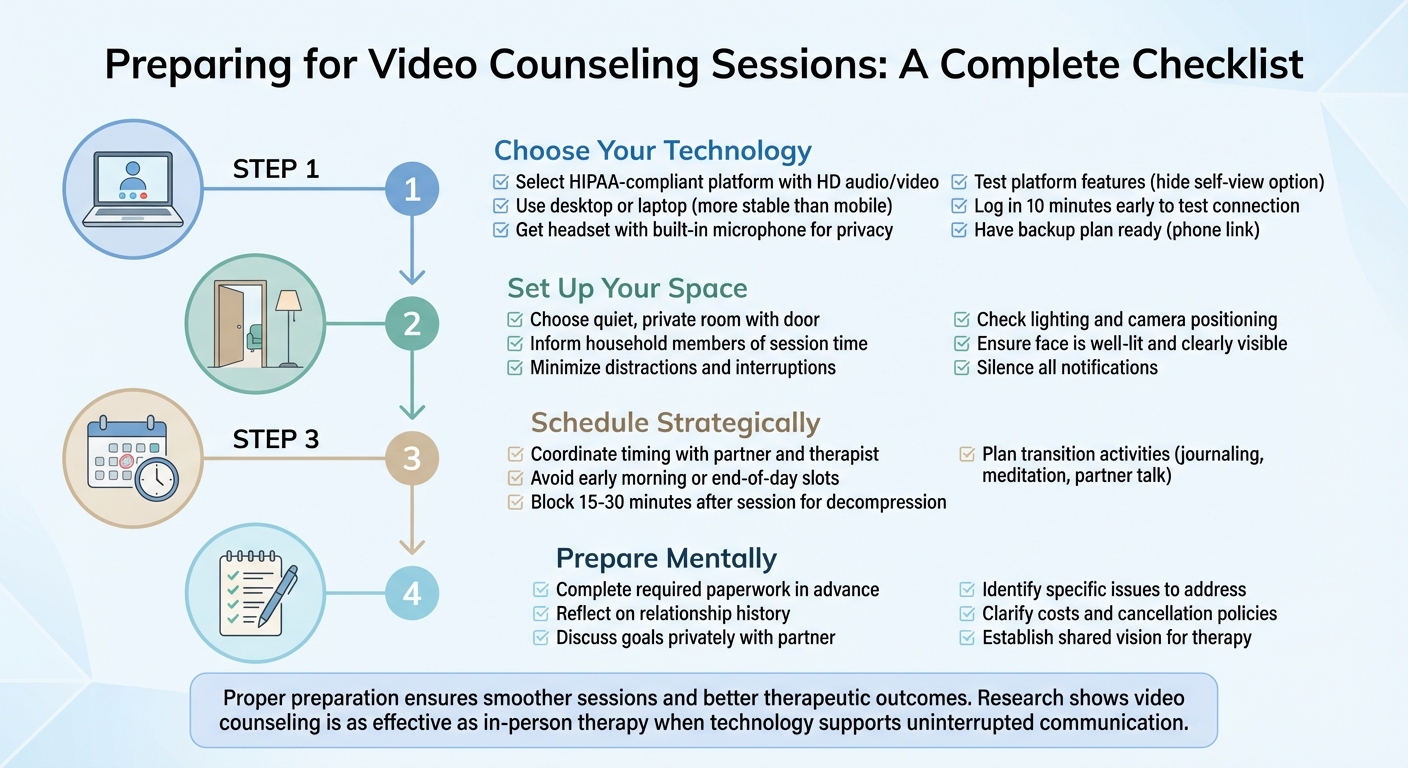
Video Counseling Preparation Checklist for Couples
Getting ready for a video counseling session is about more than just showing up. Proper preparation helps avoid distractions and technical hiccups, ensuring a smoother experience for everyone involved. Both couples and therapists benefit from setting up an environment that fosters meaningful conversations, even before the first session starts. And it all begins with having the right technology in place.
Selecting the Right Platform and Equipment
Start by choosing a platform that’s HIPAA-compliant, offering high-definition audio and video. This ensures security and allows for clear communication, which is key to capturing non-verbal cues. Research spanning the last 50 years shows that videoconferencing psychotherapy can be just as effective as in-person sessions when the technology supports uninterrupted communication [2][4].
A desktop or laptop is generally more stable than a smartphone or tablet, and using a headset with a built-in microphone can significantly improve sound quality while maintaining privacy [5]. Some platforms even let therapists hide the self-view, which can minimize distractions during the session [2]. To avoid last-minute technical issues, log in about 10 minutes early and test your internet connection. It’s also smart to have a backup plan, like a phone link, in case something goes wrong [5]. Once your tech is ready, focus on creating a space that supports privacy and concentration.
Setting Up a Private and Quiet Space
Your home can work well for therapy if you take steps to minimize interruptions. Choose a quiet, private room where you can close the door and let others in your household know about your session to avoid disruptions [1]. A calm, distraction-free environment helps you stay focused and engaged.
Scheduling Sessions and Setting Goals
Online therapy offers the convenience of flexible scheduling, but timing still matters. Work with your partner and therapist to pick a time that suits everyone. Avoid scheduling sessions right after waking up or at the end of a long, tiring day, as your focus might not be at its best [6].
After your session, give yourself 15–30 minutes to decompress. This transition time is crucial for processing what you’ve discussed and easing back into daily life. Kate Sheehan, LCSW, Managing Director of UCLA CARES, emphasizes its importance:
"This transition time from the introspection of therapy back to ‘real life’ is valuable practice time to stretch what you learn in therapy" [6].
Activities like journaling, meditating, or even talking with your partner can help you reflect and integrate what you’ve learned. Before your first session, complete any required paperwork and take time to think about your relationship history [1]. Discuss your goals privately with your partner, outlining what you both hope to achieve. Identify specific issues or conflicts to address in sessions and clarify logistical details like costs and cancellation policies. These steps not only prevent misunderstandings but also help establish a shared vision for your therapy journey [1]. Setting clear goals strengthens the connection between you, your partner, and your therapist, laying the foundation for effective virtual counseling.
Techniques for Engaging Couples During Video Sessions
Once you’ve established a reliable technical setup and created a sense of trust in the virtual space, the next step is keeping both partners actively engaged. Video counseling demands an intentional approach to fostering dialogue between partners. Interestingly, research indicates that when therapists apply effective engagement techniques, the quality of the therapeutic alliance is just as strong in video sessions as in face-to-face meetings [2].
Practicing Active Listening and Empathy
Active listening is a cornerstone of creating a space where both partners feel understood. In Emotionally Focused Therapy (EFT), therapists often take on the role of a "choreographer", helping couples navigate their interactions to become more open and responsive to one another. Rebecca Jorgensen, PhD, Founder of the Attachment Advancement Institute, describes this process:
"The role of the therapist shifts. In Stage 2, the therapist becomes a choreographer who restructures the clients’ interactions, guiding them through a process of becoming more open and responsive" [7].
One effective tool is circular questioning, which encourages both partners to share their perspectives on key issues. For instance, asking, "How does your partner’s reaction affect your feelings?" can reveal how one partner’s actions influence the other, fostering a sense of empathy and mutual understanding [8]. Another useful approach is mentalizing – prompting each partner to reflect on their behaviors and emotions. For example, you might ask one partner to guess what emotions might be driving the other’s actions. This practice helps couples connect on a deeper level, moving beyond surface-level disagreements to address underlying emotions [8].
From here, it’s important to ensure both partners have an equal voice in the conversation.
Ensuring Both Partners Participate Equally
Achieving balanced participation often requires deliberate effort, particularly when one partner tends to dominate or the other withdraws. Since non-verbal cues are harder to interpret in virtual settings, using each partner’s name when addressing them can help maintain clarity and inclusivity. For example, saying, "Sarah, what’s coming up for you right now?" avoids ambiguity and ensures both partners feel seen and heard [9].
Structured methods like the Speaker-Listener Technique can also help maintain balance. This technique establishes clear turn-taking rules, preventing one partner from monopolizing the conversation [2] [9]. At the beginning of therapy, setting ground rules – such as no interruptions or leaving the camera mid-session – can create a more respectful dynamic [8]. Another helpful strategy is distinguishing between "Conflict Talk" and "Friendship Talk", ensuring sessions aren’t consumed entirely by arguments [9]. If tensions rise, agreeing on a neutral phrase like "We need a break" allows either partner to pause the discussion, giving both space to regroup and continue in a calmer environment [9].
Reading Visual and Verbal Cues
Non-verbal feedback plays a crucial role in video counseling, though it often requires extra attention. Rosanna Rooney, Associate Professor at Curtin University, underscores this point:
"Non-verbal feedback from clients is an essential tool for therapists to track the effectiveness of their conversation" [2].
Pay close attention to posture, tone, eye contact, and pacing during sessions. If something seems unclear, don’t hesitate to ask directly, such as, "I noticed a change in your tone; what are you feeling?" [2] [9]. Environmental cues can also provide valuable insights. For example, noting whether a couple sits close together or far apart can reveal their current relational dynamic [9].
Research supports the effectiveness of video counseling in fostering connection and improving relationships. Between September 2021 and February 2022, a study at Curtin University involving 30 couples (60 individuals) tested the "Couple CARE" program via videoconferencing. The findings showed that improvements in relationship satisfaction and mental health were on par with those achieved in traditional, in-person sessions [2].
sbb-itb-596b85d
Solving Common Problems in Video Counseling
Even with thorough preparation, video counseling can come with its own set of challenges that can disrupt the flow of therapy. Tackling these issues quickly is essential to maintaining progress and keeping couples engaged during emotionally charged moments.
Fixing Technical Problems
Technical hiccups during counseling sessions can be especially disruptive, particularly during sensitive discussions. To minimize these issues, start each session with a quick check of your setup – lighting, camera positioning, and audio quality. Clear audio is critical, so using earbuds or headphones can enhance sound clarity and reduce distractions. Adjust your lighting and camera to ensure your face is well-lit and clearly visible from a comfortable angle.
Another helpful tip is to slow down your pace and silence notifications to avoid interruptions. As clinical counselor Vicki Enns, MMFT, points out:
"Going a little slower than I would in person helps me and my clients to avoid speaking over each other or missing an opportunity for the client to respond."
By resolving technical glitches upfront, you create a solid foundation for meaningful emotional work. With fewer disruptions, you can focus more on bridging the emotional gap that often accompanies virtual communication.
Addressing Emotional Distance
The physical separation of a screen might seem like a barrier to connection, but for some couples, it actually reduces intimidation and fosters a sense of control, leading to deeper emotional sharing. Andrea Kysely from Curtin University’s School of Psychology notes:
"Many clients noted that videoconferencing allowed them to become fully immersed in the therapeutic process. In fact, many couples felt that videoconferencing created an element of ‘distance’ from the therapist that allowed them to feel a greater sense of control and comfort."
To help couples connect, encourage them to recognize different types of communication – such as Casual Talk (discussing daily tasks), Conflict Talk, Friendship Talk (sharing personal stories or aspirations), and Support Talk (offering emotional care). Suggesting activities like creating a "Date Deck" with simple ideas, such as an indoor picnic or a walk, can help couples carve out meaningful time together.
Since non-verbal cues are harder to pick up in virtual sessions, make it a habit to verbalize your observations clearly. Questions like "What’s coming up for you right now?" can help uncover subtle emotional shifts. For couples sharing small spaces, practical strategies like wearing headphones or scheduling individual check-ins can help maintain privacy and personal boundaries.
Once emotional distance is acknowledged, structured approaches can guide couples through tougher conversations.
Handling Difficult Conversations Virtually
Navigating emotionally charged topics in a virtual setting often requires extra structure. Take, for example, a cohabiting couple, Todd and Natalie, who worked with clinicians at the University of Denver between September 2020 and February 2021. They were struggling with verbal aggression and emotional shutdown. The therapist introduced the Speaker-Listener Technique and established a clear "Time Out" signal, which helped improve their communication and allowed space for individual therapy to address underlying issues.
Setting up a "Time Out" signal, like saying "We need a break", can help de-escalate tense moments. Conducting early safety screenings can also address potential concerns before high-conflict joint sessions. Additionally, using partners’ names frequently during sessions, instead of relying solely on non-verbal cues, ensures clearer communication. Teaching emotional regulation techniques – such as deep breathing, cognitive reframing, and coping strategies – can further empower couples to manage daily stresses before they spiral into bigger conflicts.
These strategies help maintain stability in relationships, making video counseling a valuable tool for strengthening connections, even in a virtual setting.
Growth and Change Counseling Services
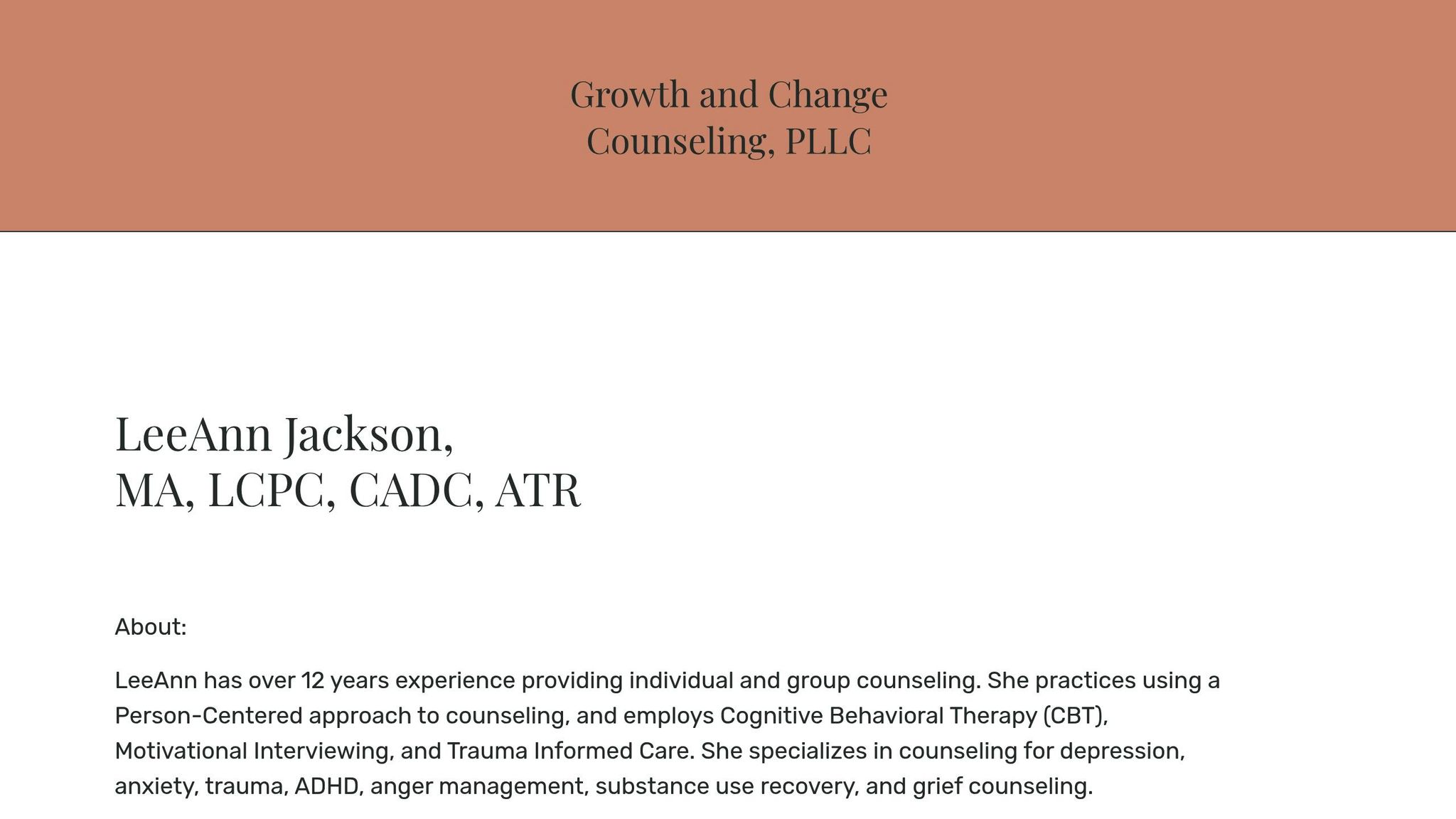
Growth and Change Counseling offers a range of services designed to address deeper relationship challenges, combining proven video counseling techniques with expert intervention. For those grappling with more persistent issues, such as entrenched patterns or significant emotional struggles, the center provides both telehealth and in-person sessions. These are available across California, including locations in Campbell, San Jose, Los Angeles, and Roseville.
When traditional video counseling isn’t enough, The Marriage Rescue Institute provides a structured and intensive solution for couples in crisis. This 12-week couples coaching program is tailored for high-stakes situations like impending divorce, infidelity recovery, or deeply harmful communication habits. The program focuses on identifying destructive patterns and equipping couples with practical skills to move from conflict toward connection.
Telehealth services eliminate the obstacle of distance, allowing couples to access specialized care no matter where they are located [1].
In addition to couples counseling, Growth and Change Counseling addresses a variety of relationship challenges, including communication breakdowns, trust issues, intimacy struggles, financial stress, and parenting conflicts [1][2]. Individual sessions with Licensed Marriage and Family Therapists are available at $200 for a 45-minute session, with sliding scale options starting at $100.
Since relationship stress can take a toll on both physical and mental health [2], having access to expert therapeutic support – whether through video counseling or specialized programs – can be a game-changer for couples looking to rebuild their connection and strengthen their future. These services are designed to provide consistent, professional guidance every step of the way.
Conclusion: Using Video Counseling to Strengthen Relationships
Studies show that video counseling can boost relationship satisfaction and mental well-being just as effectively as traditional, in-person sessions. The strategies discussed here not only enhance therapy sessions but also improve everyday communication. For example, when couples practice expressing their emotions clearly and maintaining eye contact during sessions, these habits often carry over into their daily lives, turning the home into both a practice space and a place for meaningful connection [3].
Having professional guidance is key to bridging the gap between understanding what needs to change and actually making those changes stick. A skilled therapist can help couples spot harmful patterns, experiment with new ways of communicating in real time, and approach tough conversations with greater structure and safety. As we’ve highlighted, the bond between therapist and client can grow just as strong through a screen as it does in person, with noticeable progress occurring over time [2].
Whether you’re tackling long-standing issues or working through a crisis, video counseling eliminates common hurdles like travel, childcare, and privacy concerns. It’s a practical and accessible way for couples to focus on what truly matters. By applying these techniques in every session, you can build a deeper connection and strengthen your relationship through the convenience and effectiveness of online therapy.
Video Counseling FAQs at Growth and Change Counseling
What steps can I take to ensure privacy and avoid distractions during video counseling sessions?
To ensure privacy and reduce distractions during video counseling sessions, there are a few practical steps you can take:
- Choose a secure, HIPAA-compliant video platform to protect client confidentiality and maintain a safe connection. This is essential for building trust and ensuring sensitive information stays private.
- Set up a private, quiet space for your sessions. Close doors, let others in your household know you’re unavailable, and aim to schedule sessions during times when the environment is less active.
- Obtain informed consent by clearly explaining any privacy risks associated with virtual counseling. This helps clients understand the boundaries and limitations of online sessions.
You can also enhance privacy by verifying your client’s location at the start of each session and using headphones to prevent others from overhearing. These steps not only protect confidentiality but also create a professional, focused atmosphere for effective video counseling with couples.
What are the best ways to keep both partners engaged during virtual couples therapy?
Creating a welcoming and engaging atmosphere is key to keeping both partners involved in virtual couples therapy. One simple tip is to encourage each partner to join the session from a computer instead of a phone or tablet. Why? Computers provide a better setup for observing non-verbal communication – like posture, gestures, and facial expressions – which are crucial in understanding emotions and dynamics. Positioning the screen at a slight distance and using a neutral background can also minimize distractions and help both partners stay focused.
Starting each session with a clear structure can make a big difference. Begin by outlining the agenda, setting mutual goals, and checking in emotionally with each partner. Interactive tools, such as shared worksheets, collaborative whiteboards, or quick polls, can make participation feel more active and meaningful. To ensure balance, alternate your attention between partners, address each by name, and include activities like role-playing or reflective exercises to amplify both voices in the conversation.
At Growth and Change Counseling, we weave these techniques into our telehealth couples therapy program. By using structured session plans and interactive activities, we aim to help couples stay connected, build trust, and make real progress in their relationships. These small but intentional strategies can make virtual therapy just as impactful as in-person sessions.
What should we do if technical issues disrupt a video counseling session?
Technical hiccups can happen, but a little prep work can go a long way in keeping things running smoothly. Before your session, make sure to check your internet connection – a stable broadband connection is best. Also, ensure your device is updated and test your webcam, microphone, and speakers or headphones. For better performance, consider using a wired Ethernet connection and close any unnecessary apps running in the background. It’s always smart to have a backup plan, like a phone number to switch to if the video call drops.
If something does go wrong, stay calm and handle it promptly. You might troubleshoot together by rejoining the session, moving closer to the router, or using your backup plan, such as continuing the session via phone. If the problem persists, rescheduling may be the best option to keep the session productive and focused. Taking these proactive steps helps maintain trust and ensures the counseling process stays on track.
Related Blog Posts
- Ultimate Guide to Virtual Therapy for Addicted Couples
- Best Practices for Multicultural Telehealth Counseling
- Best Apps for Couples in Counseling
- Ultimate Guide to Telehealth for Neurodiverse Couples
