Healing from trauma often requires addressing the mind, body, and spirit together. Prayer and reflection can play a key role in this process, offering tools for emotional healing and spiritual renewal. Here’s how these practices can help:
- Calm Stress Responses: Prayer and meditation help reduce the fight-or-flight response often triggered by trauma.
- Reframe Negative Beliefs: Scripture and spiritual reflection replace harmful thoughts like "I’m broken" with affirming truths.
- Process Pain Safely: Practices like lament allow you to express raw emotions to God without fear of judgment.
- Reconnect Spiritually: Trauma can shake faith, but prayer provides a path to rebuild trust in God and find peace.
- Support Emotional Strength: Journaling, forgiveness prayers, and small daily rituals nurture resilience over time.
For deeper healing, combining prayer with professional trauma therapy (e.g., EMDR or somatic therapy) can address trauma comprehensively. Christian counseling and secular therapy options, like those at Growth and Change Counseling, integrate clinical methods with spiritual care to support recovery.
Start small: Create a daily prayer habit, journal your emotions, and seek community support. These steps can help you move toward lasting peace and spiritual strength.
How Trauma Affects Your Spiritual Life
Understanding Trauma and Spiritual Disconnection
Trauma has a way of shaking the very foundation of your faith. Many survivors find themselves grappling with a deep crisis of belief, questioning God’s purpose or feeling spiritually lost and isolated [2]. This isn’t about having a weak faith – it’s a natural response to the overwhelming pain that can unsettle even the deepest convictions.
For some, trauma alters how they perceive God, especially if they’ve endured spiritual abuse. Instead of seeing God as a source of love and safety, they may begin to view Him through a lens of fear, judgment, or abandonment. This is sometimes referred to by therapists as a "soul wound" – a profound loss of trust in others, in oneself, and even in the ability to feel loved [3][10].
"Spiritual trauma leaves unseen wounds that shake up the core of how we see ourselves, God, and the world around us." – Jolene Underwood, Trauma and Abuse-Informed Therapist [3]
Trauma’s survival instincts – fight, flight, freeze, or fawn – can make it difficult to find the stillness needed for prayer or worship [1]. Studies have shown that trauma survivors often experience heightened anger and struggle with interpersonal and moral religious conflicts. These challenges go beyond typical mental health symptoms, adding another layer to the recovery process [9]. They underscore how essential faith is in rebuilding inner strength and finding peace.
How Faith Builds Emotional Strength
While trauma can disrupt your spiritual connection, faith has a unique ability to help restore emotional resilience. It provides a sense of hope and purpose that can transcend the pain. Research links positive religious coping and spirituality to reduced psychological distress in survivors of child abuse, sexual violence, and war [7].
Faith can also offer a broader perspective on traumatic experiences. Instead of getting stuck in a “why me” mindset, spiritual practices can help you reconnect with a sense of inner peace and balance – a part of yourself that remains steady even in the face of life’s difficulties [8]. The journey toward healing begins with recognizing and naming your spiritual struggles [3]. By being honest about your emotions and doubts in your conversations with God, faith can transform into a powerful source of strength and renewal.
sbb-itb-596b85d
Mike Hutchings: Healing Trauma Through Prayer
Steps for Healing Through Prayer and Reflection
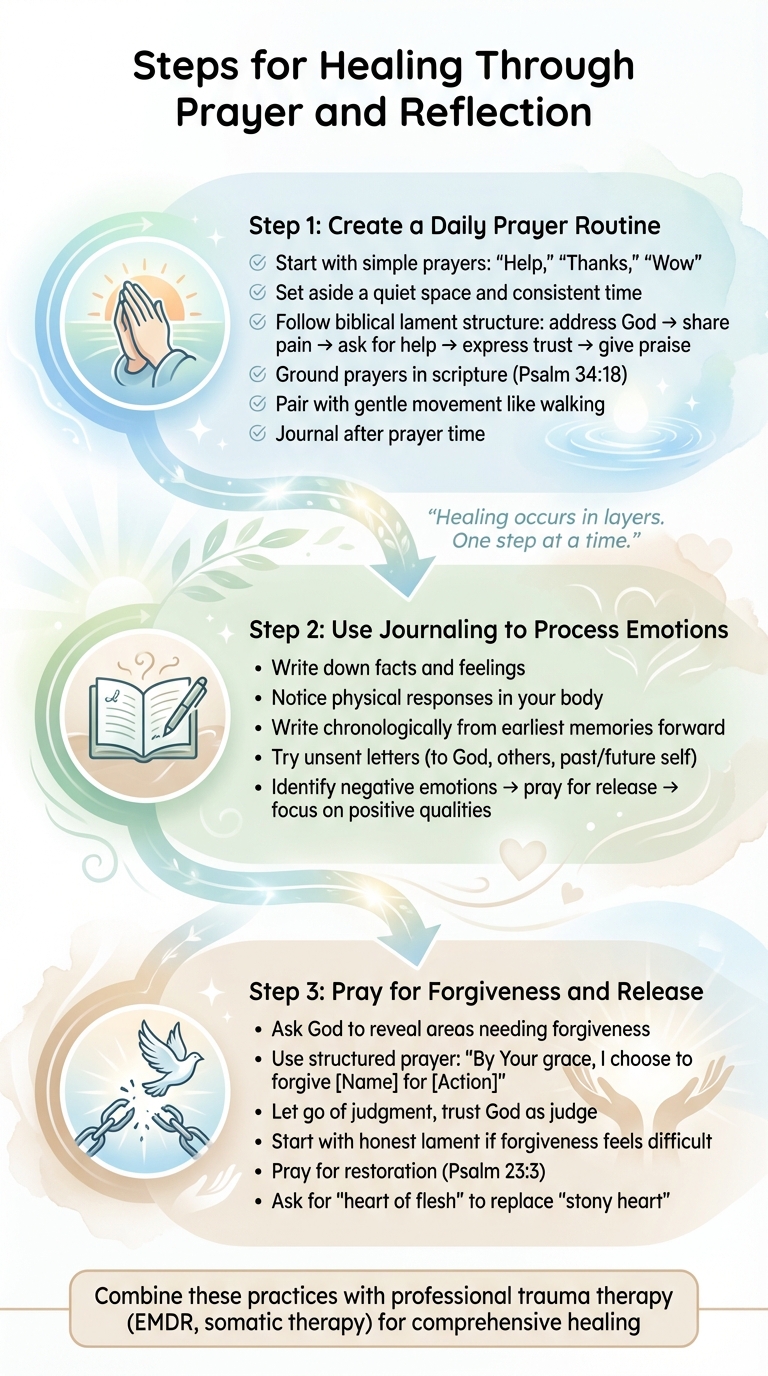
3-Step Prayer and Reflection Process for Trauma Healing
Step 1: Create a Daily Prayer Routine
Start with simple, heartfelt prayers like "Help", "Thanks", or "Wow" to nurture your connection to the divine. These small moments can grow into a meaningful habit.
Set aside a quiet spot in your home for prayer, and choose a consistent time – whether it’s first thing in the morning or just before bed. This routine can help you build a sense of stability. You might follow a five-step biblical lament: address God, share your pain, ask for help, express trust, and give praise. Ground your prayers in scripture, such as Psalm 34:18: "The Lord is near to the brokenhearted."
"Prayer for trauma healing is more than a tool. It’s an embodied practice of tapping Divine consciousness that restores the sense of connection with God." – Eugene Terekhin, Writer and Translator
Pair your prayers with gentle movements, like taking a quiet walk in a safe space. Walking can help you process heavy thoughts while staying present. After your prayer time, consider journaling to reflect on your experiences and uncover insights for healing.
Step 2: Use Journaling to Process Emotions
Journaling can be a powerful way to work through your emotions and keep track of your healing journey. Start by writing down the facts of what happened and how it made you feel. This step can help you move past denial and begin processing emotions that may have been buried.
"Saying your prayers is good, but writing them down is even better. You will be able to track your healing progress." – Eugene T., Houston-based writer and translator
As you write, pay attention to your physical responses. Do certain memories make your stomach churn or your shoulders tense? Noticing these sensations can help your body release stored trauma. You might find it helpful to write chronologically, beginning with the earliest difficult memories and working forward as emotions arise.
Another approach is writing unsent letters – to God, to those involved, or even to your past or future self. This practice can help you externalize complex feelings. When reflecting on painful events, identify the strongest negative emotion you’re experiencing, pray for its release, and then focus on a positive quality – like peace or joy – that you want to welcome into your life.
Step 3: Pray for Forgiveness and Release
Forgiveness isn’t about excusing harm; it’s about freeing yourself from the weight of resentment. Choosing forgiveness can lift the burden of bitterness and anger, which might otherwise deepen emotional wounds over time.
Ask God to show you the areas in your life where forgiveness is needed – whether it’s forgiving others or yourself. Use a structured prayer like, "By Your grace, I purpose and choose in my heart to forgive [Name] for [Specific Action]." Then, let go of judgment and trust God as the ultimate judge.
"Forgiveness is an essential step in trauma healing. This prayer for healing from trauma refocuses our attention on letting go of grudges and finding liberation in forgiveness." – Eugene T., Writer and Translator
If forgiveness feels too difficult right now, start with honest lament. Share your grief, anger, and confusion with God before moving toward trust and praise. Acknowledge any resentment or unforgiveness in your heart and ask God to cleanse it. Pray for restoration, as described in Psalm 23:3, and ask for a "heart of flesh" to replace the "stony heart" that trauma may have created.
Combining Prayer with Professional Trauma Therapy
How Prayer Supports Therapy Work
Prayer can act as a calming anchor, helping to ease the body’s fight-or-flight response, which often lingers long after trauma has occurred [1][5]. When paired with clinical treatment, spiritual practices can support healing on both emotional and physical levels.
Biblical meditation shares similarities with cognitive restructuring, a key therapy technique. It helps replace trauma-driven beliefs – like "I’m not safe" or "I’m worthless" – with affirming scriptural truths [6]. For example, during moments of anxiety or being triggered, you might practice a breath prayer: inhale with the thought "The Lord is my shepherd," and exhale with "I shall not want" [5]. This approach not only disrupts shallow, anxious breathing patterns but also reinforces a sense of peace rooted in scripture.
Professional counseling provides critical tools such as EMDR (Eye Movement Desensitization and Reprocessing) and somatic therapy, which help regulate the nervous system and guide it out of survival mode [1][11]. While prayer doesn’t replace these clinical methods, it works alongside them to enhance the healing process. For instance, combining EMDR with prayer can help reprocess triggers, reducing their emotional weight [1]. This blend of spiritual practice and structured therapy creates a more holistic path to recovery.
"Seeking professional help is not a lack of faith. It’s an act of stewardship." – Jennifer Antonucci, M.A., LMFT, LCADC from Renewing Life Center [11].
Trauma Services at Growth and Change Counseling
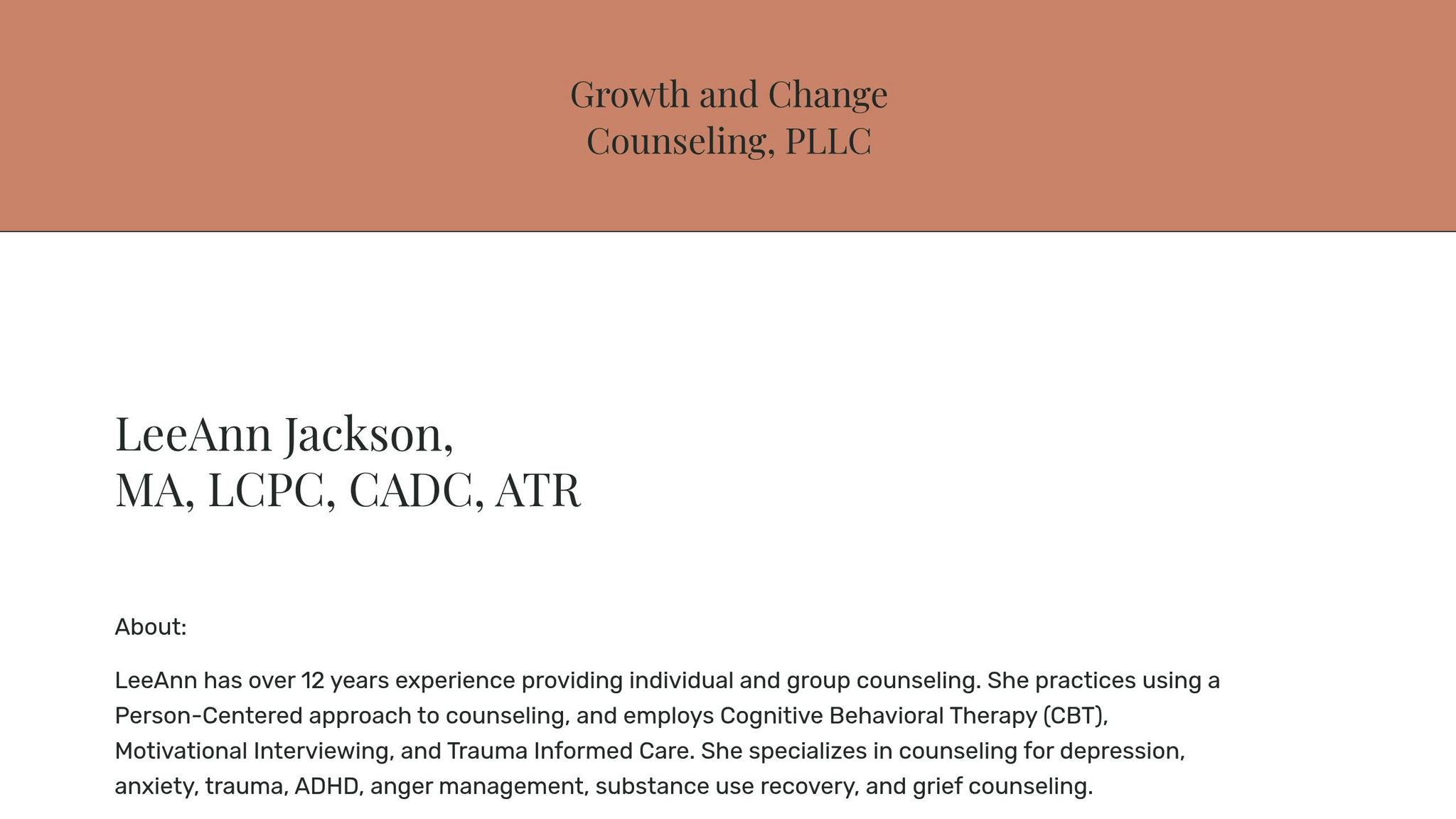
Professional trauma therapy builds on the foundation of spiritual practices, offering deeper healing. Growth and Change Counseling specializes in trauma therapy that integrates clinical techniques with Christian principles. Their approach goes beyond symptom management to address the root causes of trauma. Therapy sessions are priced between $100 (sliding scale) and $200 per session.
The practice uses evidence-based methods like EMDR, somatic therapy, and cognitive behavioral therapy, all while incorporating biblical truths to care for the spirit, mind, and body as one [4]. This approach not only provides relief from symptoms but also offers redemptive meaning through the hope of the Gospel [1]. Services are available in Campbell, CA, San Jose, CA, Los Angeles, CA, and Roseville, CA, as well as through telehealth for clients across California – ensuring that faith-integrated trauma care is within reach no matter where you are.
Building Long-Term Spiritual Strength
Connecting with a Faith Community
Recovering from trauma can feel isolating, and that sense of solitude often makes the journey even harder. Being part of a faith community, however, can provide a much-needed support system – people who encourage you through setbacks and celebrate your progress.
Smaller, more intimate settings are often the best places to form genuine connections. Groups like LifeGroups or small church gatherings offer a safe space to share struggles and practice the principle found in Galatians 6:2: "Carry each other’s burdens." Similarly, support groups focused on trauma or mental health can connect you with others who truly understand what you’re going through. If traditional church environments don’t feel right for your healing, consider seeking guidance from a marriage therapist in Roseville CA to find a path that resonates with you.
Look for people who offer kindness and understanding without judgment. Volunteering in ministry can also be a great way to meet like-minded individuals. Working together toward a shared purpose naturally builds trust and connection. As President Russell M. Nelson has said, "The Lord loves effort, because effort brings rewards that can’t come without it." These relationships are not just about companionship – they play a key role in helping you integrate spiritual practices into your daily life, making them a cornerstone of your healing.
Making Prayer and Reflection Lifelong Habits
Once you’ve found support in a community, the next step is to weave prayer and reflection into your daily routine. Healing from trauma takes time, and creating consistent spiritual habits can provide the stability you need during this gradual process. Regular prayer can act as a calming anchor, helping your body and mind shift from a state of tension to one of peace.
Incorporate prayer into the rhythms of your everyday life. As author Sarah Bessey observes, "Every rhythm of your life is a path to prayer." Whether it’s a quiet moment during a morning walk, focusing on your breath, or even pausing while doing chores, these moments can become intentional opportunities to connect with God. Journaling is another powerful tool – whether you’re writing heartfelt letters to God or simply jotting down your thoughts, it can help you process emotions as they surface.
"God changes and restores us through spiritual intimacy. This inside-out change is a benefit of the intimacy created through our relationship with God."
- Greg Jantz, Ph.D.
Just as a supportive community can nurture your recovery, maintaining these spiritual practices builds resilience that lasts long after the initial healing process. These habits not only help you manage future stress but also encourage growth and transformation. While healing may take time and patience, staying rooted in both your faith and your community can empower you to emerge stronger and more resilient.
Conclusion: Moving Forward with Faith-Based Healing
Recovering from trauma is a journey, unfolding layer by layer. Jolene Underwood, a therapist with expertise in trauma and abuse, puts it beautifully: "Healing occurs in layers. One step at a time… every layer is essential to a future with freedom, peace, and joy." [3] The spiritual practices we’ve discussed – whether it’s centering prayer, journaling, lament, or grounding in gratitude – aren’t just temporary fixes. They’re enduring tools designed to help realign your mind, body, and spirit after the disruption caused by trauma.
Start small and stay consistent. Begin with a one-minute centering prayer, using a simple sacred word like "peace" or "hope." Over time, you can gradually extend this practice to 15–20 minutes a day [5]. Incorporate breath prayers into your daily routine – perhaps at red lights or during quick breaks. For example, inhale while thinking "Lord have mercy" and exhale with "Christ have mercy" [5]. These small, personal rituals can calm your nervous system, help break cycles of chronic stress, and invite God’s peace into your daily life.
Even when words fail, simple prayers like "Help" or "Thanks" are enough. The Holy Spirit intercedes for you when you can’t find the words to express your pain [2]. These practices are not just about healing but about flourishing in God’s peace.
While spiritual habits are transformative, professional care can often provide the extra support needed to move from surviving to thriving. Growth and Change Counseling (https://johnmarkkane.com) offers trauma-informed therapy that blends faith-based approaches with proven clinical tools. Their services are available across California, including Campbell, San Jose, Los Angeles, and Roseville, as well as through telehealth.
FAQs
How can prayer and reflection aid in trauma recovery?
Prayer and reflection can serve as meaningful tools for healing after trauma, offering a space to process pain and seek comfort. Through prayer, individuals have the opportunity to share their struggles, doubts, and emotions, creating a sense of connection with God that can ease feelings of isolation. Reflection – whether it’s through journaling, meditating on Scripture, or simply sitting in quiet thought – helps soothe the mind and shift the body away from a constant state of stress.
These practices provide trauma survivors with a gentle way to work through difficult experiences in a faith-centered environment, encouraging emotional balance and nurturing a sense of hope. For those looking for additional support, Growth and Change Counseling combines prayer, reflective practices, and evidence-based therapy to help foster lasting recovery.
How can I use prayer and reflection to support trauma recovery in my daily life?
Prayer and reflection can serve as comforting tools for those healing from trauma, offering moments of peace, hope, and a deeper connection to God. These practices create opportunities for stillness and spiritual grounding, which can be incredibly supportive during emotional recovery.
To begin, try setting aside a specific time each day for prayer – whether it’s first thing in the morning or right before bed. Focus on simple, heartfelt prayers or Scripture passages that speak to healing, such as Psalm 34:18: "The Lord is close to the brokenhearted." You might also find it helpful to write down your prayers and emotions in a journal. This not only helps you process your feelings but also allows you to look back and see your progress over time.
You can enhance these moments by combining prayer with mindfulness practices like deep breathing or reflecting on things you’re grateful for. And if you feel additional support is needed, professional counseling can work hand-in-hand with your spiritual habits. Growth and Change Counseling, for example, offers trauma-focused therapy that blends faith and evidence-based methods, providing compassionate guidance as you navigate your healing journey.
What makes faith-based counseling different from traditional trauma therapy?
Faith-based counseling integrates established therapeutic techniques with spiritual elements like prayer, Scripture, and reflection. This approach aims to address trauma by focusing on emotional, mental, and spiritual well-being. It helps individuals reconnect with their faith and discover a sense of purpose through their relationship with God.
In contrast, traditional trauma therapy relies on evidence-based methods such as cognitive-behavioral therapy (CBT) or EMDR. These approaches concentrate on managing symptoms and providing psychological tools, without involving any religious or spiritual components. The main distinction lies in the integration of spirituality – faith-based counseling weaves it into the healing journey, while traditional therapy maintains a secular, faith-neutral approach.
Related Blog Posts
- Complete Guide to Trauma Recovery Steps
- Best Coping Strategies for Daily Anxiety
- 5 Ways Faith Supports Emotional Healing in Marriage
- How Christian Counseling Supports Family Healing
