Trauma doesn’t just affect one person – it can ripple through families, shaping behaviors, parenting, and even biology across generations. This connection between trauma and addiction is well-documented, with unresolved trauma often increasing the risk of substance use disorders (SUDs). Here’s what you need to know:
- Intergenerational Trauma: Trauma can pass from parents to children through epigenetics, parenting styles, and social factors. For example, stress-related changes in DNA or emotional detachment in parenting can create cycles of insecurity and stress.
- Trauma’s Role in Addiction: Many use substances to cope with trauma symptoms like anxiety or emotional numbness. Unresolved trauma often disrupts attachment and stress regulation, making addiction more likely.
- Historical Trauma: Shared traumas, such as genocide or systemic oppression, affect entire communities, amplifying addiction risks. Indigenous populations, for instance, report higher substance use linked to these collective experiences.
- Effective Recovery: Trauma-informed care addresses both trauma and addiction together. Therapy models like EMDR, Cognitive Behavioral Therapy (CBT), and family-based approaches help individuals heal while breaking harmful cycles.
Healing starts with awareness and proper support. By addressing trauma, individuals and families can reduce addiction risks and build healthier futures.
Understanding Intergenerational Trauma at Growth and Change Counseling
Research on Intergenerational Trauma and Addiction
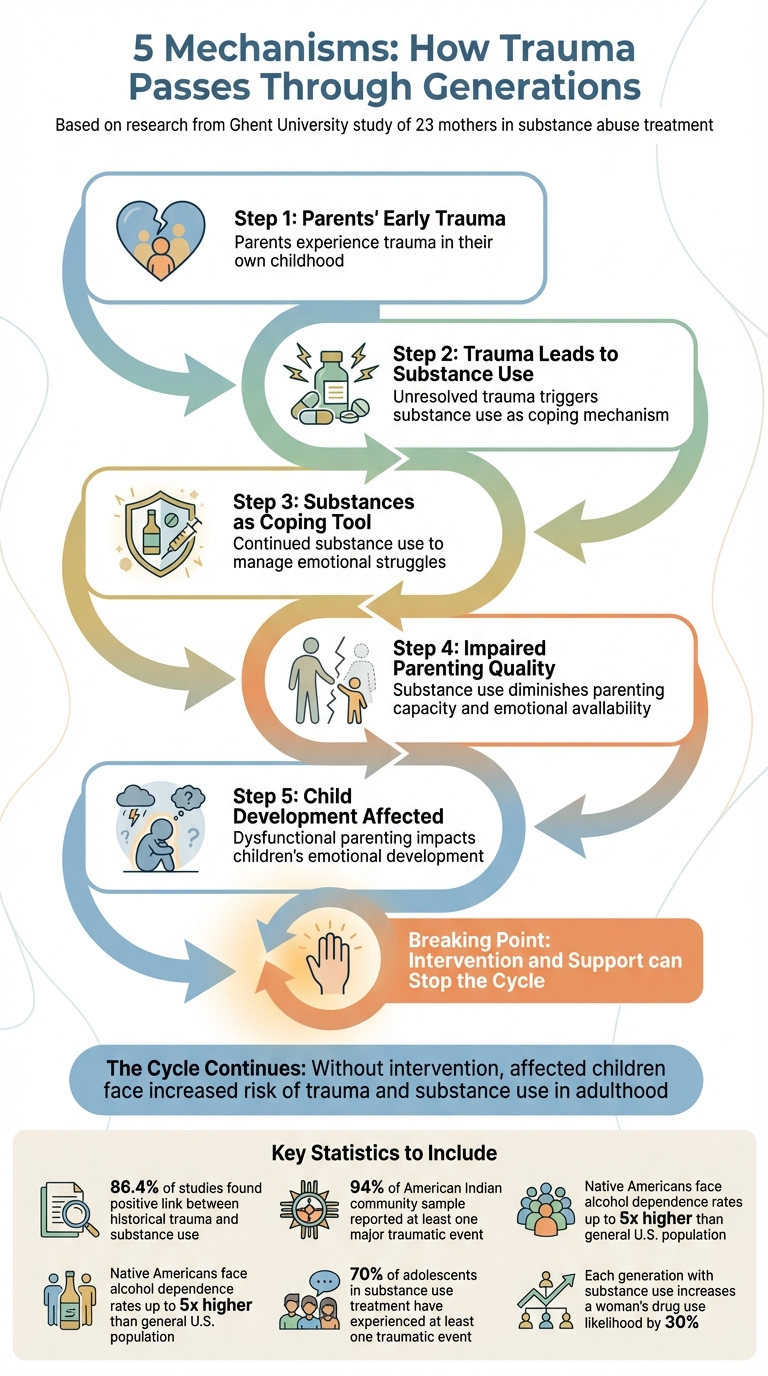
How Intergenerational Trauma Leads to Addiction: 5 Key Transmission Mechanisms
Findings from Family Studies
Family studies have shed light on how trauma and addiction are passed down through generations. For example, Florien Meulewaeter from Ghent University conducted interviews with 23 mothers undergoing substance abuse treatment in Flanders, Belgium. The research identified five key mechanisms behind this transmission: parents’ early trauma, trauma leading to substance use, substances helping parents cope with their struggles, continued substance use impairing parenting quality, and, ultimately, dysfunctional parenting affecting their children’s development [2].
Another study, published in May 2022, focused on 482 married or cohabiting couples in the U.S. with children aged 3 to 13. Led by Emma M. Reese at Brigham Young University, the research found that fathers’ adverse childhood experiences (ACEs) were linked to poorer family health, which increased the likelihood of children experiencing their own adverse family environments. Interestingly, fathers’ ACEs had a greater impact on overall family functioning than mothers’ ACEs, influencing the family’s social and emotional well-being [1].
Additionally, insecure maternal attachment – often tied to inconsistent caregiving – has been shown to heighten children’s susceptibility to substance use disorders [2]. These family dynamics provide a foundation for understanding how broader historical forces influence addiction.
Historical and Cultural Trauma Effects
Beyond individual family dynamics, collective historical and cultural traumas amplify addiction risks across generations. Historical trauma refers to the shared experience of severe trauma endured by entire communities, which often leaves a lasting imprint. A scoping review of existing studies revealed that 86.4% of research found a positive link between historical trauma and substance use [7]. This phenomenon has been observed in groups such as Indigenous populations, Holocaust survivors, and communities subjected to genocide or ethnic cleansing.
For instance, among an American Indian community sample, 94% of participants reported experiencing at least one major traumatic event [6]. Native American populations face alcohol dependence rates up to five times higher than the general U.S. population [6]. Researchers describe the "historical trauma response" as manifesting through substance abuse, often used as a way to cope with "psychic numbing", survivor guilt, and fixation on ancestral trauma [6]. Factors like the loss of cultural identity and suppression of traditional practices – through forced relocations or residential schools – are major contributors to addiction risks in these communities [5][7].
The transmission of trauma operates through various channels: socialization and cultural traditions, family dynamics, and even biological mechanisms such as epigenetic changes. Linda O’Neill, an Associate Professor at the University of Northern British Columbia, explains:
"The systemic effect of personal trauma often extends beyond the actual victim and can have a profound effect on the lives of significant others, particularly spouses and offspring."
This "chain of pain" ensures that unaddressed trauma continues to ripple through generations, perpetuating cycles of addiction [5].
Trauma-Informed Addiction Recovery Methods
Principles of Trauma-Informed Care
Trauma-informed care (TIC) shifts the focus in addiction recovery from asking "What is wrong with you?" to "What happened to you?" [9]. This approach helps reduce the shame and stigma that often keep people from seeking help or staying in treatment.
The foundation of TIC lies in creating physical and emotional safety, fostering trust through transparency, and prioritizing client choice and collaboration. These elements are especially crucial for individuals with chronic trauma, who often face heightened risks of substance use and mental health challenges [8].
The Center for Substance Abuse Treatment highlights the profound impact of trauma on treatment engagement:
"Trauma can significantly affect how an individual engages in major life areas as well as treatment" [8].
This understanding has led many recovery programs to adopt universal trauma screenings for individuals entering treatment. These screenings ensure that both substance use and the underlying traumatic stress are addressed simultaneously, forming the backbone of therapies tailored to tackle trauma’s role in addiction.
Therapy Models That Work
Several evidence-based therapy models effectively integrate trauma treatment with addiction recovery. These include Seeking Safety, Integrated Cognitive-Behavioral Therapy (ICBT), Multidimensional Family Therapy (MDFT), and Brief Strategic Family Therapy (BSFT). Each model focuses on addressing trauma while supporting recovery, whether through safety, coping strategies, or family dynamics.
- Seeking Safety helps patients develop healthy coping mechanisms to manage trauma symptoms and substance urges, without requiring them to relive painful memories [8].
- ICBT focuses on identifying the connections between thoughts, feelings, and behaviors, helping patients recognize triggers for both trauma and substance use [4].
- MDFT is particularly effective for adolescents, addressing individual behaviors, family relationships, and broader community influences to tackle intergenerational trauma [9].
- BSFT takes a problem-solving approach, targeting family dynamics that might contribute to youth substance misuse [9].
For example, a family therapy case involving a child’s anxiety and behavioral issues demonstrated the power of addressing intergenerational trauma. Over five months of therapy, the father’s experience with shaming and physical punishment was explored, leading to changes in his parenting style. This shift resolved the child’s nighttime anxiety without the need for medication [10]. Therapist Dafna Lender emphasizes:
"The past, no matter how entrenched, need not determine the future" [10].
These therapies not only support individual recovery but also break cycles of intergenerational trauma that fuel addiction. As noted by SAMHSA:
"Family-based SUD interventions are supported by empirical evidence and have been shown to be effective in promoting long-term behavior change, including recovery" [9].
Clinicians are encouraged to approach families with empathy and education, avoiding judgmental terms like "enabler" or "codependent." This supportive framework fosters understanding and promotes healing for everyone involved.
sbb-itb-596b85d
How Families Can Break the Cycle
Education and Family Participation
Breaking the cycle of intergenerational trauma starts with recognizing the patterns that have been passed down over time. Families can begin by identifying recurring issues like abuse, mental health struggles, or addiction within their family history [12]. This step helps to bring hidden dysfunction into focus, turning vague problems into clear challenges that can be addressed.
Understanding attachment styles is another key part of this process. Adults can examine whether they lean toward "dismissing" patterns – where relationships are undervalued, or parental actions are idealized without evidence – or "preoccupied" patterns, which involve unresolved anger and difficulty coping [11]. Dafna Lender, LCSW, explains:
"Trauma is transmitted between generations when frightening experiences go unnamed and cause a child to internalize" [11].
The encouraging news? Change can start with just one person. As All Points North puts it:
"Healing generational trauma starts with healing yourself first. You can be the one to break the cycle" [12].
Even if others in the family resist change, a determined individual can gradually shift the dynamic for everyone.
Practicing self-compassion and reparenting is essential for addressing unmet emotional needs. Parents, for instance, can work to repair attachment ruptures by taking accountability for actions that may have frightened or invalidated their children. Offering heartfelt apologies that acknowledge a child’s feelings can also help [11]. Small but meaningful gestures – like engaging in joyful play, offering physical touch (such as sitting side by side), or sharing stories – can mend attachment wounds and calm anxious minds [11].
By focusing on self-healing and rethinking attachment, individuals can lay the groundwork for broader family recovery. Beyond mental and emotional healing, incorporating physical or body-centered approaches can further strengthen the process.
Body-Based and Experiential Therapies
For families looking to break cycles of trauma, somatic therapies provide an effective way to address emotional regulation. While traditional talk therapy focuses on thoughts and feelings, trauma often lingers in the body. Somatic approaches tackle this by addressing physical sensations and nervous system responses where traumatic memories are often stored [14]. Linda Kocieniewski, LCSW, emphasizes:
"Healing also occurs through the body" [14].
One effective method is Eye Movement Desensitization and Reprocessing (EMDR), which uses bilateral stimulation – like tracking a therapist’s finger with your eyes – to help the brain process painful memories and transform them into sources of resilience [14]. This therapy targets implicit memories that traditional talk therapy may not reach and often produces noticeable shifts within just 4–8 sessions [14].
Incorporating simple daily practices can also help regulate the nervous system. Techniques like diaphragmatic breathing (deep belly breathing), grounding exercises (such as holding ice or focusing on your surroundings), and body scanning (mentally checking for areas of tension) can provide immediate relief during moments of anxiety or trauma triggers [13][14]. These tools act as "circuit breakers", activating the body’s natural relaxation response [13]. For families dedicated to breaking trauma cycles, these small but impactful techniques can offer quick relief while professional therapy continues to deepen the healing process.
Growth and Change Counseling: Trauma and Addiction Treatment
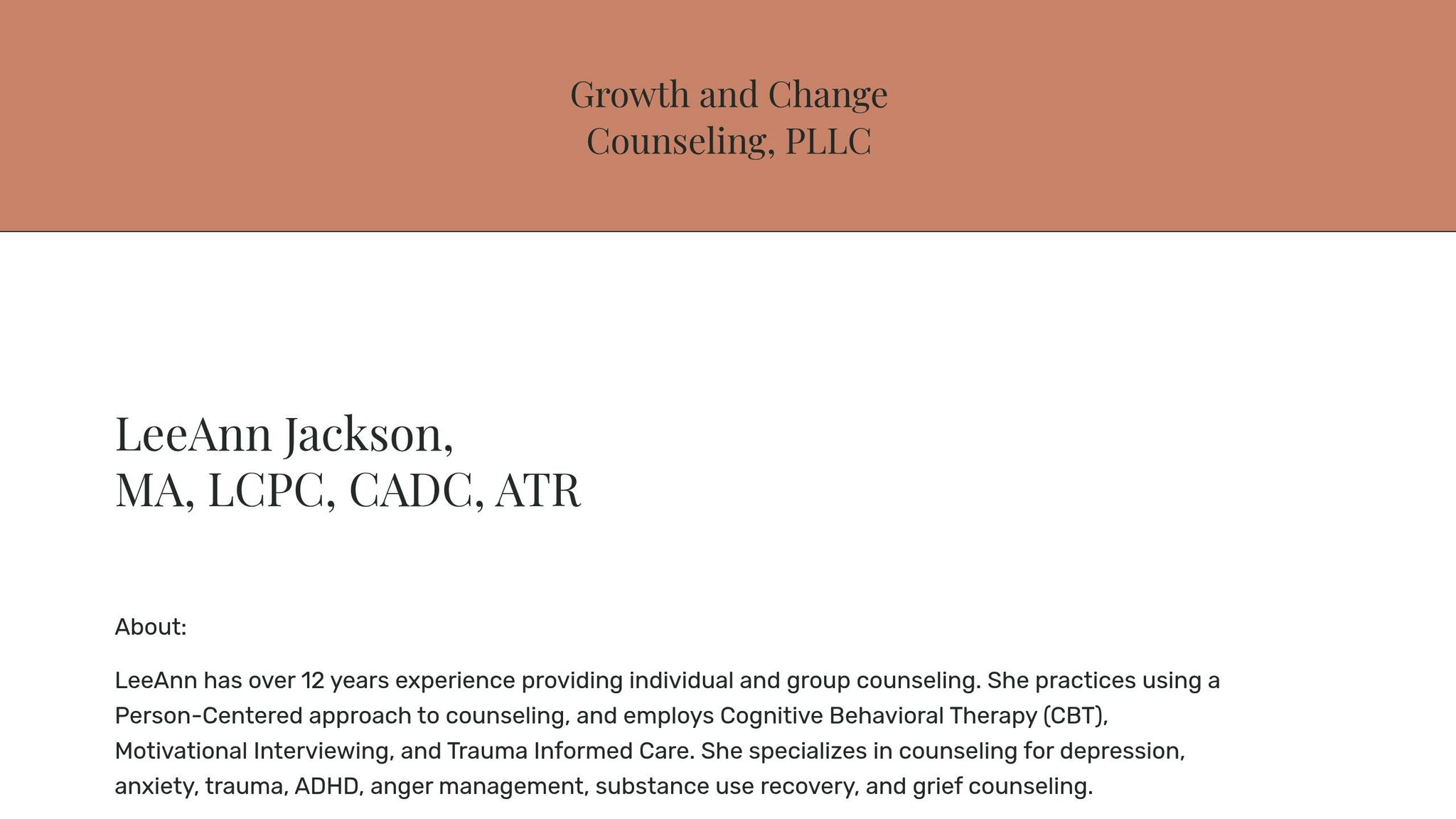
Available Therapy Services
Addressing intergenerational trauma requires more than just family-based interventions – it demands specialized professional care. At Growth and Change Counseling, the focus is on breaking the cycle of trauma-induced addiction through a combination of individual therapy, family therapy, and parent coaching. This is especially critical, as adults who have experienced trauma are three times more likely to develop substance use disorders [17].
The clinic employs a range of evidence-backed approaches that have shown success in treating trauma-related addiction. These include Eye Movement Desensitization and Reprocessing (EMDR), Cognitive Behavioral Therapy (CBT), Dialectical Behavior Therapy (DBT), and Narrative Therapy. To complement these methods, holistic therapies such as yoga, meditation, and creative arts therapy are integrated to help clients manage stress and regulate emotions [17][12][18]. For parents in recovery, the practice offers attachment-based interventions aimed at fostering greater parental sensitivity and reducing harsh parenting behaviors. This not only supports the parent’s healing journey but also helps to prevent the transmission of trauma to their children [15].
By addressing trauma on mental, emotional, and physical levels, Growth and Change Counseling takes a comprehensive approach to treatment. These services are made even more accessible through both in-person and telehealth options, ensuring that care is available to those who need it most.
Locations and Telehealth Options
Growth and Change Counseling provides in-person services at offices located in Campbell, San Jose, Los Angeles, and Roseville, California. For families who cannot visit these locations, telehealth services are available throughout the state, offering a convenient way to access specialized care [16].
Telehealth plays a vital role in extending support to families affected by intergenerational trauma. This is especially important given that over 70% of adolescents seeking treatment for substance use have experienced at least one traumatic event [17]. Additionally, research highlights the compounding nature of trauma, showing that each generation with substance use issues increases a woman’s likelihood of drug use by 30% [16]. By providing flexible and accessible care, Growth and Change Counseling ensures that more families have the tools to break these cycles and move toward healing.
Conclusion: Treating Trauma for Lasting Recovery
Addiction is rarely an isolated issue – it often serves as a coping mechanism for unresolved trauma, sometimes passed down through generations. Studies reveal that trauma can alter brain development, particularly in areas related to stress and emotion regulation, which increases vulnerability to substance dependence [3]. Beyond its biological effects, unresolved trauma can also disrupt parenting, leading to emotional instability and reduced parenting skills [12][19].
Addressing this complex interplay between trauma and addiction requires a treatment approach that goes beyond surface-level solutions. Breaking the cycle demands professional intervention that tackles both the addiction and its root causes. Dual-diagnosis treatment is crucial, as it addresses both mental health challenges and substance use disorders. Therapies such as EMDR, trauma-focused CBT, and attachment-based interventions have proven effective in helping individuals process traumatic experiences and rebuild secure emotional connections [12][15].
The evidence highlights the importance of integrated care. Research shows that supportive environments filled with nurturing relationships and resources can mitigate the biological effects of early trauma [3]. As All Points North Lodge emphasizes:
"Healing generational trauma starts with healing yourself first. You can be the one to break the cycle and stop the legacy of familial trauma" [12].
Recovery isn’t just about ending substance use – it’s about addressing the deep-seated issues that fuel it. Whether you’re confronting your own trauma or seeing its effects on your family, professional support can help you uncover triggers, recognize patterns, and build healthier ways to cope. Growth and Change Counseling provides specialized trauma and addiction treatment, offering individual therapy, family therapy, and parent coaching across California. For added flexibility, telehealth options are also available.
Healing begins with you. By addressing your trauma, you can break generational cycles and create a healthier future for yourself and your family.
FAQs
What is intergenerational trauma, and how does it contribute to addiction risk?
Intergenerational trauma happens when unresolved pain and stress are passed down from one generation to the next. This can occur through learned behaviors, like unhealthy coping mechanisms, or even through biological changes that influence how the brain handles stress and emotions. Studies have found that trauma can actually alter gene expression, leaving individuals more prone to stress and emotional challenges.
When these inherited struggles are paired with exposure to harmful behaviors, such as substance use, the risk of addiction increases. Factors like disrupted attachment, chronic stress, and heightened sensitivity to drugs or alcohol fuel a cycle that keeps substance use alive across generations. Breaking this cycle requires addressing these deeply ingrained patterns. Trauma-informed therapy plays a crucial role in helping individuals and families heal. Growth and Change Counseling offers tailored support to help people recover from intergenerational trauma and develop healthier ways to cope.
What are the best therapy approaches for addressing trauma and addiction together?
Effective therapy for trauma and addiction recovery blends trauma-focused care with methods that address substance use and the relationships that play a role in both. One approach, attachment-based family therapy, helps individuals and their loved ones explore how early life experiences and intergenerational trauma influence behaviors. This process encourages the development of secure relationships and healthier coping strategies. Another model, the Family-Centered Relational Recovery Model, combines family therapy, parent coaching, and relational healing to support not just the individual but their entire family during recovery.
Research underscores the importance of trauma-informed dual-diagnosis programs, which tackle PTSD and substance use disorders at the same time. These programs often incorporate cognitive-behavioral techniques to help clients regulate emotions and minimize triggers. Additional methods, like trauma-focused CBT, mindfulness-based stress reduction, and family systems therapy, enhance recovery efforts by teaching individuals how to handle distress, rebuild trust, and establish supportive connections.
Growth and Change Counseling offers integrative, solutions-focused therapy for trauma and addiction. Their services include individual therapy, family sessions, and parent-coaching, available in California and through telehealth.
How can families overcome cycles of trauma and addiction?
Intergenerational trauma refers to the emotional and psychological burden passed down from a parent’s or grandparent’s painful experiences. This inherited trauma can influence stress responses, attachment styles, and even gene expression, potentially increasing the risk of substance use disorders across generations. But here’s the good news: these patterns don’t have to define the future.
Families can take meaningful steps to disrupt these cycles. Encouraging open, judgment-free conversations is a great place to start. Establishing stable, nurturing routines can provide a sense of security, while trauma-informed therapy can address both individual challenges and family dynamics. Programs that focus on parents – teaching healthier coping mechanisms and building stronger attachment skills – can make a real difference as well.
Professional support, like the services offered by Growth and Change Counseling, equips families with strategies to heal old wounds, strengthen relationships, and foster resilience. With dedication and the right resources, breaking free from these patterns is entirely within reach.
Related Blog Posts
- How Family Therapy Restores Trust After Addiction
- Top 7 Therapy Approaches for Cross-Cultural Couples with Addiction
- How Trauma Impacts Parent-Child Relationships
- Cultural Healing for Addiction Recovery
