Helping multilingual clients process trauma requires more than just language translation – it demands a tailored approach that respects their linguistic and personal experiences. Here’s what therapists need to know:
- Language impacts trauma processing: Clients may express emotions differently depending on the language used. Trauma memories are often tied to their native language, while day-to-day life may revolve around another.
- Intake is key: Assess language preferences, migration history, and support systems to avoid misunderstandings. Always offer materials and communication in the client’s preferred language.
- Informed consent matters: Ensure clients fully understand therapy terms by providing consent materials in their primary language and using professional interpreters when necessary.
- Interpreters are essential: Use trained interpreters, not family members, to maintain accuracy, confidentiality, and professionalism.
- Session flexibility: Allow clients to switch between languages during sessions to better navigate emotions tied to trauma.
- Family dynamics: Address power imbalances in multilingual families and include family members where appropriate, using culturally relevant tools.
Therapists must prioritize clear communication, professional interpretation, and a deep understanding of how language shapes trauma recovery.
Trauma-Focused CBT: A Culturally Adapted Therapy to Work with Latino Families
Intake and Language Assessment
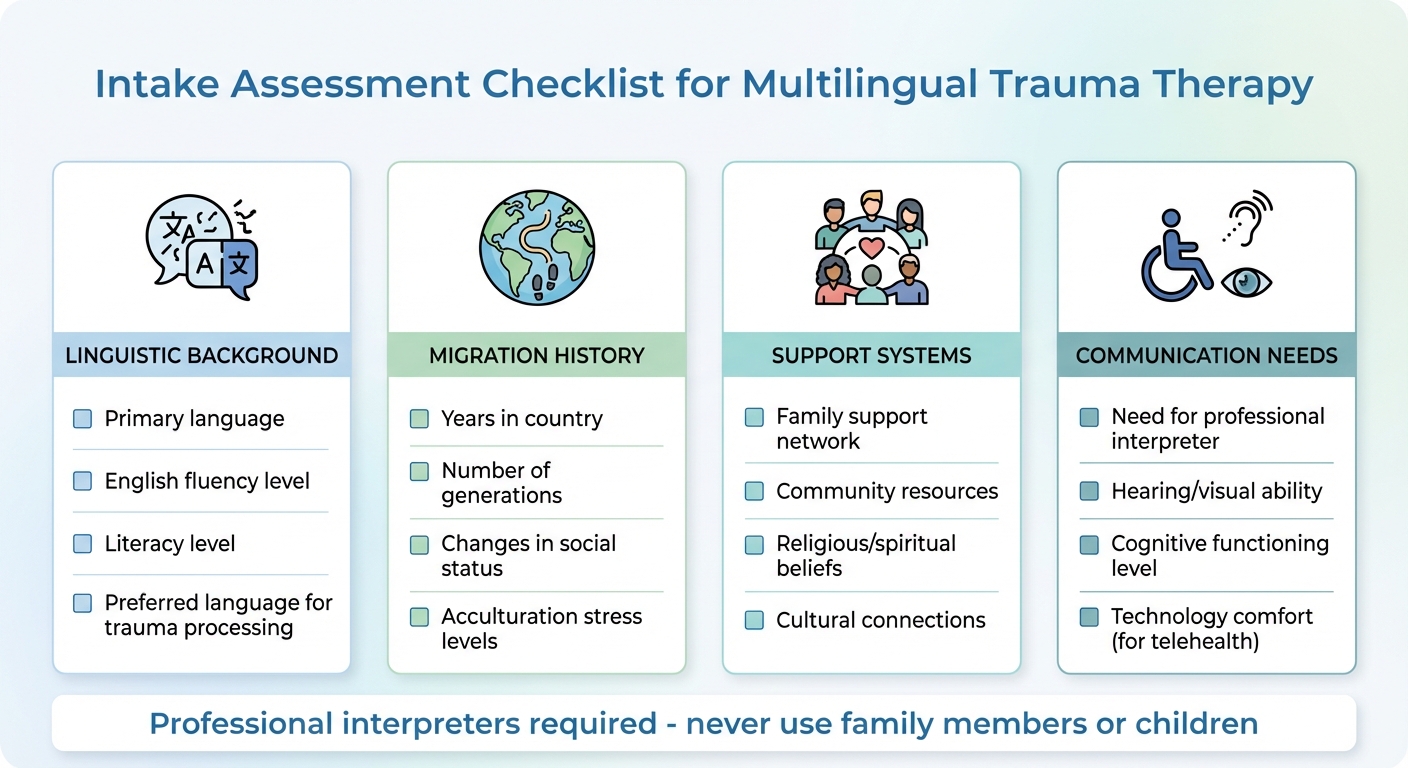
Intake Assessment Checklist for Multilingual Trauma Therapy Clients
The intake process is a crucial starting point in trauma therapy, especially when working with multilingual clients. This phase involves understanding language preferences, migration history, and potential communication barriers. Gathering accurate details ensures your approach is tailored and reduces the risk of misunderstandings.
Identifying Language Preferences
Begin by directly asking clients which language they prefer for therapy sessions. Don’t assume that fluency in English automatically makes it the best language for processing trauma. As the American Psychological Association (APA) highlights:
"Psychologists interact in the language requested by the client and, if this is not feasible, make an appropriate referral" [2].
Clarify preferences for all forms of communication, including verbal exchanges and written materials. The APA also advises that "whenever possible, the written information is provided in the language understandable to the client" [2]. This step ensures the client feels supported and understood throughout the process.
Evaluating Migration and Background History
Understanding a client’s migration history offers valuable context for their trauma. Document details such as how long they’ve been in the U.S., their generational status, and any shifts in social or occupational roles. Keep in mind that the length of time spent in a country doesn’t necessarily equate to acculturation.
It’s also essential to explore the client’s support systems, including family connections and culturally specific resources like community groups or spiritual practices. Changes in social status stemming from migration, such as a loss of professional standing, can deeply impact identity and self-worth. These sociopolitical dynamics are critical to note during intake [2].
The APA further emphasizes the importance of integrating culturally relevant support, stating that "effective psychological intervention may be aided by consultation with and/or inclusion of religious/spiritual leaders/practitioners relevant to the client’s cultural and belief systems" [2].
Screening for Literacy and Communication Barriers
Language preference is just one part of the equation. Assess for sensory, cognitive, or behavioral factors that might affect therapy. This includes checking for hearing or vision impairments, cognitive challenges, or developmental concerns. If you’re offering telehealth services, confirm that the client can comfortably use the required technology, such as viewing materials on a screen or navigating online platforms [4].
Pay close attention to signs of misunderstanding, even if the client appears to agree nonverbally. Some clients might hesitate to admit they’re struggling with language comprehension due to embarrassment. Creating an environment where they feel comfortable asking for clarification can make a significant difference [5].
| Intake Category | Key Data Points |
|---|---|
| Linguistic Background | Primary language, English fluency, literacy level, preferred language for trauma processing [2][4] |
| Migration History | Years in country, number of generations, changes in social status, acculturation stress [2] |
| Support Systems | Family support, community resources, religious/spiritual beliefs [2] |
| Communication Needs | Need for interpreter, hearing/visual ability, cognitive functioning level [2][4] |
Finally, determine whether a professional interpreter or culture broker is necessary. If you’re unable to provide therapy in the client’s preferred language, arrange for appropriate support or make a referral [2].
With these intake details in place, you’ll be ready to move forward with securing informed consent and addressing interpreter requirements in the next steps.
Informed Consent and Interpreter Use
After the intake process, it’s crucial to ensure that the therapy respects the client’s language preferences and comprehension needs.
The next major step is obtaining informed consent. This process ensures your client understands their rights and the therapy process. For multilingual clients, it’s essential to provide this information in their preferred language to guarantee they fully grasp the terms and concepts involved.
Providing Informed Consent in the Client’s Language
Informed consent serves as the bridge between the initial assessment and active trauma intervention.
Make sure all consent materials are provided in the language the client feels most comfortable with. This includes both written documents and verbal explanations. Be prepared to spend additional time facilitating communication when working with an interpreter [6].
One effective method is the teach-back technique, where the client repeats key concepts to confirm their understanding. Pay special attention to terms such as "confidentiality", "mandated reporting", and "voluntary participation" to ensure both you and the interpreter are aligned in using accurate terminology in the client’s language.
If you’re collaborating with an interpreter, schedule time before the session to review the informed consent materials together. Discuss any mental health-specific terminology that may come up. As Villalobos, B. T., et al. highlight:
"The interpretation in the context of trauma therapy can be particularly challenging for interpreters without mental health training" [6].
Providing interpreters with these materials in advance helps ensure clarity and preparedness.
Collaborating with Professional Interpreters
Partnering effectively with a professional interpreter requires careful planning and communication. Establish a strong clinician–interpreter relationship to ensure high-quality care [1].
Start with a pre-session briefing to align on session goals and review any potentially sensitive or triggering topics. Share outlines or materials ahead of time so the interpreter can prepare [6]. During the session, maintain direct communication with your client by making eye contact and speaking to them, not the interpreter. Use short, clear sentences and avoid idioms or slang, which may not translate well [7].
It’s also important to acknowledge the emotional toll interpreters may experience when working in trauma-focused settings. They are often exposed to distressing content, which can lead to vicarious trauma or secondary traumatic stress [6]. To support their well-being, allow time for debriefing after sessions and avoid scheduling back-to-back trauma-focused appointments. A healthy interpreter is vital for providing effective client care.
Finally, take steps to ensure your choice of interpreter does not compromise safety or confidentiality.
Avoiding Inappropriate Interpreter Choices
Under no circumstances should a client’s child or vulnerable family member serve as an interpreter. Relying on children for interpretation can expose them to psychological trauma, place undue responsibility on them, and lead to miscommunication due to their lack of clinical vocabulary [7]. As Stanford Geriatrics explains:
"Use of family members, especially children, as interpreters is strongly discouraged because of… psychological trauma to children when they hear very disturbing news or when they realize the extreme responsibility they have for the family member’s health" [7].
Additionally, cultural sensitivities around certain topics – like sexual trauma – can prevent open and honest communication [7].
| Risk Factor | Consequence of Using Family/Untrained Interpreters |
|---|---|
| Confidentiality | Client may withhold trauma details to avoid judgment or retaliation [7] |
| Clinical Accuracy | Paraphrasing can obscure the client’s true emotional state or symptoms [7] |
| Child Welfare | Exposure to adult trauma can cause secondary trauma in children [7] |
| Legal Compliance | Not providing professional interpretation may violate Title VI of the Civil Rights Act [7] |
| Interpreter Health | Untrained individuals are unprepared for the emotional toll of trauma sessions [6] |
Professional interpreters are trained to convey the meaning behind words, not just translate them verbatim. They ensure that clinical nuances and emotional tones are communicated accurately and appropriately [7]. This precision is especially important in trauma therapy, where the smallest details can have a significant impact.
Session Structure and Trauma Processing
After addressing informed consent and interpreter protocols, the next step is to shape each therapy session in a way that supports trauma processing while respecting your client’s language preferences. This builds on the groundwork laid during the intake and consent stages, ensuring a well-rounded therapeutic approach.
Establishing Language for Each Session
Start each session by confirming the client’s preferred language, allowing flexibility for them to switch between languages as needed. This fluidity can help them navigate emotional intensity more effectively. Language preferences often shift depending on the topic, the client’s emotional state, or even the time of day [8].
For some clients, speaking in a foreign language (LX) can create an "emotional buffer", making it easier to talk about traumatic memories without being overwhelmed by feelings tied to their native language (L1) [8][9]. On the other hand, L1 often serves as the “language of the heart,” unlocking deep emotions and childhood memories that are crucial for healing [8][9].
Clients might alternate between languages, using L1 to “zoom in” on emotions and LX to “zoom out” for a more analytical perspective [9][10]. This code-switching is a regulation tool, not avoidance. However, avoid turning therapy into a language practice session for the host country’s language unless that’s a specific treatment goal. Doing so during a crisis can leave clients feeling unheard [8].
This adaptable approach to language helps create interventions that align with the client’s emotional and linguistic needs.
Adapting Trauma Interventions for Multilingual Clients
Trauma interventions should reflect the client’s linguistic and cultural context [1][3]. Translation isn’t just about words – it’s about capturing meaning, emotional tone, and cultural nuances.
Begin by explaining trauma responses as “normal reactions to abnormal situations” in the client’s preferred language [12]. This helps reduce feelings of shame and encourages engagement. Use simple language instead of clinical jargon when discussing concepts like grounding or flashbacks, as these terms might not translate well or could carry unintended meanings in another language [12].
Tools like translated cue cards can help clients differentiate between current triggers and past events [12]. These resources can also serve as reminders outside of therapy, reinforcing cognitive strategies [12].
Be mindful of cultural frame switching, where a client’s personality or values might shift depending on the language they’re speaking [8]. What may seem like inconsistency could simply reflect the cultural frameworks tied to each language.
Once interventions are linguistically tailored, grounding techniques become a vital part of maintaining stability.
Using Grounding and Regulation Techniques
Grounding exercises are critical for managing intrusive memories, flashbacks, and dissociation. Present these techniques in the client’s preferred language to strengthen their emotional connection and encourage independent use [12].
One effective method is the OBSERVATIONS strategy, a sensory-based regulation technique. It involves observing the environment, focusing on breathing, and guiding clients to acknowledge and manage their sensations [12]. Leading these exercises in the client’s primary language, while incorporating familiar metaphors, can make the process more relatable.
Start and end each session with a brief ritual, such as checking in on language preferences and practicing a grounding exercise. Using culturally familiar metaphors during these moments can enhance the client’s sense of safety. As noted by SAMHSA:
"Early in treatment, trauma survivors generally value routine and predictability. The counselor should recognize these needs and respond appropriately by offering information in advance" [12].
Consider creating a multilingual resource box with materials like safety plans, grounding guides, and self-monitoring logs in various languages [12]. Encourage clients to track the intensity of their triggers on a scale of 1–10, helping them see that while these experiences may feel overwhelming, they are not constant [12].
sbb-itb-596b85d
Family and Relational Contexts in Trauma Therapy
Expanding beyond individual therapy, addressing family dynamics is essential for a more complete recovery process. Trauma doesn’t just affect the individual – it ripples through family systems. In multilingual families, language plays a key role in shaping emotions, power dynamics, and pathways to healing.
Understanding Family and Language Dynamics
Family members often rely on different languages to express emotions and navigate relationships. For instance, a teenager might share their trauma in English during therapy, while the therapist responds in Spanish to include monolingual parents, allowing everyone to process in their preferred language [14]. The language used in therapy doesn’t just affect the individual – it influences the entire family’s recovery process.
Western therapy often focuses on individual healing, but many multilingual clients come from collectivist backgrounds where well-being is tied to community and interdependence [13]. Tools like genograms can help map intergenerational trauma and resilience, showing how trauma may pass through generations via gene expression or internalized cultural narratives. At the same time, these tools can highlight family strengths [15]. Using culturally relevant elements, such as dichos (traditional sayings or metaphors), can help bridge language gaps and establish trust with Spanish-speaking families [14]. Therapists may notice that clients express emotions more freely when sessions are conducted in their native language, emphasizing the importance of linguistic alignment in therapy.
In some families, silence around trauma is seen as protective, but it can leave unresolved issues lingering for generations [15]. Encouraging open, constructive conversations – like using "I" statements (e.g., "I felt hurt when…") instead of "you" statements – can reduce blame and create space for healing [15].
Addressing Power Imbalances in Multilingual Families
Language proficiency often shifts power dynamics within families. For example, when children are expected to translate for their parents, it can undermine parental authority and place an unfair burden on the child [14]. To prevent this, therapists should always rely on trained interpreters instead of family members to maintain professional boundaries and neutral power dynamics [1][2].
The dominant language in society often carries authority, which can marginalize elders or family members who aren’t fluent. Professional interpreters or cultural mediators can help ensure that everyone’s voice is heard equally [1][2]. Providing written materials – like informed consent forms or treatment plans – in languages that each family member understands is another way to promote inclusivity [2]. It’s also important to distinguish generational conflicts from acculturation gaps and assess each family member’s level of acculturation individually, rather than assuming a uniform experience based on time spent in the United States [2].
Therapists can also help clients identify whether challenges stem from external factors, like systemic racism, rather than internalizing these struggles. This concept, sometimes called "healthy paranoia", encourages clients to navigate these challenges without self-blame [2].
Including Traditional Practices in Therapy
Incorporating traditional ceremonies, spiritual perspectives, or rituals can enhance trauma therapy [13]. These practices complement standard trauma interventions by providing care that respects cultural and linguistic nuances. For example, in some cultures, what Western medicine might label as a "psychotic disorder" could instead be seen as a spiritual crisis or even a step toward becoming a healer. Recognizing this perspective can be a valuable part of the recovery process [13].
Traditional healers like shamans, curanderos, or espiritistas often play a central role in healing. In American Indian communities, it’s common for entire families to participate in therapy sessions, reflecting a communal approach to care [2]. Similarly, when working with Navajo clients, understanding traditional beliefs – such as conditions like "Moth Madness", which is attributed to supernatural causes – can ensure that trauma interventions are culturally sensitive [2]. Asking clients who they’d like to include in therapy sessions is another way to honor family dynamics [13].
Rather than striving to "master" a client’s culture, therapists should practice cultural humility. This means acknowledging that they may never fully understand the client’s experience but still striving to respect and appreciate it [13]. Identifying both family and community resources can further support the client’s recovery journey [2]. A combined approach that offers practical tools, like navigating school systems, alongside deeper trauma work can be especially effective [15].
For organizations like Growth and Change Counseling, which provides family therapy and parent coaching across California, integrating these family-focused and relational strategies ensures that multilingual clients receive care that respects their linguistic and cultural heritage while addressing the complexities of trauma within family systems.
Documentation and Professional Development
Keeping accurate records and staying up-to-date with training are critical for effective multilingual trauma work. The American Psychological Association emphasizes:
"Psychologists working with culturally diverse populations should document culturally and sociopolitically relevant factors in the records" [2].
This involves more than jotting down session notes – it’s about capturing the unique factors that shape each client’s experience. Such detailed documentation sets the stage for clear communication and effective follow-up care.
Documenting Language Use and Key Observations
It’s important to record details about a client’s language preferences, level of English fluency, and their duration or generational context in the United States [2]. If a professional interpreter is involved, be sure to document their name, credentials, and any pre-session briefing details. If the interpreter has a dual role that could affect the intervention, make a note of that as well [2][6].
Also, document any communication challenges, such as rapid interpretation, difficulties translating mental health terms, or shifts in communication flow caused by heightened emotional states. Pay attention to and record signs of acculturation stress, family support dynamics, and cultural beliefs that may influence how the client expresses distress. If you refer the client to a provider who speaks their native language, make sure to include details about the referral process [2][6].
Supervision and Consultation: A Crucial Support System
Supervision is an invaluable tool for reflecting on the dynamics between clinicians and interpreters, as well as addressing the specific challenges of multilingual trauma work. This space allows you to examine personal biases and ensure fair, unbiased treatment [2]. Supervision is also essential for managing secondary traumatic stress, which can impact both therapists and interpreters [1][6].
When faced with uncertainties about a client’s linguistic or cultural background, consultation with experts is key. This might include reaching out to traditional healers, such as shamans or curanderos, particularly when a client’s distress is tied to indigenous beliefs [2]. Bringing detailed records of acculturation stress and family dynamics to these consultations can offer valuable context [2]. The insights gained through supervision and consultation also help guide ongoing professional development.
Expanding Knowledge in Multilingual Trauma Therapy
Continuous learning is vital in this field. The National Child Traumatic Stress Network (NCTSN) offers resources aimed at strengthening collaboration between mental health clinicians and professional interpreters. These tools are designed to improve access to and the quality of services for children, adolescents, and families with limited English proficiency (LEP) who have experienced trauma:
"designed to increase the capacity and partnership of professional interpreters and mental health clinicians working together in order to improve quality and access of services for children, adolescents and families with no or limited English proficiency (LEP) and who have experienced trauma" [1].
These resources go beyond language skills, focusing on frameworks that are responsive to socio-cultural contexts and strategies for addressing secondary traumatic stress.
Consider specialized training in trauma-informed mental health interpretation. Organizations like NCTSN and the American Speech-Language-Hearing Association (ASHA) provide practice portals with updated guidance [1][4]. If local resources are scarce, telesupervision can connect you with experts in multilingual trauma therapy [4]. For telehealth providers, such as those at Growth and Change Counseling, training should also address how technology intersects with cultural and linguistic considerations [4].
Conclusion
Providing trauma therapy to multilingual clients requires a deep commitment to language-sensitive care and a genuine respect for diverse cultural backgrounds. Language is far more than a means of communication; it plays a critical role in how clients process trauma, manage emotions, and build trust with their therapist. Approaching therapy with this understanding can lead to better outcomes, as research shows that culturally aware practices significantly impact treatment success [16].
Key steps like conducting detailed language assessments during intake, collaborating with professional interpreters, considering sociopolitical contexts, and pursuing ongoing supervision lay the groundwork for ethical and effective trauma care. It’s worth noting that nearly half of racially and ethnically diverse clients end therapy after just one session [11], often due to insensitivity or assumptions rooted in stereotypes. To counter this, therapists must actively confront their own biases and seek guidance when working with ethnic or linguistic groups outside their expertise [2]. By pairing this self-reflection with specialized training and the support of skilled interpreters, therapists can deliver care that honors the complexity of their clients’ identities.
This checklist is designed to guide you in creating a thoughtful and comprehensive approach to multilingual trauma therapy. For more tools and insights to enhance your practice, visit Growth and Change Counseling.
FAQs
How can therapists effectively communicate with multilingual clients during trauma therapy?
Therapists working with multilingual clients can make a big difference by identifying the client’s preferred language right from the start and determining if an interpreter is necessary. If an interpreter is needed, it’s crucial to work with a trained professional who is familiar with trauma-informed care and understands the importance of confidentiality. Setting clear expectations with the interpreter about their role and the session’s goals ensures smoother communication.
Using straightforward language, steering clear of idioms, and regularly checking for understanding – like asking clients to restate key points in their own words – can help reduce misunderstandings. Offering translated materials, such as handouts or treatment plans, can further support verbal communication and help clients feel more at ease.
At Growth and Change Counseling, we emphasize clear and respectful communication to deliver effective trauma therapy for multilingual clients. Whether in-person across California or through telehealth, our approach is designed to meet the needs of diverse individuals.
What is the role of interpreters in trauma therapy for multilingual clients, and how can therapists choose the right one?
Interpreters play a crucial role in trauma therapy by bridging the communication gap between therapists and clients who speak different languages. Their job goes beyond simple translation – they ensure that the client’s experiences and the therapist’s guidance are communicated accurately, preserving emotional depth and any important cultural context. A skilled interpreter can also help foster a sense of safety for the client and minimize the risk of misunderstandings that could hinder the healing process.
When choosing an interpreter, therapists should prioritize professionals with certification in mental health or medical interpreting. These interpreters should not only be fluent in the client’s language but also have a deep understanding of the client’s cultural background. Ideally, they should also have training in trauma-informed care to handle sensitive situations appropriately. It’s important to avoid relying on untrained family members or friends as interpreters, as this can compromise both confidentiality and accuracy. Before starting sessions, therapists should review the interpreter’s qualifications, clarify the goals of the session, and emphasize the importance of maintaining a neutral, supportive stance throughout the process.
Why should therapists consider a client’s migration history and family dynamics in trauma therapy?
Understanding a client’s migration history and family dynamics is crucial when addressing their trauma and supporting their healing process. Migration often introduces a host of challenges, such as adjusting to unfamiliar cultural norms, navigating complex legal systems, and grappling with the loss of familiar surroundings. These factors can pile on stress and uncertainty, directly shaping how trauma manifests and how clients interact with therapy.
Family dynamics play an equally important role in recovery. Families can either be a source of comfort and stability or, conversely, a source of added stress. Migration often disrupts traditional family roles, alters communication patterns, and reshapes expectations, which can destabilize emotional well-being and coping strategies. By delving into these interconnected aspects, therapists can craft trauma-informed approaches that respect the client’s personal and cultural background, paving the way for a more meaningful recovery journey.
Related Blog Posts
- Checklist for Therapists Working with Asian-American Couples
- Trauma Therapy for Immigrant Families: Challenges
- Best Practices for Multicultural Telehealth Counseling
- Trauma-Informed Family Therapy Techniques
