- Language Support: Use professional interpreters, multilingual materials, and clear communication techniques like the LEARN model.
- Cultural Awareness: Understand clients’ values, family roles, and mental health beliefs. Personalize therapy approaches to align with these factors.
- Technology Access: Assess clients’ digital tools and skills. Offer guidance, flexible formats (e.g., phone sessions), and privacy solutions.
- Bias Reduction: Engage in cross-cultural training, self-reflection, and supervision. Build trust by addressing systemic barriers and showing empathy.
These strategies help therapists provide effective, inclusive virtual mental health care, especially for underserved communities.
Rethinking Telemental Health: Multicultural Insights from Dr. Michael Jones
Common Challenges in Multicultural Telehealth Counseling
Therapists working with diverse clients in telehealth settings encounter unique obstacles that can strain the therapeutic relationship and impact treatment outcomes. Below are some key challenges that virtual platforms add to the complexities of communication and cultural understanding.
Language and Communication Barriers
Language differences often create immediate challenges during virtual sessions, especially when clients have limited English proficiency. Misunderstandings can quickly escalate in digital interactions, as accents, dialects, and incomplete nonverbal cues become harder to interpret. For instance, the inability to fully observe body language or facial expressions can lead to miscommunication.
The virtual format itself can add to these difficulties. Something as simple as a therapist glancing away from the camera to take notes might be misinterpreted by a client as a lack of attention. To prevent such misunderstandings, therapists can explain their actions to maintain trust. Additionally, literacy levels can present another layer of complexity. Clients who struggle with reading may find it difficult to navigate digital consent forms, intake paperwork, or follow-up resources, potentially limiting their engagement in care. Beyond language, differing cultural views on mental health further influence how clients perceive and participate in therapy.
Different Views on Mental Health Across Cultures
Cultural beliefs play a significant role in shaping attitudes toward mental health. In some cultures, seeking therapy may be seen as a weakness or even a failure on the part of an individual or their family. These stigmas often persist in virtual sessions, where clients might already feel uneasy about the process. Moreover, clients from these backgrounds may expect therapists to offer direct advice or concrete solutions, contrasting with the exploratory style of many Western therapeutic approaches. When these expectations aren’t met, clients might feel dissatisfied and even discontinue therapy.
Spiritual or religious interpretations of mental health can also create challenges. If a client’s struggles are framed through a spiritual lens and these beliefs are not acknowledged during virtual sessions, it can hinder the development of a shared understanding and effective treatment plan.
Technology Access and Digital Skills Gaps
Access to technology and digital literacy can significantly affect the quality of telehealth counseling. Clients from low-income or immigrant backgrounds may lack access to smartphones, computers, or reliable internet connections. Those living in rural areas might face additional barriers due to insufficient broadband availability. These technological limitations can disrupt sessions or make them entirely inaccessible.
Digital literacy also varies widely. Older adults may need extra guidance to navigate video platforms, while younger clients using small device screens may find it harder to engage effectively. These gaps can make it challenging for therapists to establish a strong connection with their clients.
Biases in Virtual Care Delivery
Unconscious biases can be more pronounced in virtual settings, where building rapport is often more difficult than in person. Therapists may unintentionally assess symptoms through a culturally narrow perspective, leading to misunderstandings or less effective treatment plans. Without the full sensory context of in-person interactions, subtle cultural cues can be missed, further complicating evaluations.
The screen can also amplify power dynamics, particularly for clients from cultures that place a high value on deference to medical professionals. This imbalance may make clients hesitant to voice concerns or preferences. Using frameworks like the LEARN model (Listen, Explain, Acknowledge, Recommend, Negotiate) [1][2] can help therapists address these biases by fostering cultural humility and encouraging a more collaborative approach to treatment planning.
Solutions to Overcome Multicultural Telehealth Challenges
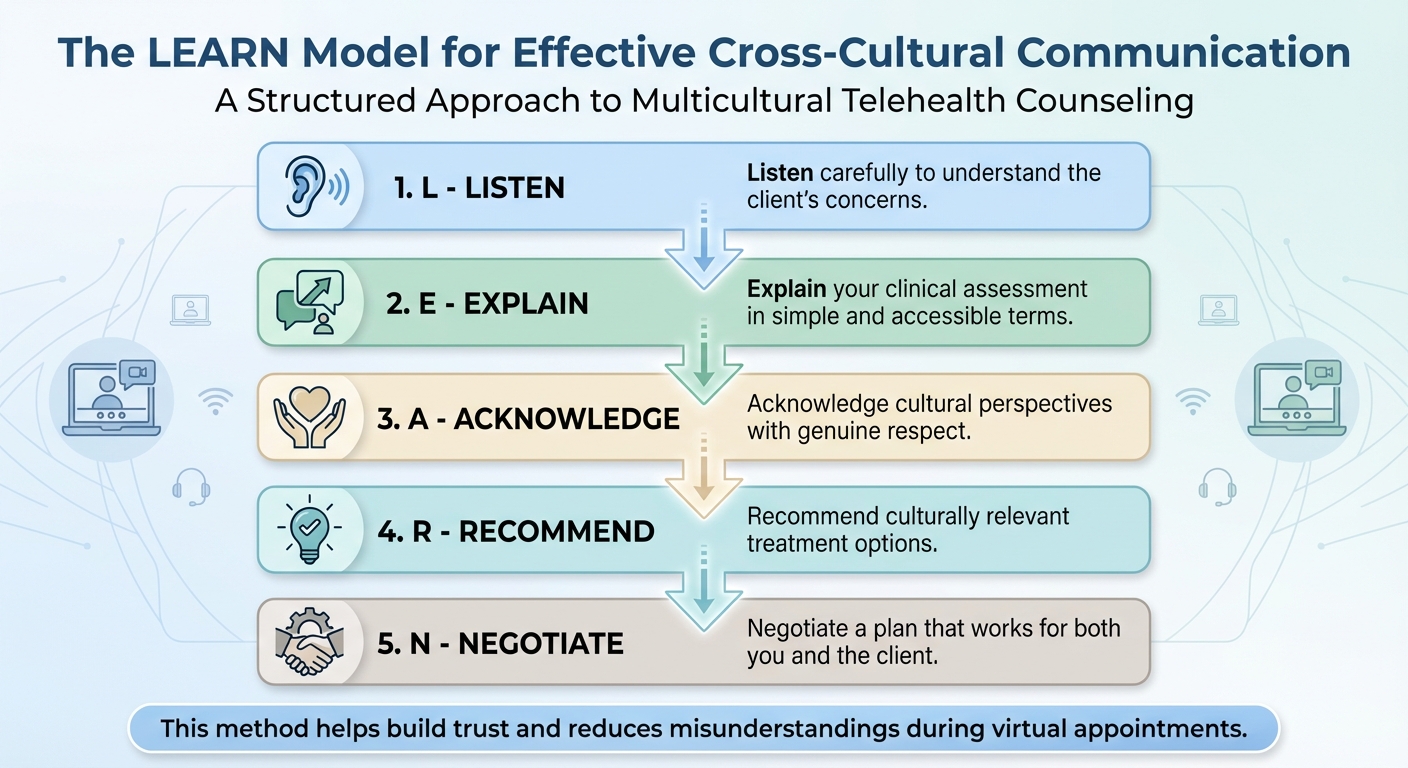
LEARN Model Framework for Multicultural Telehealth Counseling
The challenges faced in multicultural telehealth require thoughtful strategies that therapists can apply right away. These approaches aim to improve communication, respect cultural perspectives, address technology barriers, and actively work to reduce bias in virtual care.
Implementing Language Support Systems
When working with clients who have limited English proficiency, using professional interpreters should always be the priority. Trained medical interpreters – especially those available via secure video – are skilled in handling language subtleties and healthcare-specific terminology. This avoids the ethical complications of relying on family members or children as translators. During intake, make sure to note each client’s preferred language and literacy level, and adapt all written materials to suit their needs.
The LEARN model provides a structured way to enhance cross-cultural communication in telehealth sessions. This involves:
- Listening carefully to understand the client’s concerns.
- Explaining your clinical assessment in simple and accessible terms.
- Acknowledging cultural perspectives with genuine respect.
- Recommending culturally relevant treatment options.
- Negotiating a plan that works for both you and the client.
This method helps build trust and reduces misunderstandings during virtual appointments. To further enhance communication, narrate your actions during sessions – for example, explain when you’re taking notes to avoid confusion. Additionally, offer multilingual consent forms, instructions, and follow-up summaries. Using visual aids or plain language can also support clients with limited health literacy. Finally, tailor interventions to align with each client’s cultural values and experiences.
Using Culturally Adapted Interventions
Effective communication is only the first step. Therapists must also adapt their interventions to respect each client’s cultural background. Start by gathering detailed information during intake about the client’s cultural identity, values, family roles, help-seeking behaviors, and past experiences with mental health care and technology. This allows for interventions that are personalized rather than based on general assumptions.
A strength-based approach can be particularly helpful. This perspective emphasizes resilience, community resources, spirituality, and protective cultural factors. For instance, therapists at Growth and Change Counseling are mindful of challenges faced by couples and parents from Eastern cultures (such as Indian, Chinese, Thai, Vietnamese, or Korean), as well as those encountered by expatriates, missionaries, and third-culture kids. By incorporating diverse psychological theories and, when requested, spiritual or religious beliefs, therapists can create treatment plans that align with the client’s worldview.
Adjusting communication styles is another key element. Factors like formality, directness, eye contact, and pacing should match the client’s cultural norms, even in a virtual setting. For youth and families from diverse backgrounds, consider family-based formats, flexible scheduling, and multimodal engagement, such as combining video sessions with text check-ins. Collaborating with community stakeholders can also make telehealth programs more relevant and accessible.
Improving Digital Access and Support
Before starting services, assess each client’s access to technology and digital skills. This includes evaluating internet bandwidth, device availability, privacy options, and comfort with digital tools. These proactive steps help prevent disruptions and allow for necessary accommodations. Orientation sessions can also be valuable – teach clients how to log in, use platform features like mute and chat, and troubleshoot common issues in a straightforward and clear manner.
Tailor tech support to the client’s needs. Older adults may benefit from printed or emailed step-by-step guides, extra time, or caregiver assistance, while younger clients might prefer mobile-friendly platforms and visual instructions. Be flexible with session formats – if video calls are not practical or feel culturally uncomfortable, offer phone sessions or hybrid models using secure, HIPAA-compliant tools.
Address privacy concerns by suggesting practical solutions like using headphones, white-noise machines, or scheduling sessions during quieter times. Establish clear backup plans, such as providing a phone number to use if the video connection drops, and explain these procedures ahead of time. Growth and Change Counseling, for example, offers telehealth services across California, providing flexibility for clients dealing with geographical or scheduling limitations. With strong digital support in place, therapists can focus on addressing deeper issues like bias.
Reducing Bias in Telehealth
Cultural competency training is an ongoing process. Therapists should engage in training that covers telehealth-specific challenges, digital equity, and cross-cultural communication, while also committing to regular self-reflection and learning. Supervision – such as reviewing recorded sessions (when appropriate) and discussing cultural countertransference – can help identify and minimize implicit biases in diagnosis and treatment planning. These efforts complement language support and cultural adaptation strategies, ensuring therapists remain mindful of their assumptions.
Building trust in a virtual setting requires consistent eye contact, a warm tone, reliable follow-through, and openly acknowledging cultural differences and systemic barriers that clients may face. As John Mark Kane, LMFT at Growth and Change Counseling, explains:
"I believe in the inherent value of human life. No matter what your struggle, background, belief system, or things you have done, you are inherently valuable, and with me, you will find a safe place to work on yourself or your family."
Monitoring outcomes across demographic groups – such as attendance rates, symptom changes, and client satisfaction – can reveal disparities and guide improvements in outreach and interventions. Clearly communicating confidentiality limits, data security practices, and platform safeguards can also help reduce mistrust, particularly among clients with histories of institutional harm. Creating a safe and non-judgmental space is essential for effective multicultural telehealth counseling.
sbb-itb-596b85d
Best Practices for Multicultural Telehealth Counseling
Effective multicultural telehealth counseling requires a thoughtful blend of technical expertise and genuine interpersonal connection. Therapists who excel in this area do so by combining structured methods with adaptability, always prioritizing the client’s cultural background and unique needs.
Using Client-Centered Approaches
Every client brings a distinct set of experiences and perspectives to therapy. The most successful multicultural telehealth counseling acknowledges this by avoiding cookie-cutter solutions. Instead, therapists should create therapy plans that respect cultural identity, family dynamics, and the client’s comfort with technology. By tailoring their approach and adjusting based on client feedback, therapists can foster greater engagement and trust.
Building Empathy and Cultural Humility
Cultural humility goes beyond cultural competence – it’s about ongoing self-awareness and a willingness to learn, rather than assuming expertise in another culture. Empathy plays a critical role here. Therapists should listen actively, ask thoughtful questions, and avoid relying on stereotypes. Practical steps include regular reflection to uncover personal biases, showing sincere interest in the client’s lived experience, and addressing power imbalances that may arise in therapy. In a virtual setting, this means building rapport through warmth and openness – explaining your thought process, acknowledging cultural differences, and demonstrating curiosity about the client’s worldview. This ongoing effort to understand and connect strengthens assessments and enhances the therapeutic relationship.
Growth and Change Counseling Telehealth Services
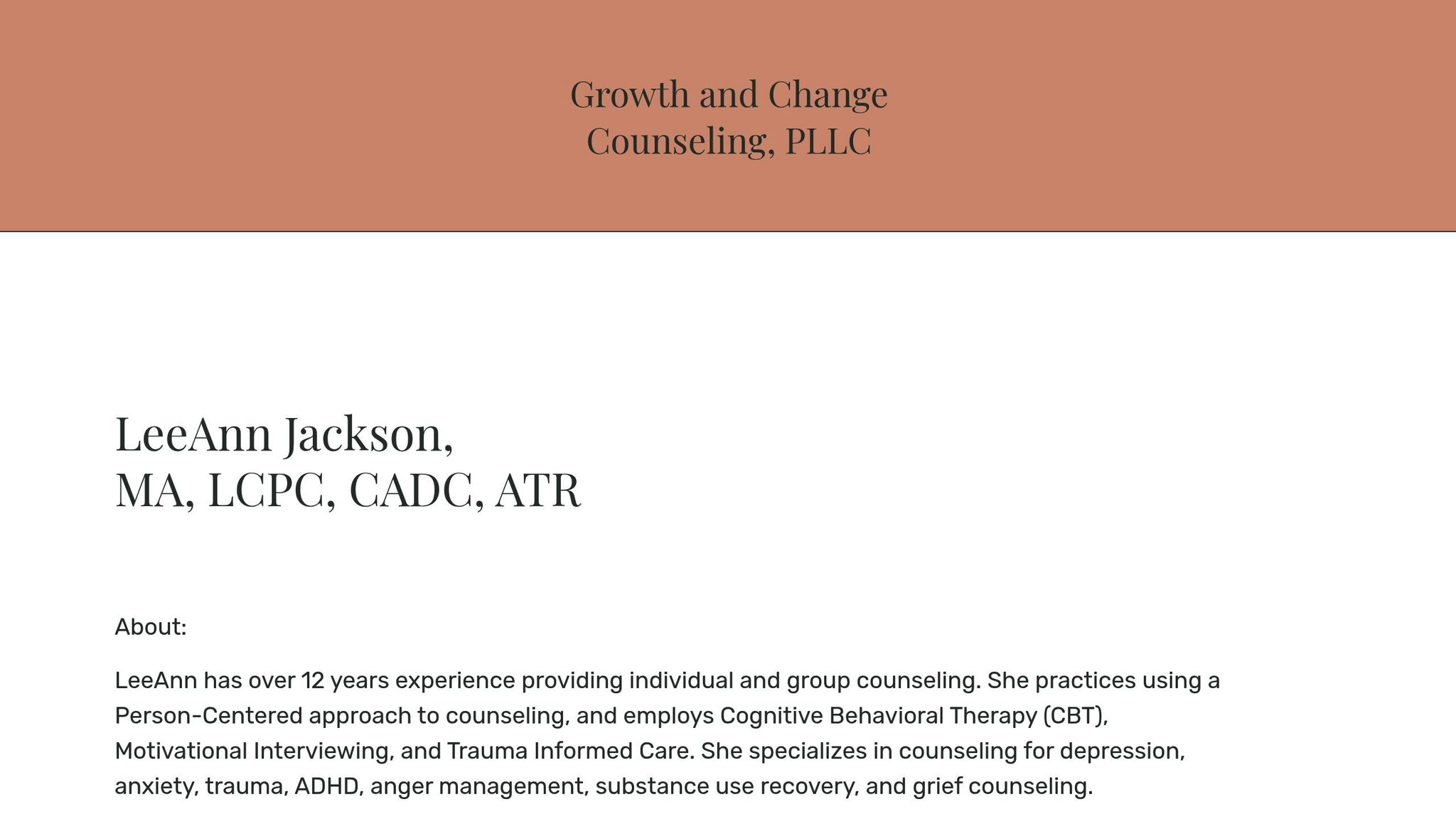
Growth and Change Counseling is a prime example of how these practices can be applied effectively. Based in California, this practice provides telehealth services that integrate evidence-based methods with culturally responsive care. Their offerings include individual therapy, family therapy, parent coaching, and treatment for challenges like anxiety, depression, addiction, trauma, and navigating neurodiverse relationships.
The therapists at Growth and Change Counseling bring a wealth of cross-cultural expertise to their work. They are particularly skilled at addressing the unique needs of couples and parents from Eastern cultural backgrounds, including Indian, Chinese, Thai, Vietnamese, and Korean communities. The team also includes bilingual therapists, such as Karin Wiese, LMFT, who offers services in Afrikaans, ensuring better communication and stronger cultural connections.
For couples facing serious challenges, The Marriage Rescue Institute provides a 12-week telehealth coaching program. This intensive process combines evidence-based techniques with cultural sensitivity. As John Mark Kane explains:
"I believe in addressing the needs of the whole person, and that requires blending different viewpoints and creating a unique approach to therapy for each individual, couple, family, or parent."
This personalized approach ensures therapy aligns with each client’s cultural values, beliefs, and family dynamics – whether they are seeking support for relationship issues, mental health concerns, or navigating life transitions in a cross-cultural context.
Conclusion
Multicultural telehealth counseling thrives when therapists prioritize cultural understanding, practical solutions, and authentic connections. The approaches discussed – like offering language support, adapting interventions to fit cultural contexts, addressing bias, and improving access to technology – lay the groundwork for meaningful and effective virtual care. Among these, language support stands out as a cornerstone for clear and respectful communication across cultures in digital settings.
Telehealth continues to evolve to meet the diverse needs of clients navigating logistical hurdles. For individuals juggling work and family responsibilities, dealing with transportation issues, or living in areas with limited services, virtual counseling removes obstacles while maintaining high-quality care. Sessions that reflect clients’ cultural values, family structures, and comfort with technology lead to better engagement and outcomes compared to one-size-fits-all methods.
FAQs
What is the LEARN model, and how can therapists apply it in multicultural telehealth counseling?
The LEARN model serves as a practical framework for therapists to address cultural differences thoughtfully during counseling sessions. It’s especially useful in multicultural telehealth settings, where understanding and communication are key. Here’s how therapists can implement it:
- Listen attentively to grasp the client’s cultural perspective and personal experiences.
- Explain their clinical methods and any cultural assumptions they may hold, ensuring transparency.
- Acknowledge cultural differences with genuine respect and empathy.
- Recommend interventions or strategies that align with the client’s cultural values and preferences.
- Negotiate treatment goals that respect the client’s cultural background while prioritizing their mental health needs.
By integrating the LEARN model, therapists can build a supportive and inclusive space that encourages trust and collaboration with clients from all walks of life.
How can therapists address technology access challenges in telehealth counseling?
Therapists can tackle technology access issues in telehealth counseling by adopting a few practical approaches. Providing technical support and straightforward instructions can make it easier for clients to use the necessary platforms. Opting for low-bandwidth tools ensures that even those with slower internet connections can stay connected. Offering flexible scheduling and alternatives like phone sessions or asynchronous communication can also be a game-changer for clients struggling with tech limitations. These strategies aim to make care accessible to everyone, no matter their technological situation.
How do cultural beliefs influence the success of telehealth counseling sessions?
Cultural beliefs heavily influence telehealth counseling, shaping how individuals view mental health, express their feelings, and participate in therapy sessions. These beliefs can affect everything from communication styles to the level of trust clients place in the process, as well as their comfort in sharing personal experiences with a therapist.
For telehealth counseling to be effective, therapists need to recognize and respect these cultural differences. By adopting a culturally aware approach, therapists can build stronger relationships with clients and create a safe, welcoming space that encourages meaningful progress.
Related Blog Posts
- Top 7 Therapy Approaches for Cross-Cultural Couples with Addiction
- Checklist for Therapists Working with Asian-American Couples
- Guide to Relational Intelligence for Intercultural Couples
- Managing Boundaries in Addiction Recovery Telehealth
