Cross-cultural couples often face challenges that go beyond typical relationship issues. Differences in values, communication styles, and family expectations can lead to misunderstandings, making therapy that addresses these dynamics essential. This guide offers therapists practical strategies to help couples navigate identity differences, external pressures, and communication barriers while building mutual respect and understanding.
Key Takeaways:
- Backgrounds Shape Relationships: Different traditions, gender roles, and religious practices can create friction.
- Communication Challenges: Direct vs. indirect communication styles, emotional expression, and nonverbal cues often differ between partners.
- External Pressures: Family disapproval, immigration stress, and social isolation are common hurdles.
- Therapeutic Approaches:
- Adapt Emotionally Focused Therapy (EFT) to address emotional patterns influenced by upbringing.
- Use the Gottman Method to create shared traditions and resolve recurring conflicts.
- Apply Integrative Behavioral Couple Therapy (IBCT) to balance acceptance of differences with practical compromises.
- Practical Tools: Active listening, clarifying assumptions, and alternative communication methods like art or storytelling can bridge gaps.
Therapists play a critical role in helping couples respect each other’s backgrounds while building a unified relationship, turning differences into strengths.
Cross-Cultural Relationships: Navigating Differences for Stronger Connections
How Background Shapes Relationships
Our upbringing profoundly influences the values and expectations we bring into relationships. When two people from different backgrounds come together, these differences can sometimes create friction, particularly when cultural norms and traditions collide.
How Background Shapes Relationship Norms
Cultural values play a key role in shaping relationship dynamics. For instance, in many Latinx and South Asian families, extended family often holds significant sway over major decisions. This can contrast sharply with the emphasis on independence and nuclear family structures in mainstream U.S. culture. These differing expectations can lead to disagreements about living arrangements, financial obligations to extended family, or even how holidays are celebrated.
Gender roles also vary widely across cultures. In some communities, traditional expectations about household responsibilities and decision-making persist, while others lean toward more egalitarian approaches. Even how partners express commitment and affection can differ – some cultures favor open displays of affection and verbal affirmations, while others prioritize showing care through actions rather than words.
Religious and spiritual traditions add another layer of complexity. Practices around worship, dietary restrictions, or holiday observances can create challenges when partners come from different faiths or hold varying levels of religious commitment. Navigating these differences often requires thoughtful compromise and mutual respect.
Impact on Communication and Emotional Expression
Cultural influences extend to how we communicate and express emotions. In some cultures, direct and open dialogue is encouraged, while others rely on more subtle, indirect forms of communication. For example, many Asian cultures emphasize "saving face" and using nonverbal cues, whereas Western cultures often promote straightforward conversations.
Emotional expression follows a similar pattern. To some, openly sharing feelings signifies closeness, while others see emotional restraint as a sign of strength. Approaches to resolving conflict also differ – some prefer direct confrontation, while others lean toward indirect methods to avoid tension.
John Mark Kane’s experiences in Southeast Asia underscore the importance of understanding these diverse communication styles, especially in therapy. At Growth and Change Counseling, therapists work with couples from Eastern cultures to address challenges like differing levels of adjustment to Western norms within a single family.
Nonverbal communication further highlights cultural differences. Eye contact, physical touch, personal space, and facial expressions can vary widely. What feels natural in one culture might seem overly intimate or distant in another. By recognizing these differences, therapists can frame communication struggles as reflections of cultural patterns rather than personal flaws. This perspective allows for interventions that respect both partners’ backgrounds while encouraging the development of shared communication styles.
Acknowledging these deep-rooted cultural influences is essential for creating therapeutic approaches that honor both individuality and partnership, laying the groundwork for the discussions that follow.
Key Challenges Faced by Cross-Cultural Couples
Cross-cultural couples encounter a unique set of challenges that extend beyond the typical hurdles most relationships face. Understanding these difficulties is essential for therapists to pinpoint patterns and offer tailored solutions that address the underlying issues. Building on earlier discussions about cultural influences, this section delves into the specific obstacles these couples often navigate.
Navigating Conflicting Identities
One of the most significant hurdles for cross-cultural couples is blending their distinct cultural identities into a unified relationship. Each partner brings a lifetime of deeply rooted traditions, values, and customs, which can sometimes clash with their partner’s background.
Religious and spiritual practices are a common source of tension. Questions like "Which holidays do we celebrate?" or "How do we raise our children spiritually?" often arise. These aren’t just logistical concerns – they strike at the heart of personal and cultural identity. For instance, dietary practices tied to religion or tradition can become a point of contention, requiring careful compromise.
Gender roles present another major challenge. In some cultures, traditional divisions of household duties and decision-making authority are the norm, while others lean toward a more egalitarian approach. When expectations differ, it can lead to misunderstandings and feelings of disconnect.
The process of cultural negotiation – where both partners adjust by adopting elements of each other’s culture – often feels like a balancing act. This can sometimes feel like losing a part of one’s identity, creating internal struggles. Adding to this are external pressures, such as societal or familial expectations, which only make these identity conflicts more complex.
Dealing with External Pressures
Outside influences often amplify the challenges cross-cultural couples face. One of the most common stressors is family disapproval, which can take many forms, from emotional withdrawal to outright rejection. Extended family members may openly oppose the relationship, creating tension that ripples through the couple’s dynamic.
"Our therapists are attuned to the unique challenges that couples and parents from Eastern cultures (Indian, Chinese, Thai, Vietnamese, Korean, etc.) face in their relationships because of cultural norms and patterns. Some of these challenges are unique to Indian, Chinese, and other Asian cultures and can be exacerbated by varying levels of adjustment to Western culture within the family system."[1]
Another layer of complexity comes from immigration-related stress. Navigating visa processes, work authorization issues, or adapting to a new country can take a toll. One partner might feel isolated while trying to maintain the relationship and adjust to unfamiliar norms, all while being far from extended family and their cultural roots.
Social isolation is another common struggle. Cross-cultural couples may find themselves in a liminal space – not fully accepted by either cultural community. They might face workplace discrimination, stereotyping, or subtle exclusion from social events and gatherings.
The situation becomes even more complicated when family members have different levels of adjustment to Western culture[1]. For example, first-generation immigrants may hold on to traditional values, while younger family members embrace Western norms, creating intergenerational tensions that can spill over into the couple’s relationship.
Communication Barriers and Misunderstandings
Even when both partners speak the same language fluently, cultural nuances in communication can lead to misunderstandings. These challenges often stem from deep-seated cultural differences that go beyond vocabulary and grammar.
One of the most common issues is the clash between direct and indirect communication styles. A partner from a culture that values straightforwardness might see indirect communication as evasive, while someone from a culture emphasizing subtlety may find directness abrasive or disrespectful.
Nonverbal cues further complicate matters. Eye contact, personal space, physical touch, and facial expressions carry different meanings in different cultures. What feels like a warm gesture to one partner might come across as intrusive or distant to the other.
Emotional expression is another area where cultural differences emerge. In some cultures, openly sharing emotions is seen as a sign of trust and closeness, while in others, emotional restraint is valued as a mark of strength and maturity. These differences can lead to misinterpretations about each other’s emotional availability or commitment.
Conflict resolution styles also vary widely. While some cultures prefer direct confrontation to resolve issues quickly, others favor indirect methods that preserve dignity for all involved. These contrasting approaches can escalate disagreements, leaving both partners feeling unheard and frustrated.
Language barriers can make these challenges even more pronounced. Even if both partners are fluent in the same language, expressing nuanced emotions or complex ideas in a second language can be difficult. This often leads to oversimplification or miscommunication during critical discussions.
Such communication barriers can create a cycle of misunderstandings and frustration. Over time, partners might start attributing these issues to personal shortcomings rather than recognizing them as natural consequences of cultural differences, further straining the relationship.
Effective Therapy Approaches for Cross-Cultural Couples
Supporting cross-cultural couples effectively means tailoring therapeutic approaches to address the unique challenges these relationships encounter. Research highlights the importance of culturally sensitive therapy, with 86-90% of cross-cultural couples reporting significant improvements after engaging in such interventions[3].
Adapting Emotionally Focused Therapy (EFT)
Emotionally Focused Therapy (EFT) becomes especially impactful when therapists account for how cultural backgrounds influence emotional patterns and attachment needs[4]. This approach involves helping couples recognize culture-specific ways of expressing affection, comfort, and emotional presence. For example, some cultures prioritize emotional restraint, while others encourage open expression.
In traditional EFT, therapists work to identify negative interaction cycles and help partners share underlying emotions and needs. For cross-cultural couples, this requires understanding the cultural context behind those patterns. Take, for instance, a partner from a culture that values emotional control – they might seem distant or unresponsive, but their behavior may reflect deeply ingrained norms rather than a lack of care.
Imagine a scenario where one partner expresses love through actions like cooking traditional meals, managing finances, or maintaining family ties, while the other interprets these gestures as avoiding emotional closeness. An EFT therapist would guide the couple to see these behaviors as culturally influenced expressions of love and commitment, not emotional detachment.
Growth and Change Counseling exemplifies this approach by addressing the unique challenges faced by couples from Eastern cultures. Their therapists consider how cultural norms and varying levels of adjustment to Western culture shape family dynamics[1]. This culturally aware approach allows EFT to honor each partner’s background while fostering emotional connection.
Applying The Gottman Method
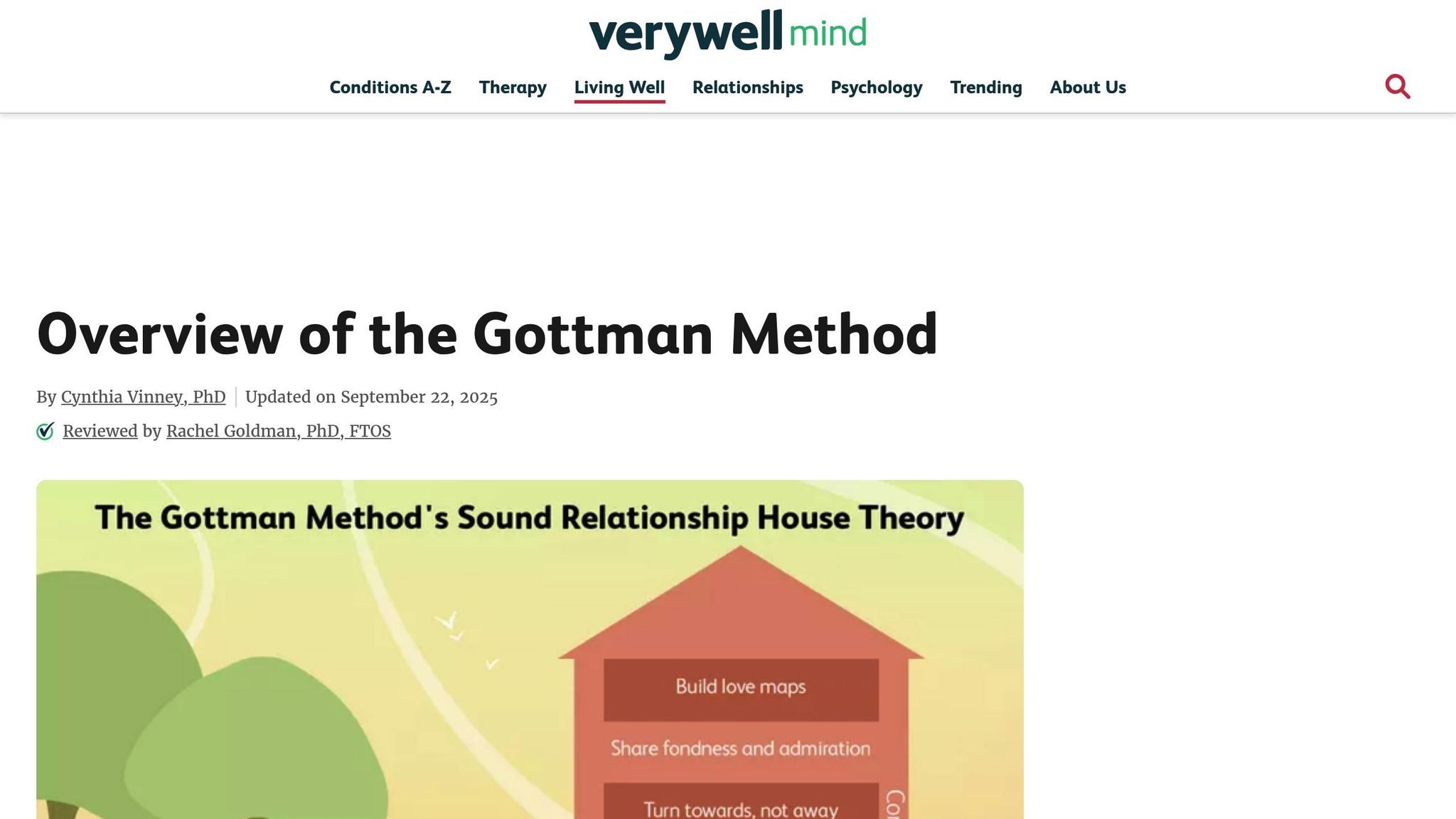
The Gottman Method offers another avenue for helping cross-cultural couples by focusing on creating a shared cultural narrative. This approach doesn’t ask partners to abandon their traditions; instead, it helps them weave new customs that respect both backgrounds[3].
Building “love maps” – a deep understanding of each other’s inner worlds – is particularly important for cross-cultural couples. This process fosters empathy and prevents misunderstandings rooted in cultural differences. For example, therapists might help couples develop shared traditions, navigate cultural expectations, and negotiate family roles. This could mean blending holiday celebrations, setting boundaries with extended family members, or finding common ground on parenting practices.
The method’s structured conflict resolution strategies are also invaluable when cultural differences lead to recurring tensions. Therapists teach couples to separate disagreements about traditions or roles from personal criticisms. For instance, a couple might face challenges over elder care, with one culture emphasizing multi-generational households and the other valuing independence. The Gottman Method helps them explore the values behind these preferences and find solutions, like arranging nearby housing for aging parents or creating shared caregiving plans.
Integrative Behavioral Couple Therapy (IBCT)
Integrative Behavioral Couple Therapy (IBCT) balances acceptance and change, recognizing that culture influences every interaction. This approach helps couples embrace cultural differences while working toward practical compromises[3][5].
The acceptance element encourages couples to view cultural differences as strengths rather than obstacles. Therapists guide discussions about cultural habits, values, and beliefs, helping partners appreciate the richness these bring to their relationship. This shift often eases the pressure to choose between cultural identity and the relationship.
On the practical side, IBCT focuses on finding compromises and creating new traditions. Couples might alternate holiday celebrations, blend parenting styles, or develop communication strategies that respect different comfort levels with emotional expression or directness. For example, a partner’s relationship with their extended family or their religious practices may be deeply rooted in cultural identity. Rather than trying to change these aspects, IBCT encourages couples to accommodate and celebrate them.
Therapy sessions often include role-playing difficult conversations, practicing culturally appropriate ways to express needs, or developing strategies for navigating situations where cultural differences might stand out.
Why These Approaches Work
Cross-cultural relationships require ongoing dialogue and adaptation. Unlike couples with similar backgrounds, these pairs can’t rely on shared assumptions – they benefit from explicit conversations about expectations, values, and traditions. The therapeutic approaches outlined here provide a framework for those discussions while creating the emotional safety needed for honest exploration of cultural differences. By fostering understanding and connection, these methods help cross-cultural couples build stronger, more resilient relationships.
sbb-itb-596b85d
Practical Techniques for Cross-Cultural Communication
Navigating cultural differences in relationships requires more than traditional couples therapy techniques. To truly connect, cross-cultural couples benefit from tailored approaches that respect and embrace their unique dynamics.
Adapting Active Listening for Different Contexts
Active listening takes on a new dimension when working with cross-cultural couples, as nonverbal cues and communication styles can vary widely across cultures[2][5]. For instance, behaviors that signify respect in one culture might be misinterpreted as disrespect in another, leading to confusion and conflict.
Therapists must familiarize themselves with each partner’s cultural norms around eye contact, body language, and emotional expression. While direct eye contact might convey engagement in some cultures, it could feel confrontational or inappropriate in others[2]. Similarly, silence or indirect speech may not indicate disengagement but rather reflect thoughtful processing or respect for the other person’s perspective.
To bridge these gaps, therapists can use techniques like paraphrasing and asking clarifying questions to ensure understanding. For example, instead of assuming silence means withdrawal, they might explore whether it signifies a culturally appropriate way of showing attentiveness or deference.
At Growth and Change Counseling, therapists are particularly sensitive to challenges faced by couples from Eastern cultures, where emotional expression may differ significantly from Western norms. By adapting active listening techniques to honor these differences, therapists help couples connect more deeply and authentically.
Clarifying Meanings and Assumptions
Misunderstandings often arise when partners interpret each other’s actions through their own cultural lens. Therapists can help by encouraging couples to ask thoughtful questions that uncover the cultural context behind behaviors. Simple prompts like, "What does that mean in your culture?" can reveal hidden assumptions and prevent misinterpretations[3][5][6].
Creating a safe space for storytelling is another powerful tool. When partners share personal experiences and cultural traditions, they build empathy and gain insight into each other’s perspectives. For instance, one partner might explain that involving extended family in decision-making reflects a value for collective wisdom, not a lack of trust.
Therapists should approach each couple with curiosity and avoid making sweeping generalizations about cultural norms. The focus should remain on the couple’s individual experiences and values[8]. When verbal communication stalls, alternative methods can provide a way forward.
Alternative Communication Approaches
Sometimes, words just aren’t enough – especially when language barriers or heightened emotions get in the way. In these moments, creative approaches like art, music, or shared activities can help couples reconnect[3][5].
Drawing exercises, for example, allow partners to express feelings that might be hard to articulate, particularly when language skills differ. Music, often called a universal language, can bring couples together through shared rhythms and melodies. Even cooking traditional dishes together can be a meaningful way to share heritage while creating new memories.
Technology also plays a role. Translation apps and other digital tools can help couples overcome language barriers, whether they’re navigating long-distance relationships or one partner is still learning a shared language.
It’s important to tailor these methods to each couple’s comfort level. While some might find artistic expression intimidating, others may embrace it as a natural way to communicate. Therapists guide couples in choosing approaches that feel genuine and sustainable.
Research highlights the effectiveness of these culturally sensitive techniques, with 86–90% of cross-cultural couples reporting significant improvements when such methods are used in therapy[3]. This reinforces the value of moving beyond generic strategies to embrace tools that respect cultural diversity while building practical communication skills.
Growth and Change Counseling incorporates these approaches into their 12-week couples coaching program, offering solutions-focused therapy that adapts to each couple’s unique cultural blend. By addressing communication barriers head-on, they help couples build lasting skills and deeper connections.
Building Mutual Respect and Integration
Creating a thriving cross-cultural relationship isn’t about favoring one culture over another or asking partners to set aside their heritage. Instead, it’s about finding ways to honor both backgrounds while building something meaningful together. Studies reveal that 86–90% of cross-cultural couples report greater satisfaction when they engage in culturally sensitive therapy[3].
The secret lies in seeing cultural differences not as barriers but as opportunities. When couples take the time to blend their perspectives thoughtfully, these differences can become a source of strength. This process requires patience, honest communication, and often the guidance of a therapist who understands the unique dynamics at play. With this foundation, couples can begin exploring practical ways to merge traditions and set boundaries.
Merging Traditions and Setting Boundaries
One of the most delicate tasks in cross-cultural relationships is deciding which traditions to embrace, adapt, or celebrate independently. Therapists often play a key role in helping couples navigate these decisions by encouraging open conversations about the personal significance of cultural practices[5].
For example, a Mexican-American partner might share the deep emotional and spiritual meaning behind Día de los Muertos, while a Korean-American partner could explain the importance of honoring elders during Lunar New Year[3][5]. These discussions help couples appreciate the values and emotions tied to their traditions.
Successful integration often requires creative solutions rather than strict adherence to traditional practices. Take one couple with Mexican and Korean backgrounds: they celebrated Lunar New Year with Korean food and games while honoring Día de los Muertos with Mexican altars and storytelling. They also alternated which holidays were spent with each extended family, ensuring both cultures remained an active part of their relationship[3][5].
Boundaries become equally important, especially when external family pressures arise. Therapists can guide couples in setting limits and crafting unified responses to challenging situations[5][7]. Role-playing and practicing assertive communication can help couples prepare for difficult discussions with family members.
For instance, if one family expects strict participation in religious holidays that conflict with the other partner’s beliefs, the couple might agree on a compromise. This could mean attending ceremonies without engaging in specific rituals or finding alternative ways to show respect while staying true to their values[5].
Therapists at Growth and Change Counseling specialize in helping couples navigate these complexities. By building on these strategies, couples can also create unique practices that reflect their shared values and identities.
Creating a Shared Relationship Approach
Cross-cultural couples can go a step further by developing new rituals that reflect both partners’ backgrounds and values. Clear boundaries lay the groundwork for mutual respect, but creating shared traditions helps couples shape a joint identity that’s uniquely theirs, free from outside expectations[3][5].
The process begins by identifying common values beneath the surface of cultural differences. While traditions may vary, many cultures share universal principles like family connection, gratitude, or celebrating milestones. Therapists can help couples uncover these shared values and use them as a foundation for new traditions.
Some couples create unique anniversary celebrations that incorporate elements from both cultures, like combining traditional foods, music, or symbols. Others establish weekly rituals that blend different approaches to communication and connection. The goal is for both partners to feel seen and valued in these shared practices[3].
Growth and Change Counseling emphasizes this collaborative effort:
"We believe in addressing the needs of the whole person, and that requires blending different viewpoints and creating a unique approach to therapy for each individual, couple, family, or parent."[1]
This philosophy extends to helping couples design their own relationship blueprint. Instead of adopting one cultural model, therapists guide partners in negotiating norms that suit their specific situation. This might involve blending communication styles, decision-making approaches, or methods of resolving conflict.
Cultural differences can sometimes lead to intense disagreements due to deeply held values, but they also offer opportunities for deeper connection. As Growth and Change Counseling wisely notes:
"Conflict is a pathway to intimacy. If there’s no conflict in a relationship, at least one person isn’t being genuine."[1]
When couples approach these differences with curiosity instead of defensiveness, they often find that their diverse perspectives complement each other. For instance, one partner’s direct communication style might balance the other’s more subtle approach, or one’s focus on individual success might harmonize with the other’s emphasis on collective well-being.
Through Growth and Change Counseling’s 12-week couples coaching program, partners receive tailored, solutions-focused therapy designed to help them integrate their cultural backgrounds. This program moves beyond surface compromises, encouraging couples to create a relationship dynamic that respects both heritages while allowing room for growth.
Ultimately, the goal isn’t to erase differences but to celebrate them within a unified relationship. Mutual respect and integration build empathy, adaptability, and problem-solving skills that benefit couples far beyond cultural matters. This foundation allows both partners to stay true to themselves while creating something meaningful together.
Cross-Cultural Therapy at Growth and Change Counseling
Cross-cultural couples often navigate unique challenges, but with the right approach, these differences can become powerful strengths. Therapy that is culturally aware and tailored to the couple’s needs can help them not only overcome obstacles but also deepen their connection. Below are some key strategies for supporting these relationships effectively.
Key Takeaways for Supporting Cross-Cultural Couples
At the heart of successful therapy for cross-cultural couples lies cultural sensitivity. A one-size-fits-all approach simply doesn’t work. Instead, interventions like culturally adapted EFT, the Gottman Method, and IBCT can help couples explore how their cultural backgrounds influence emotions, conflict resolution, and family dynamics. By recognizing the role of each partner’s heritage, therapists can guide couples toward greater understanding and harmony.
Communication is another cornerstone. Therapists should encourage open conversations about cultural contexts, help clarify assumptions, and even explore alternative forms of expression, such as art or music, to bridge gaps. Perhaps most importantly, therapy should help couples see each other as individuals rather than as representatives of their cultures. This shift fosters deeper intimacy and mutual respect, moving beyond stereotypes to build genuine understanding.
Next Steps for Therapists
To better support cross-cultural couples, therapists must continually develop their cultural awareness and skills. This means seeking specialized training, gaining firsthand experiences, and learning about the unique challenges these couples face – such as immigration stress, family expectations, and feelings of isolation. As John Mark Kane, LM, shares:
"I spent my formative years living in countries in Southeast Asia, which gave me firsthand experience of living in different cultures and going through transitions and adjustments between cultures and nations. I have a personal understanding of the needs of expatriates, missionaries, and third culture kids (TCKs)."
This perspective highlights how personal experiences and ongoing education can enrich a therapist’s ability to connect with and support cross-cultural clients.
Staying informed about the latest research and best practices is equally important. Therapists can enhance their expertise by joining professional organizations, attending workshops, and seeking guidance from seasoned colleagues. Early intervention is another critical factor – it allows couples to address potential issues before they grow into larger conflicts, improving their chances of success.
Programs like the 12-week coaching offered by Growth and Change Counseling demonstrate how culturally responsive therapy can meet the complex needs of cross-cultural couples. By focusing on emotional and relational well-being while honoring diverse backgrounds, such programs help couples build strong, unified partnerships.
Ultimately, working with cross-cultural couples requires patience, humility, and a commitment to growth. When cultural differences are embraced as opportunities rather than barriers, relationships can flourish, showcasing the beauty and richness of human connection.
FAQs
How can therapists tailor their approach to meet the unique needs of cross-cultural couples?
Therapists play a key role in helping cross-cultural couples by cultivating cultural awareness and providing a safe, judgment-free environment where both partners can openly share their experiences and viewpoints. Taking the time to understand each partner’s unique cultural background, values, and traditions is crucial for addressing potential conflicts or misunderstandings that may arise.
Another important focus is enhancing communication skills. Therapists can assist couples in overcoming language barriers, navigating different communication styles, and managing cultural expectations. By promoting honest conversations and fostering mutual respect, therapists can help couples build stronger connections and deepen their understanding of one another, ultimately reinforcing the foundation of their relationship.
How can cross-cultural couples blend their traditions and establish healthy boundaries with extended family?
Blending traditions in a relationship where cultures intersect takes effort, but it can also be deeply rewarding. The key? Open conversations and a shared willingness to embrace each other’s backgrounds. Start by talking about which traditions hold the most meaning for each of you. From there, find ways to weave them into your life together. Maybe that means celebrating holidays from both cultures or even starting entirely new traditions that represent your unique connection.
When it comes to extended family, setting boundaries can help ensure your relationship remains strong. Work as a team to decide what feels right – whether it’s about how much say family members have in decisions or how to approach cultural expectations. When you communicate these boundaries, do so with respect and consistency, making it clear they’re about supporting your partnership, not creating division. And if things get tricky, reaching out to a therapist can provide helpful tools and fresh perspectives to bridge cultural gaps.
How can cross-cultural couples navigate differences in emotional expression and conflict resolution?
Cross-cultural couples often face unique challenges when it comes to emotional expression and resolving conflicts. These differences are deeply rooted in cultural backgrounds, which influence how individuals process and express emotions. To navigate these complexities, open communication and mutual understanding are key.
Start by having honest conversations about how each partner handles emotions and approaches conflict. Recognizing and respecting each other’s perspectives can lay the groundwork for deeper connection. From there, focus on bridging gaps by practicing active listening – really hearing and understanding what your partner is saying – and validating each other’s feelings. This helps create an environment where both partners feel seen and supported.
Setting shared goals for resolving disagreements can also be a game-changer. It shifts the focus from “me versus you” to “us versus the problem.” If things feel particularly challenging, working with a therapist who understands cultural dynamics can provide helpful strategies and tools to strengthen your relationship and tackle issues more effectively.
Related Blog Posts
- 5 Ways Grief Impacts Marriages
- Top 7 Therapy Approaches for Cross-Cultural Couples with Addiction
- Checklist for Therapists Working with Asian-American Couples
- Emotional Intelligence for Neurodiverse Couples
